 |
A Ntomo mask, covered with numerous cwory shells with five horms and a standing male figure; traces of age and ritual use
"The Bamana (Bozo) Ntomo masks were worn by boys as they passed through the early cycle of initiation into manhood. The masks reinforce the lessons the
boys are taught as they are prepared by elder males in the society for circumcision. There are two main style groups of their masks. One is characterized by an oval face with four to ten horns in a row on top like a comb, often covered with cowries or dried red berries. The other type has a ridged nose, a protruding mouth, a superstructure of vertical horns, in the middle of which or in front of which is a standing figure or an animal. The ntomo masks with thin mouths underscore the virtue of silence and the importance of controlling one’s speech. During their time in ntomo the boys learn to accept discipline. They do not yet have access to the secret knowledge related to korè and other initiation societies. Members wore a wooden face mask during the initiation festival at harvest time and when begging for rice.
One reference sites the number of horns on such masks to symbolizes a human being's levels of increased knowledge based on the initiation stages, while another reference sites that Ntomo masks with an even number of horns are female and those with an odd number of horns are male. Some masks are plain wood with no decoration while others are covered in brass reprouse, cowrie shells or small red seeds with further esoteric significance and the masks will vary greatly by region. The miniature mask rising from the forehead can be compared to other Ntomo masks that feature a full human or animal figure.
The wearer of these masks will usually be seen walking through the village and entering the family compounds to announce a ritual or a puppet masquerade. The village association comprises female and male divisions and is organized according to age groups (flan-bolow). One enters the ton after circumcision and leaves it at the age of about thirty-five. Every year the ton organizes a festival (called Checko) of theatrical performances in the village square. These include koteba and the puppets known as sogo bo in a succession of light-hearted sketches that satirize aspects of Bamana social and religious life. Prior to the public performances, ton members parade through the village streets accompanying masks (sogow) such as Ngon and Ntomo. Sogobaw (big beasts) resemble small, mobile theaters with a head and a wood-frame body. Small puppets, expertly manipulated, emerge from the back of this “beast”." - Sources Bamana: The Art of Existence in Mali, Africa: The Art of a Continent, A History of Art in Africa
not available
Heght: 64 cm
Weight: 2,7 kg
|
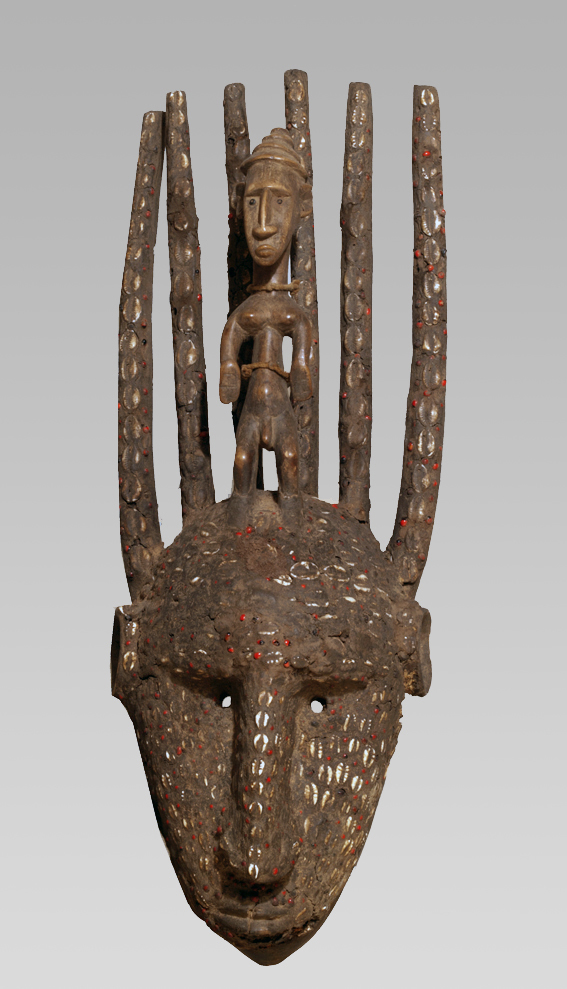 photo: tribalartforum.com/ identification no. P3071788.jpg |
|

