 |
 A Bamana maternity, seated on a four leg stool shortened, angeled legs,, holding in each hand a child in its hands, the breasts tapering and swept downwards, a elongated neck surmounted by a globular head with a circular fascial plane weathered, hard wood, several age cracks an remnants of encrusted karite. In contrary to the "washing-ceremony" Kate Ezra is describing "A Human Ideal in African Art", 1986; 22, the ritual remnants of this sculpture is a result of daily sacrification. Daba Diarra explained: The similar sculptures - obvious from the same carver and collected in the same region - have completly different surfaces. The reason is the different form of sacrification. In this case the women, who are bagging for fertility are taking the water, in which they have washed their hands after the meal, to lavish the sculpture. This form of sacrification creates a very specific patina, which we found also at some Malinke figures. Little particles of the meal, which are in the washingwater, are "feeding the sculpture" and are producing the specific encrustration of the figure. Another consequence is the reaction of the wood, which is for both sculptures the same bumbu wood - hard an heavy like iron. The first sculpture shows significant, weathered age-cracks and the second one has only some cracks at the bottom like the other one. The "daily sacrification with washingwater" slowed down the drying-process of the wood with the consequence that this sculpture has much less age-cracks. The value of children in women´s lives is expressed in a song sung by Bamana women after genital mutilation (Luneau 1974:539): "The child you bear "If you are not afraid of females, Master 1.600 - 2.000,- Euro Height: 72 cm |
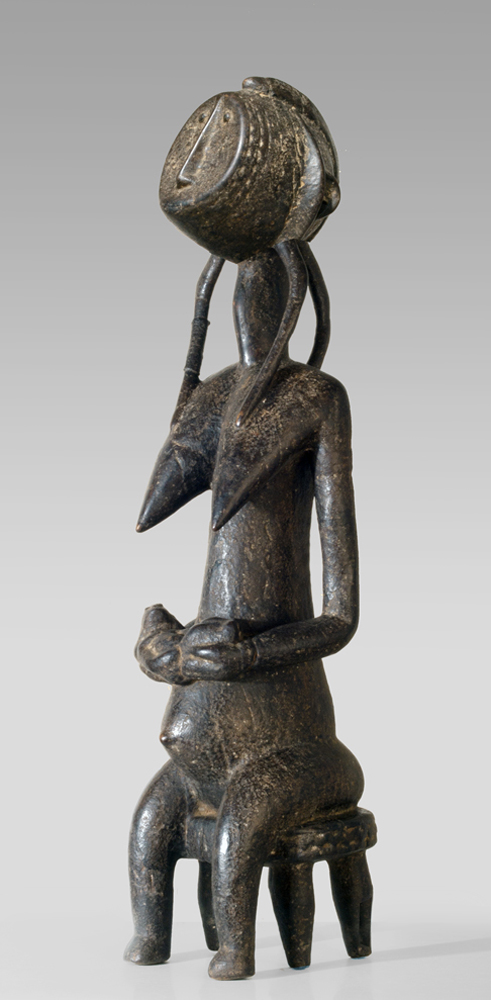 photo: tribalartforum.com/ identification no. P4306034.jpg |
 |