|
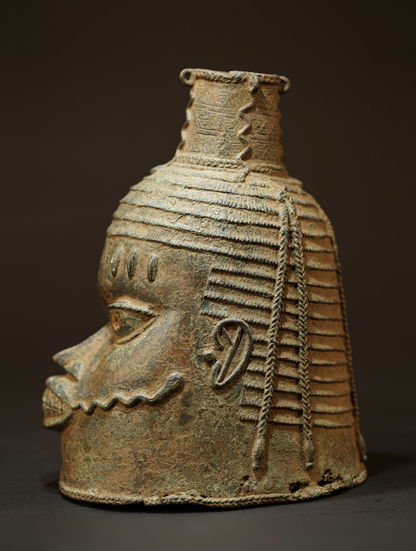
 A Benin bronze rattle-staff in tree parted segments, probably 18th/19th century, indicated by the similarity of the bronze staff Kate Ezra mentioned (photo) and the diagonal serpentlike line at the head from mouth to ear.,a special feature that we can observe with bronze heads of the 18th to early 20th century, two sculptures and a head with a conical cap, inside the slotted segments are pieces of metal that allow the rattling of the rod when moving. The staff was cast in two parts and can be put together.; traces of oxidations, TL analysis in request /plus 250,- Euro.
These staffs are from the Benin culture. They represent authority that is passed down in families, villages, priests or successors in general.[1] They would be used as parts of ancestral altars to commemorate current and past leaders. These were carved from wood for everyone except the Oba’s who would have them casted from brass and sometimes from ivory.
On the top of the staffs there would be a slit that would house a wood or clay cylindrical rattle. This rattle was used to call attention to spirits so that they would come to their altar and make themselves present. These staffs were lined up by the altar where they symbolized the community and the continuity from generations of being passed down. On the Oba’s staff there are often figures or mudfish represented. It’s also said that the spirits from past Oba’s are housed within the staff and continue to be passed on. 800 - 1.000,- Euro sold Height: 110 cm |
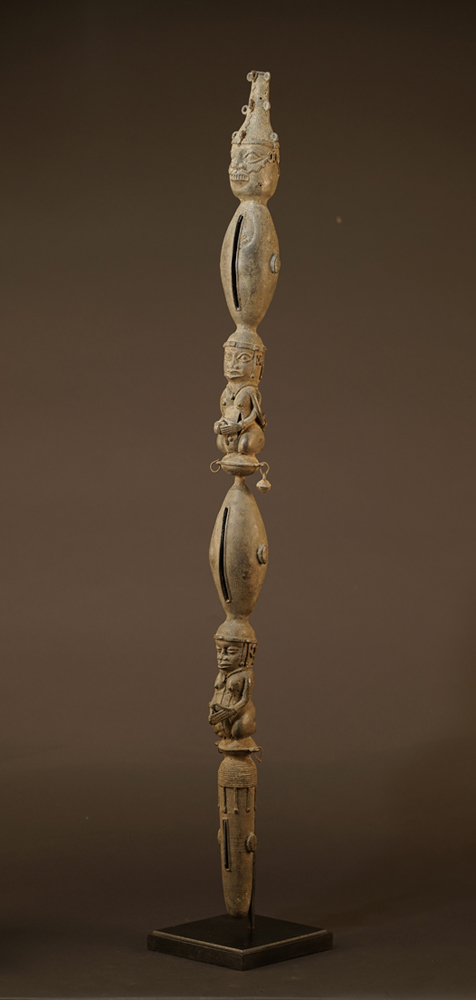 photo: tribalartforum.com/ identification no. DSC06355.jpg |

|