 |
 This large, decorative Yoruba Epa helmet mask, Nigeria, 20th centuryy, has large bulging eyes and is surmounted by a maternity sculpture holding a cock in one hand and a ritual vessel in the other, at the back a child, the domed coiffure striated, the whole figure is fragmentary with signs of old insect damages( the animals aren´t alive anymore), hard, heavy wood, attachment holes at the rim Epa helmet masks are used to promote health and wellbeing within a community by celebrating and honouring ancestors, cultural heroes and important individuals (including mothers, priests, farmers, kings and hunters) within a village. Originating in Ekiti and spreading to much of North-Eastern Yoruba towns (including Owo, Efon Alaye, Igbomina and Ijesa), the bi-annual, week-long Epa festival acknowledges the roles these individuals have played in building a successful community. Epa masqueraders perform slow, steady and controlled movements due to the huge and heavy masks they carry on their heads during performances. The masqueraders dance around the village and must jump on a raised mound to demonstrate their ability to maintain balance. It is believed to be a bad omen for the town (sometimes leading to misfortune) if the mask should fall of the performer’s head during the jump. When not in use, the masks are kept in shrines where villagers can pray to and provide offerings to ancestors. The olomoyeye (also called eyelashe, iyaolomo, olomoyoyo, omoniyi, olomopupo or omobomi; meaning 'owner of many children') mask depicts a mother with many children representing the important role women play in baring children and extending the lineage of men in the community. sold Height: 112 cm
|
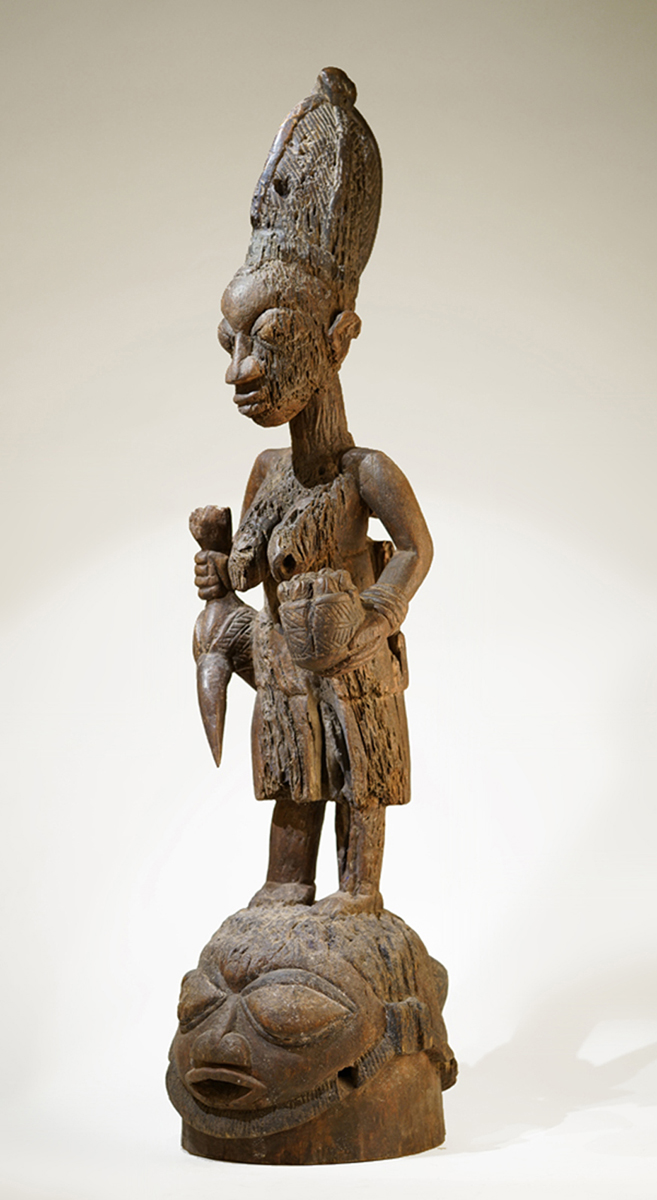 photo: tribalartforum.com/ identification no. DSC01501.jpg |
 |