 |
 The Benin plaque "four pages in front of a palace scene" occupies a special position among all Benin plaques because it shows the palace itself. Partly greenish oxidised patina, right foot of the left young man and the so-called spear (by Gunsch) of the man next to him broken off.
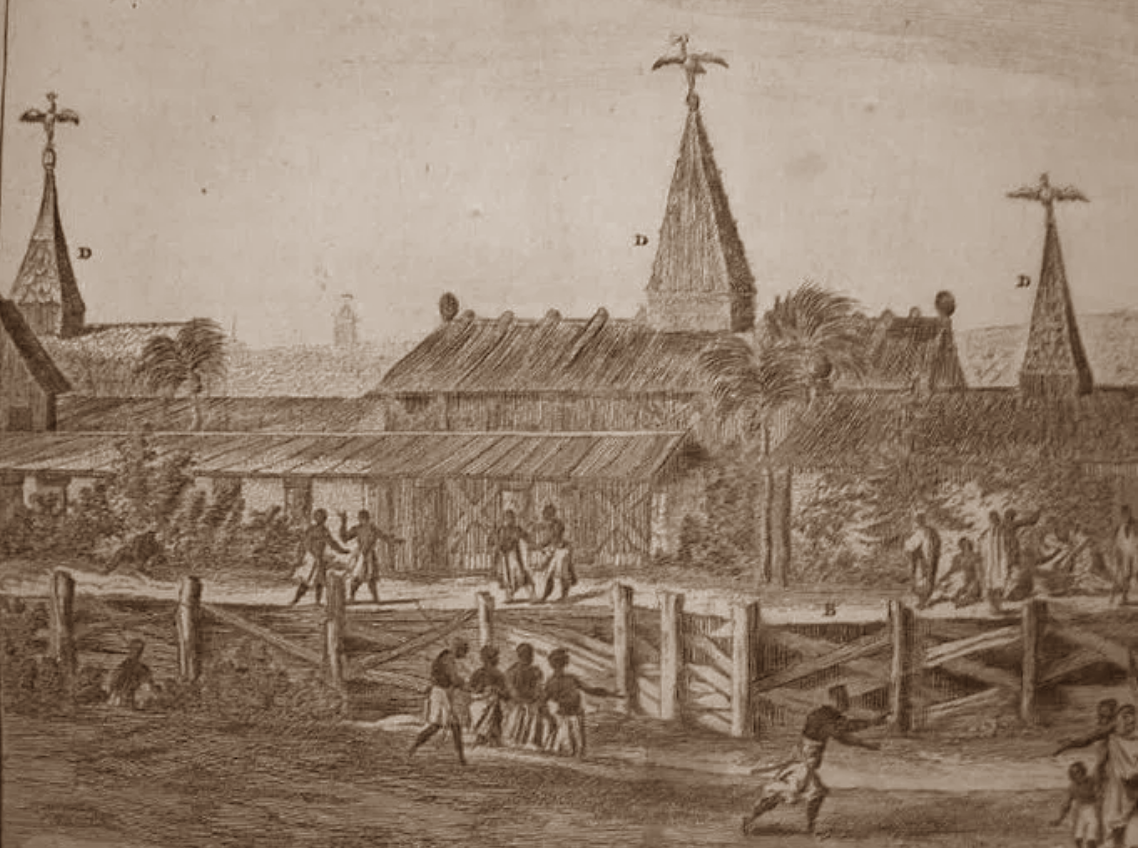
Engraving of the Benin City palaceof the Oba by Olfert Dapper (ca 1635-1689), 1686
The plaque „four pages in front of a palace scene“ in the British Museum (British Museum Af1898,0115.46) is one of two known plaques to depict the interior of the palace and the installation of the plaques themselves. … A plaque with a similar composition held in the Berlin Ethnologisches Museum likewise shows four young men before a palace veranda.“ Gunsch, 62
Two Benin plaques depicting the palace provide the only extant evidence of the plaques´ original installation. … (They) are therefore highly useful testimonies …“ Gunsch, 140
„Four young men flank an entrance to the palace compound or to a courtyard within it. The two outermost figures are emada, recognizable by their nudity. Wearing a single strand of beads around their neck, (simple armlets,) and a bead at the end of the braided strands framing their faces, the pages carry leopard-skin fans in their right hands. Between the emada, two young men stand holding shields and spears. Although the plain baldric and patterned skirts they wear are both shown tied at their left, the artist depicts the figures as mirror-images, both holding their spears closest to the entrance and their shields in the opposite hand. The rich patterning of their skirts and their more elaborate, braided hairstyle suggests their higher rank..."
What is perhaps most interesting about this scene is its setting. Unlike the vast majority of the plaque corpus, the artist has fully defined the figures´ surroundings, and it is clear that the four young men are at court, prepared to serve as guards and attendants. The particular section of the court they inhabit may also be explicit.“ Gunsch, 62
Contrary to Dr. Gunch probably half a dozen plates of this motif are known. Gunsch's work refers to the plates that were stolen in 1897 and does not take into account what was evacuated immediately before the conquest of Benin City or what was in neighboring locations outside of the capital of Benin. wj
According
of "Flange patterns by sub-type" Annex 2 Gunsch this plate belongs to "Rounded corner, double woven British Museum f1898,0115.112 left

https://jaenicke-njoya.com/Bi479/pages/DSC04916.htm
TL-analysis Kotalla: 340 years (+/- 23%).
According to the UNESCO Convention of 1970, a claim for repatriation expires one year after the authorities of a country of origin have learned where and with whom a cultural object is located. Wolfgang Jaenicke Gallery therefore always informs about every newly imported object. Especially about the bronzes from Nigeria shown on this page, which are published in the internet and are accessible to everyone. Organizations dealing with restitution issues, but also freelance art historians employed by the state, such as restitution experts like Benedicte Savoy, are regularly informed about objects in the Galerie Wolfgang Jaenicke.
Every buyer of an art object, regardless whether it is made of wood, terra-cotta or bronze, must be aware that from a European legal perspective, traditional African art usually came from the respective African country of origin with insufficient export documents. Galerie Wolfgang Jaenicke, Berlin, tries to do justice to this dilemma by acting with the greatest possible transparency. The export policy of African states is problematic for art historical research, since African and European dealers usually work covertly due to diffuse legal situations and important information that was passed on from trade to science before 1970 tends to be lost.
In case of uncertainties, please contact the managing director of Jaenicke-Njoya GmbH, Wolfgang Jaenicke. It is in the interest of the gallery to clarify any questionable situation with all available means.
More info on request.
Height: 49 cm
Weight: 9,2 kg
|
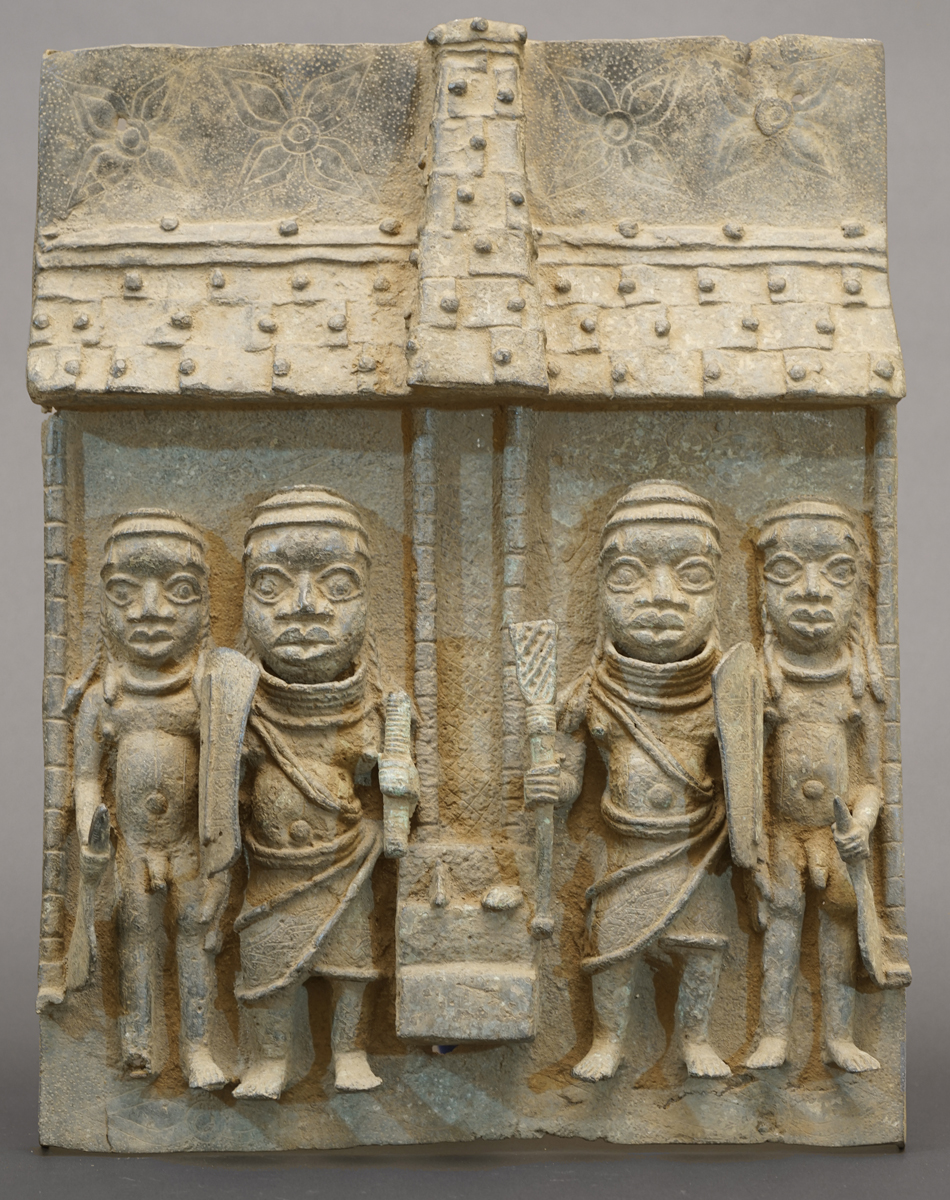 photo: tribalartforum.com/ identification no. DSC04909.jpg
 |
|
