 |
 An Akwanshi monolith, Nigeria, Crossriver region, related to the Nselle or Nkrgor style, incl. plinth, Philip Allison, African Stone Sculptures, plate 36, 37, 38., incl. stand In abandoned villages of certain Ekoi sub-tribes in the region of Ikom, deep in the jungle, around 300 large figures made from dolerite and sandstone have been found. The Ekoi claim that their forfathers have offered human sacrifices to the "Akwanshi" as these stones are called. However, they are unable to satisfactorily explain the exact significance of these figues - presumably they represent chiefs invested with sacerdotal function. Allison aaO, p.25 -35 Akwanshi stone sculptures were first documented by British anthropologist Charles Partridge at the turn of the twentieth century. In his book Cross River Natives (1905), he identified their presence within the Ikom area. However, it was Allison Philip, a British-colonial forestry specialist, who conducted the first organized research on the monoliths in the late 1960s. Based upon conclusions derived from archaeology in the area, Eyo Ekpo, director of Nigeria’s Department of Antiquities and head of Nigeria’s National Museums, suggests a plausible date that compares with the Nok culture (c. 300 BC). But it is a combination of the aesthetic appeal and the source and meaning encoded in the monoliths, which are yet to be fully deduced, that continues to intrigue and excite many scholars and collectors. 3.200 - 3.600 EuroHeight: 64 cm |
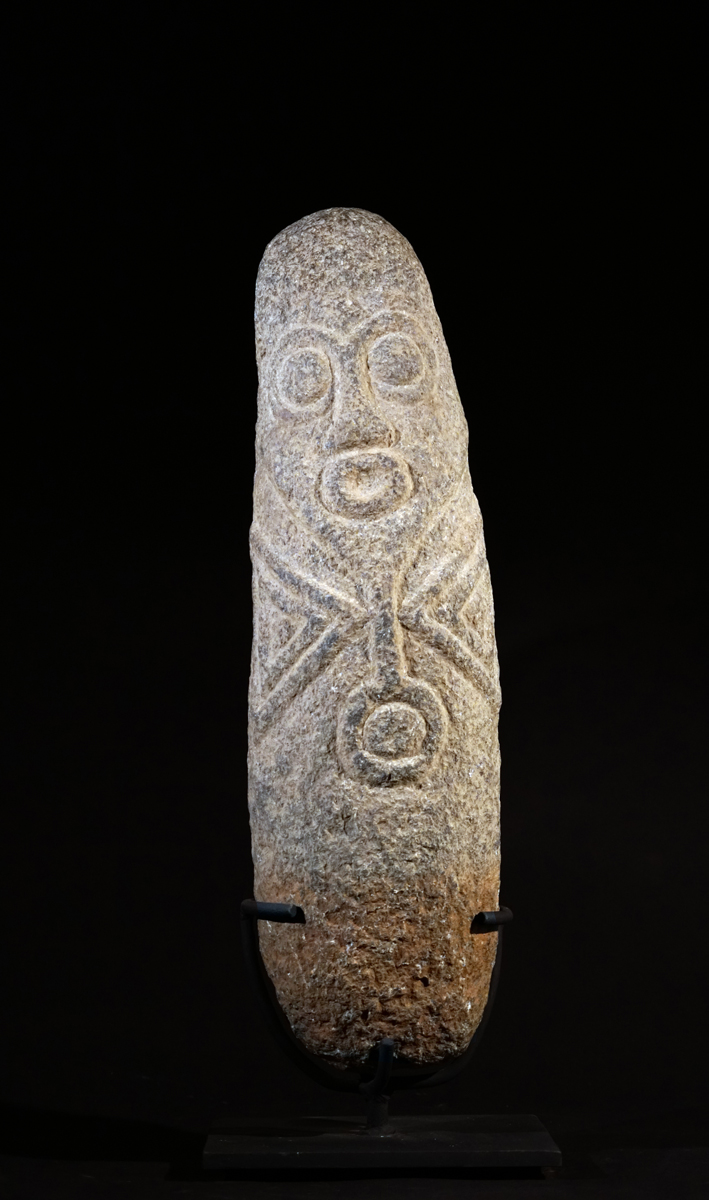 photo: tribalartforum.com/ identification no. DSC09398.jpg |
 |