|
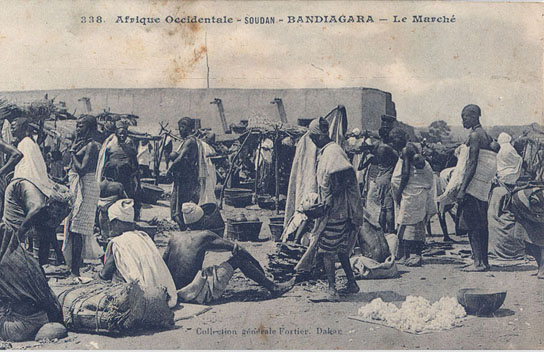
 A Dogon "White Monkey Mask" with an encrsted patina, heavy, hard wood, purchased in Bandiagara 2004. There are nearly eighty styles of Dogon masks, and for the most part they all utilize the use of various geometric shapes in their design, independent of the various animals they are supposed to represent. Most masks have large geometric eyes and stylized features and are often painted or colored with various substances. The Dogon continue an ancient masquerading tradition called "Dama" which commemorates the origin of death. Dama memorial ceremonies are held to accompany the dead into the ancestral realm and restore order to the universe. In these ceremonies there are a large number of performers, often a few hundred, and it is considered absolutely necessary to the ceremony. In the case of the dama, the timing, types of masks involved, and other ritual elements are often specific to one or two villages and may not resemble those seen in locations only several miles distant. The masks also appear during baga-bundo rites performed by small numbers of masqueraders before the burial of a male Dogon. sold Height: 34 cm |
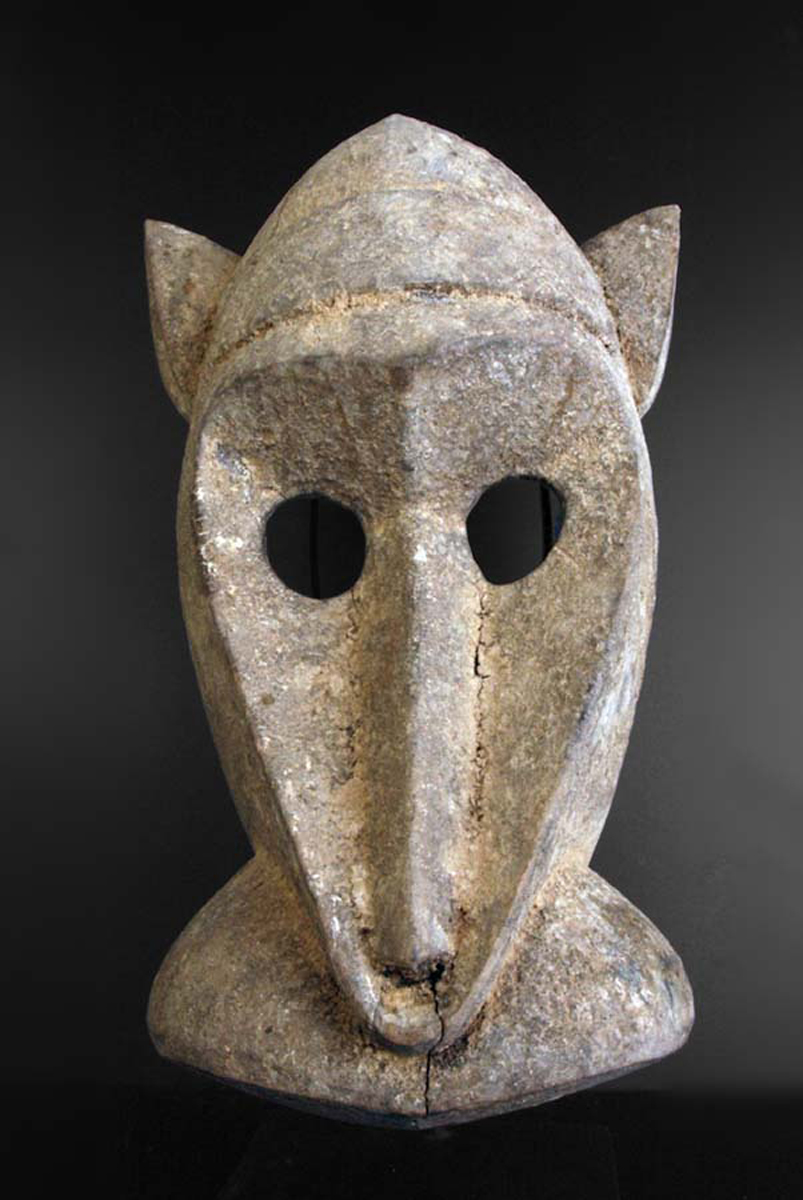 photo: wolfgang-jaenicke.com, for more information, please write us an e-mail with the identification number of the photo identification no. P3069974.jpg |

This mask represents Omono, the White Monkey. The dancer wearing the mask sits aside from the performers who are conducting an important public ritual. During the intermission, children invite Omono to perform his dance that mimics the antics of the white monkey. The dance is very comical and provides comic relief during otherwise serious or sad ceremonies. |