 |
 A miniature Songye costume sculpture, Zaire, with a Kifwebe mask, standing on a wooden plinth, the whole figure is covered with intricate knit string, making a western eye think of metallic mesh medieval knights would wear, the hips are clothed with a piece of fur in place of a skirt, the neck is surrounded with long bands of straw, at the top of the back there are feathers, the head is mounted with a miniature Kifwebe mask which is attached to the mesh costume as the Songye traditional style does it. “Certain masking traditions of the Congo River basin personify local control of mystical power. Striated face masks known as kifwebe probably originated in North Shaba, an area inhabited by both Songye and Luba groups. Significant departures in the role and formal interpretation of this art form subsequently developed in each culture. Among the small Songye chiefdoms along the Lomami River, maskers were emissaries of the ruling elite, who relied on the ideology of witchcraft and sorcery to sustain their rule. These kifwebe members commanded a body of esoteric secret knowledge visually encoded mnemonically in the mask's features.” Further literatur: Hersak, Dunja. 2010. "Reviewing power, process, and statement: the case of Songye figures". African Arts. 43: 38-51. Neyt, François. 2009. Songye: The Formidable Statuary of Central Africa. Munich: Prestel. Petridis, Constantine. 2009. Art and power in the central African Savanna: Luba, Songye, Chokwe, Luluwa. Cleveland, Ohio: Cleveland Museum of Art. sold |
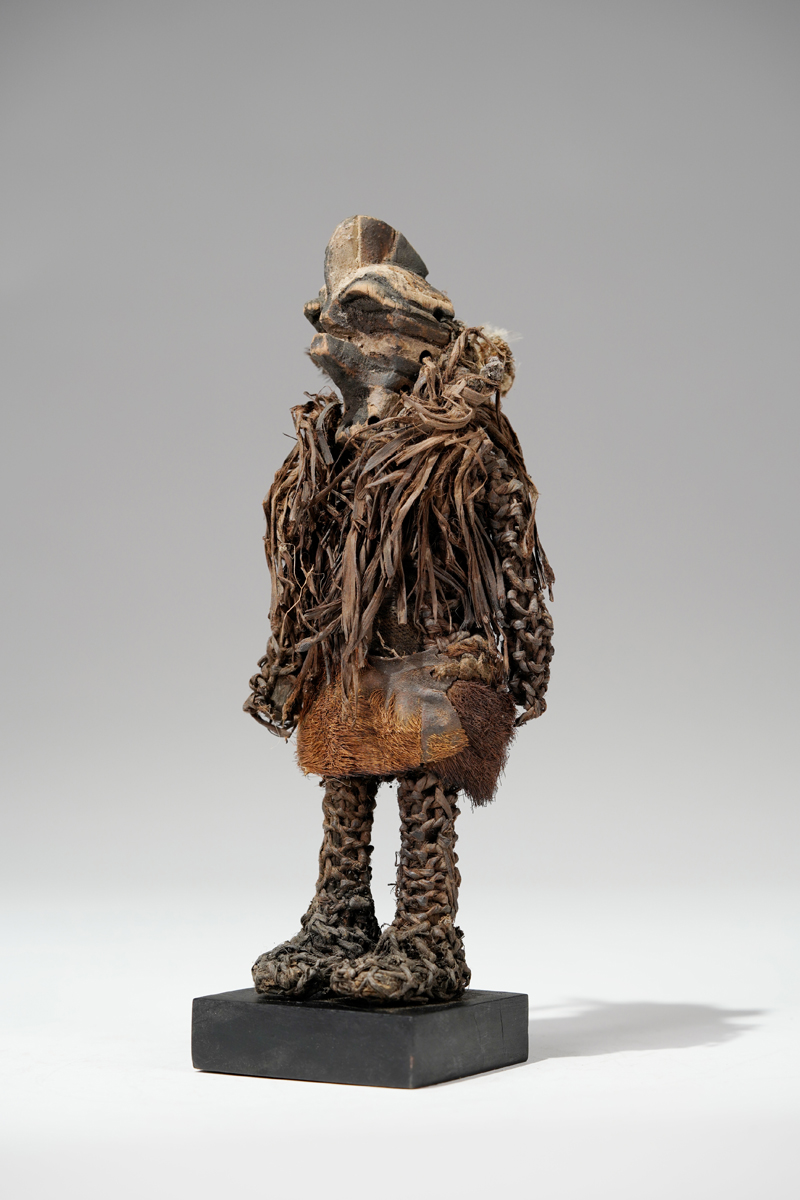 photo: wolfgang-jaenicke.com, for more information, please write us an e-mail with the identification number of the photo identification no. _XBD100327.jpg |
 |