 |
 A male Mambila sculpture, Nigeria, standing on wedgeshaped feet, rhomboid legs, the torso with a protruding abdomen, high abstract arms with hands touching a pointed goatee, the heartshaped fascial plane, a blockshaped mouth beneath a triangular nose, framed by pointed button-eyes, on top a coiffure in form of small wooden nails; grey to ochre surface. "There are two types of sculpture: simple pieces tied together (kike) and anthropomorphic figurines (tadep dua). Wood figures are used to represent the ancestors, who are responsible for the hamlet’s wealth, sometimes called ‘guardian’ figures. The figures are recognizable by the heart-shaped face and the pigments used. These figures and masks, talked about previously, are not allowed to be seen by women, and are kept in ritual storehouses in front of a painted screen, hanging on a net and guarded by the head of the family." Source: Milwaukee Public Museum. Jacque Kercache, les chefs-dóevre du monde entier naissent libres et éaux, éd. Adam Brio, 1990. sold Height: 88 cm |
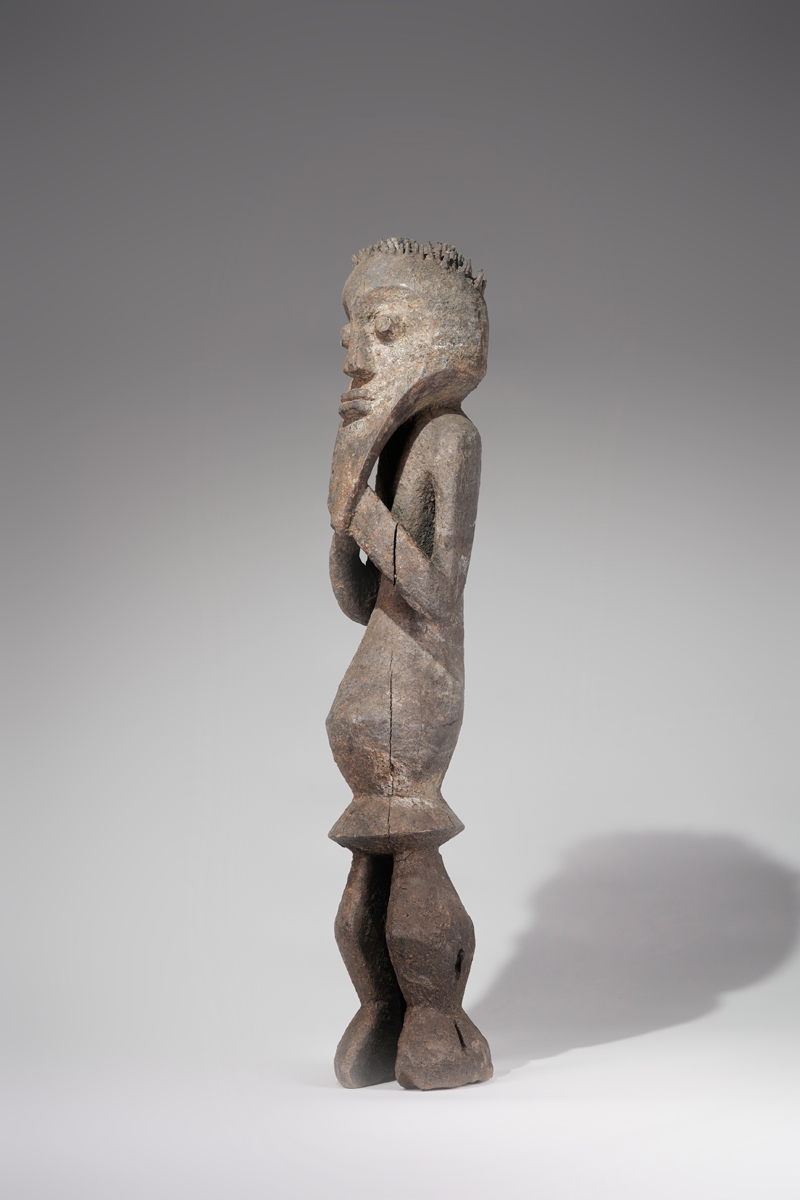 photo: wolfgang-jaenicke.com, for more information, please write us an e-mail with the identification number of the photo identification no. _XBD101014.jpg |
 |