|
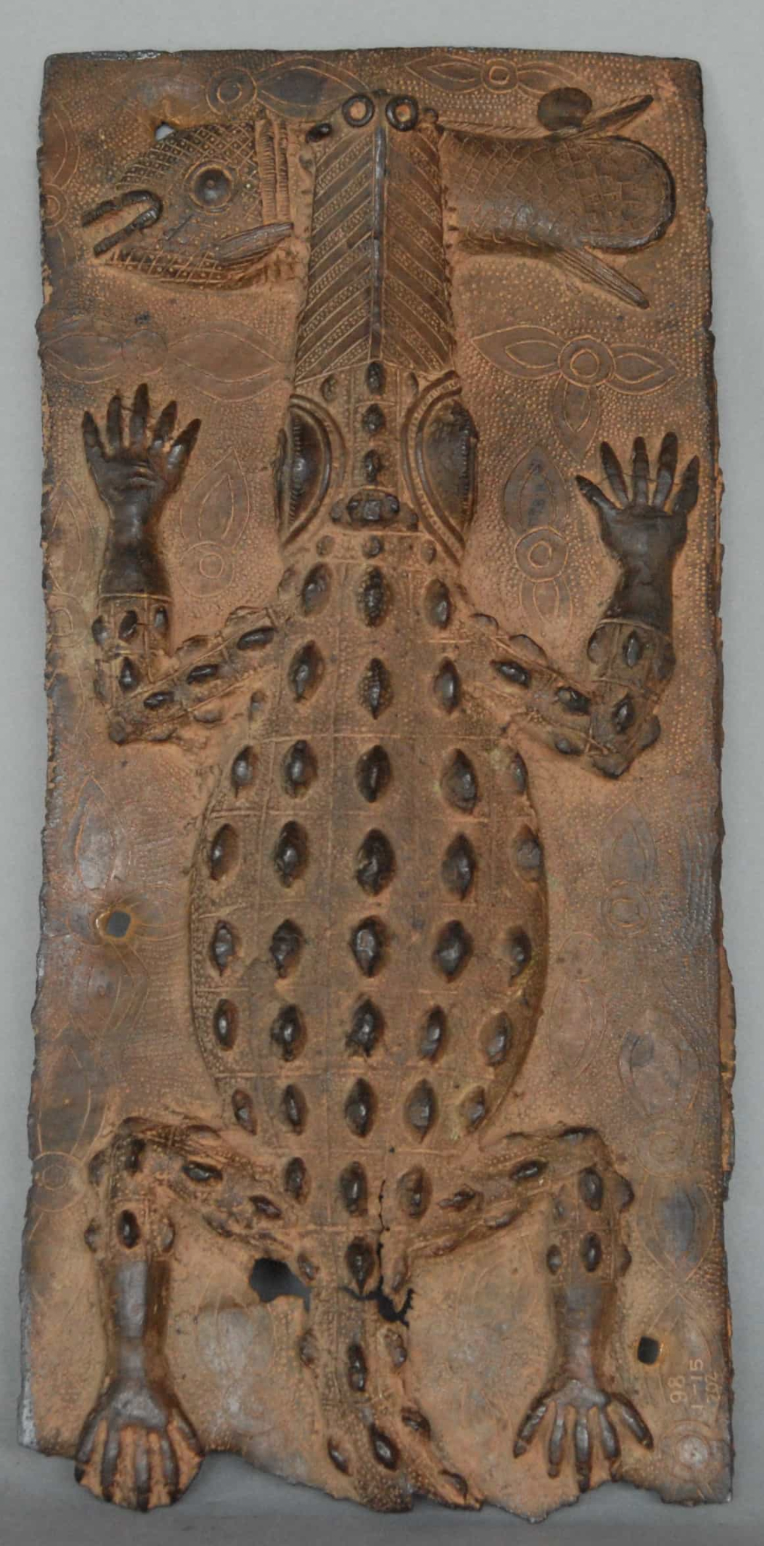
 A fragmentary Bronze Plaque, a copy in the style of Benin, called "Ama", a crocodile fetching a fish. KathrynWisocki Gunsch, The Benin Plaques, patterns of authorship, page 74, see anex 2 flange patterns by sub-type, in comparison photo, photo 3 and 5 of this exemplare. Another argument why copies of Benin bronzes in private collections should be included in the Digital Benin catalogue. They could not only offer an important tool to examine the retrospective elements of the Benin Bronze Foundry more closely and at the same time lead to more transparency. Specimens acquired through criminal acts could also be identified more easily in this way, since the Art Loss Register fundamentally rejects the registration of Ife and Benin objects, which is certainly also due to the incomprehensible reversal of guilt in the restitution debate, as demanded in the Sarre/Savoy Report. This does science a disservice, as it only encourages a tendency that leads to an opaque black market. "Found undocumented in the gallery and later documented as retrospective object" National Mueum Benin City.
sold Height: 53 cm |
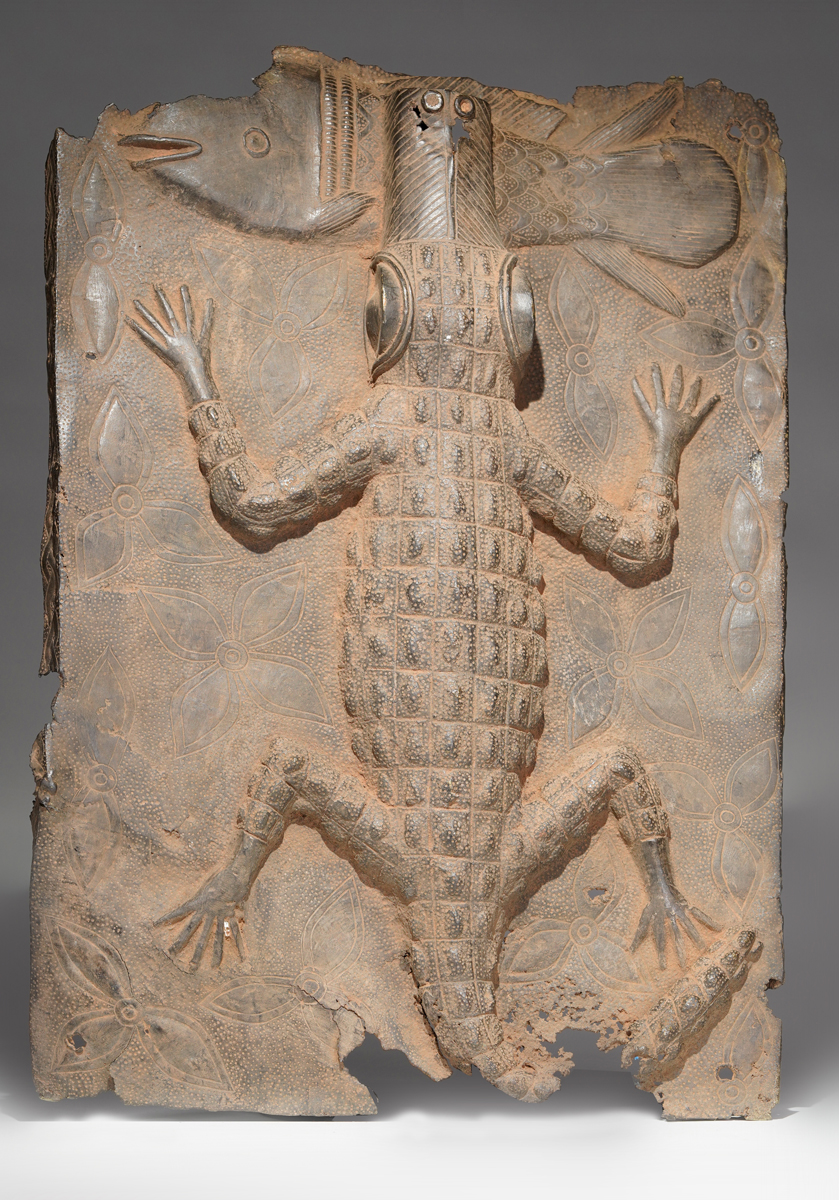 photo: wolfgang-jaenicke.com, for more information, please write us an e-mail with the identification number of the photo identification no. _XBD101211.jpg |
 |