|
 A rare Adan horse-rider, Ghana, standing straight, arms midway bent, long slender torso, wide shoulders, thick neck, a small rounded head with simple features, the hole in the horse is for ritual medicine use; partly covered with kaolin, signs of longlasting use. "The Adan are a small sub-group of the Ewe people and live in south-east Ghana, close to the border with Togo. They are believed to only number about 2,200 people. They are also known under a variety of names, such as Ada, Adangme, Adangbe, Adantomwi, Agotime, Dangbe or Ga, and they believe that they originally came from southern Egypt, leaving there in the 15th century. Adan oral history suggests that they travelled through present day Ethiopia before arriving in Nigeria, where they settled in the towns of Ife and Tado. Once there, the people split into four distinct groups. The first moved group moved to Togo, where they became known as the Ewe, the second group moved to Porto Novo, on the coast of Benin, and became associated with both the Yoruba and the Fon people. The third group settled in the district of Keta, in Ghana, where they became the "Ewe of Ghana", while the fourth group moved to the area around Ada, in south-east Ghana, some 35km from Accra. This fourth group became the present day Adan. Interestingly, the Adan language appears to be related to that of the Igbo people of eastern Nigeria, and thus appears to confirm that the Adan did, at one time, live in Nigeria.The Adan are a small sub-group of the Ewe people and live in south-east Ghana, close to the border with Togo. They are believed to only number about 2,200 people. They are also known under a variety of names, such as Ada, Adangme, Adangbe, Adantomwi, Agotime, Dangbe or Ga, and they believe that they originally came from southern Egypt, leaving there in the 15th century. Adan oral history suggests that they travelled through present day Ethiopia before arriving in Nigeria, where they settled in the towns of Ife and Tado. Once there, the people split into four distinct groups. The first moved group moved to Togo, where they became known as the Ewe, the second group moved to Porto Novo, on the coast of Benin, and became associated with both the Yoruba and the Fon people. The third group settled in the district of Keta, in Ghana, where they became the "Ewe of Ghana", while the fourth group moved to the area around Ada, in south-east Ghana, some 35km from Accra. This fourth group became the present day Adan. Interestingly, the Adan language appears to be related to that of the Igbo people of eastern Nigeria, and thus appears to confirm that the Adan did, at one time, live in Nigeria..."
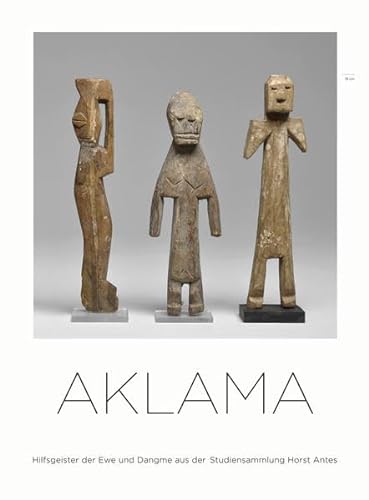
Lit.: Studienstiftung Horst Antes (Hrsg.): Aklama: Hilfsgeister der Ewe und Dangme aus der Studiensammlung Horst Antes / Helping spirits of the Ewe and Dangme People from the Study collection of Horst Antes, 2016. sold |
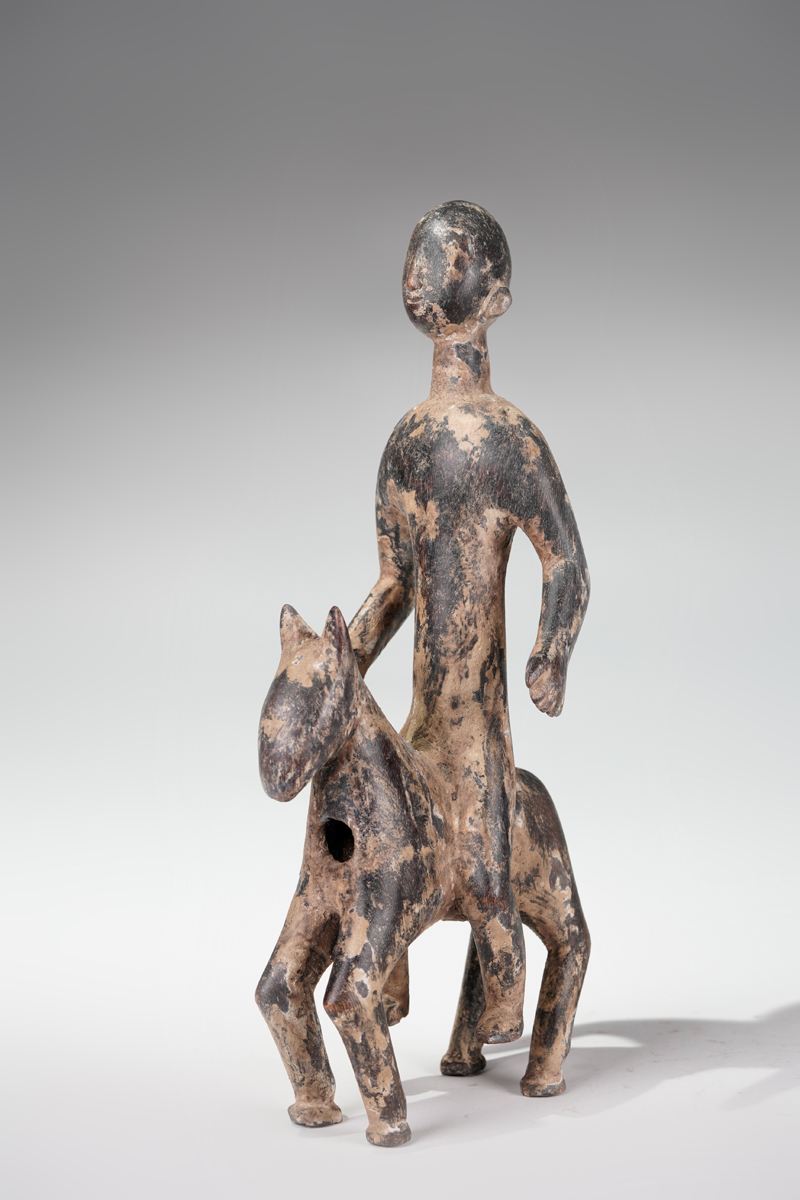 photo: wolfgang-jaenicke.com, for more information, please write us an e-mail with the identification number of the photo identification no. _XBD101650.jpg |
 |