 |
 A Songye stool, Zaire, depicting a female figure standing on a wooden base, knees bent, thick stomach, conical breasts, the arms in a square position, which are carrying the stool part, a thick cylindric neck carrying the stylised head, with expressive features in the style of Songye; some cracks, signs of use. “The Songye knew two types of statues of power (minkishi). While the larger statues protected the well-being of all members of a village, the smaller ones served for the private use of an individual and were commissioned by a diviner (nganga) to the specific needs of that person . The Songye made prayers to ancestral spirits through personal minkishi for multiple reasons. While some of them sought to protect their families and themselves, others were used to promote fertility, hunting or agriculture. The minkishi were also used to protect and cure certain illnesses. Whenever the nganga treated a patient with herbal medicines, he might also prescribe the treatment of a nkishi as a form of protective strengthening. The creator of the statue was not necessarily the diviner himself. Among the Songye, the wooden statue was considered an “empty container” before the nganga transformed it into a powerfully endowed ritual object. The cavities dug in the middle of the stomach and on the head contained magical substances (bishimba) to strengthen the object." Source: Christies. Marijnissen, R.H., Cent Chefs-d'œuvre du Musée Ethnographique d'Anvers et de Collections Particulières. Sculptures Africaines : Nouveau Regard sur un Héritage, Anvers, 1975, p. 66, n° 96 sold Height: 45 cm |
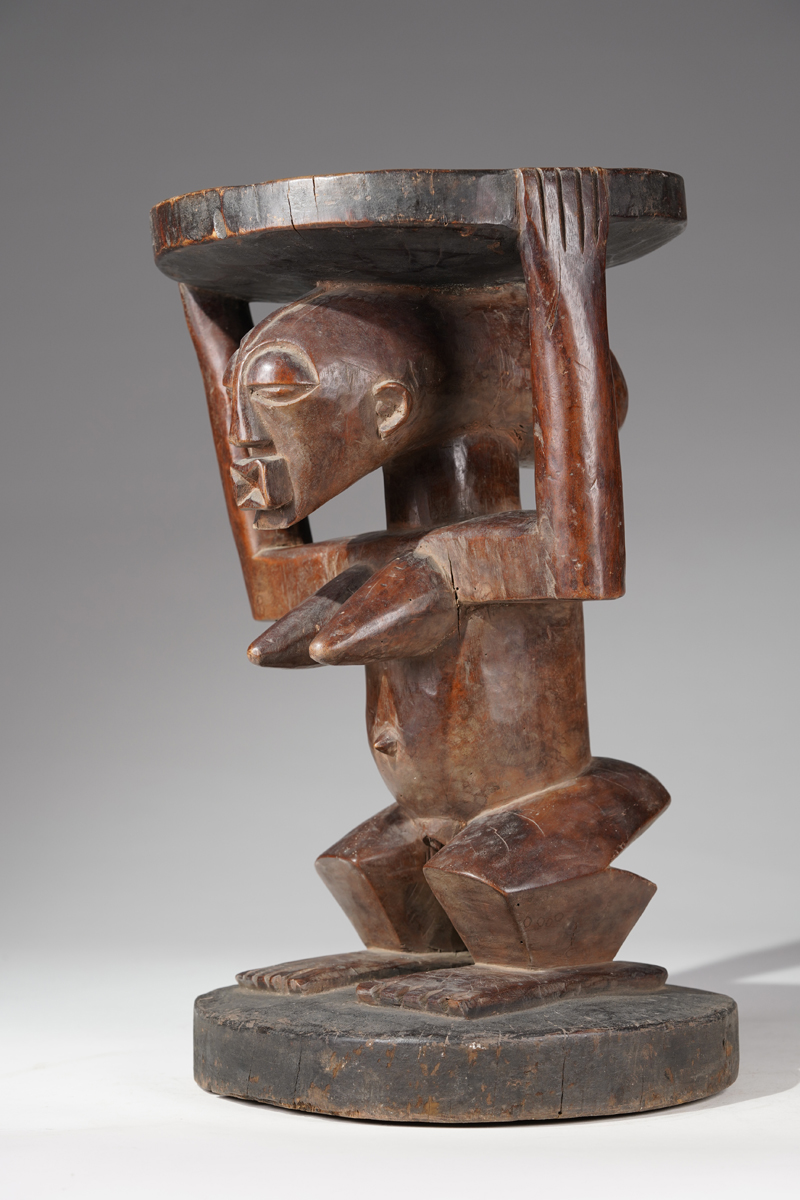 photo: wolfgang-jaenicke.com, for more information, please write us an e-mail with the identification number of the photo identification no. _XBD119069.jpg |
 |