 |
 An Aklama couple, SouthEast Ghana, standing on a wooden base, both carved in a similar way: shourt legs and a slight cut to signify the feet, a flat long body that slims at the top, small arms coming out of it, a long wide neck carrying the head, both have their own head shape and are composed of small indentations to suggest facial features of a mouth, and two slit eyes, the heads and body are painted with vermillon and blue patina; signs of use. “Who are these West African figures with such enormous presence, returning our gaze so forcefully and self confidently? What kinds of ideas and expectations are connected to them? They have however been suffused with collective experiences and personal intentions in the course of their production given them an essential spirit that endures beyond the physical existence of those who carved them. In addition, there striking patina swathes them like decorative mantel reflecting the nose contact between the figures and their former owners over the course of many years. Perhaps as objects aura is determined by the veneration people offer it. The helper spirits from Ghana once mediated between gods and humans and were consequently revered with sacrifices offered up tp them. Now decontextualized and accorded a new position, they have been lifter out of their religious ritual setting and set in a different context once defined by the aesthetics of art. Source: AKLAMA, Helper spirits of the Ewe and Dangle, the the study collection of Horst Antes. Studienstiftung Horst Antes. Further projects involving these sculptures, he Montessori school : https://www.aklama.net/Aklama-Montessori.html sold |
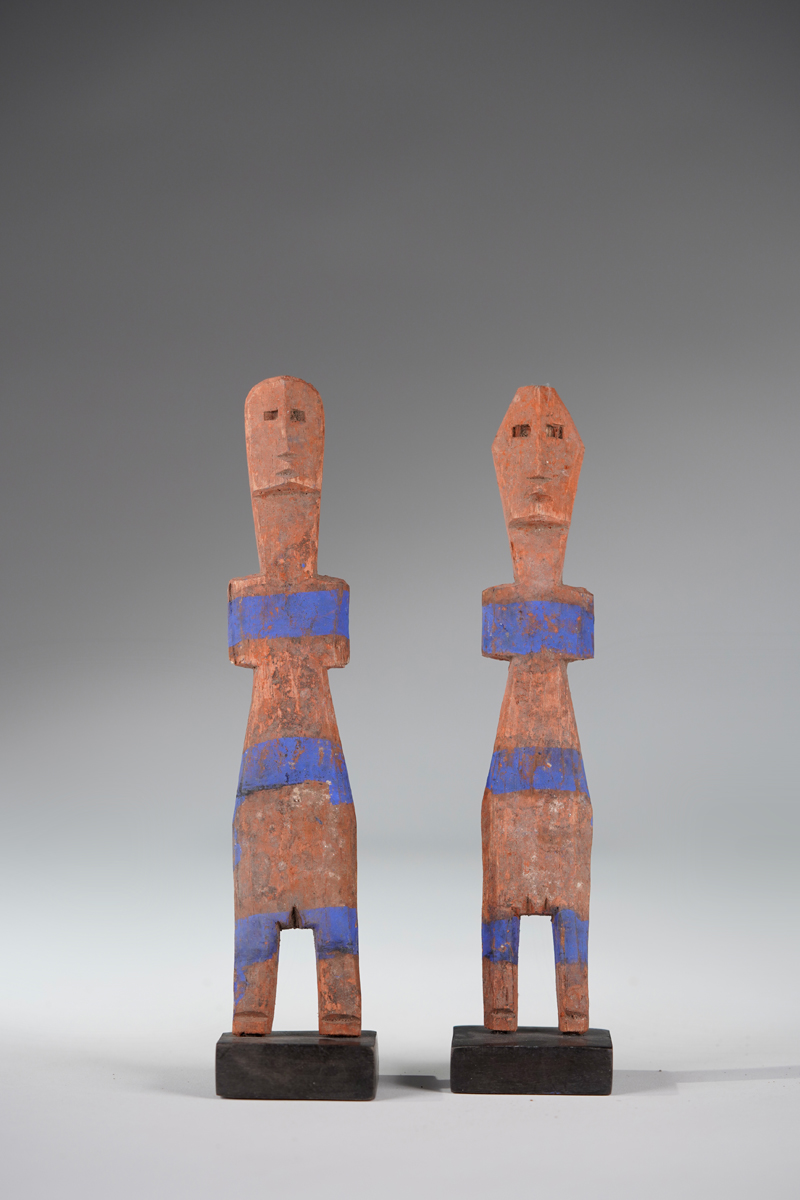 photo: wolfgang-jaenicke.com, for more information, please write us an e-mail with the identification number of the photo identification no. _XBD119860.jpg |
 |