 A small Luba caryatide stool supporting a circular disk, a repaired old crack on top and on the left side of the sculpture, fine aged patina. "Female caryatid stools were part of each Luba king's treasury and the most important emblem of his kingship. Stools figured prominently in royal investiture rites where "the new ruler swore his oath of office and addressed his people for the first time as king" (Roberts and Roberts 1996: 18, text to cat. 2). The purpose of caryatid stools was, however, not as much functional as it was symbolic. The female figure made reference to the matrilineal dynastic succession. When a Luba king died his residence was preserved as lieu de mémoire where his spirit was alive and incarnated by a human medium, called mwadi. Objects from the deceased king's royal treasury became objects of devotion and were ritually venerated. The present lot shows traces of palm oil and scraping on the lips and nose of the caryatid figure. The ritual removal of small pieces of wood attests to the stool's spiritual importance as source of sacred substance." Roberts and Roberts 1996: 18, text to cat. 2. Mary Nooter Roberts and Alison Saar, Body Politics: The Female Image in Luba Art and the Sculpture of Alison Saar, Los Angeles, 2000, p. 59, cat. 75. sold Height: 25,5 cm |
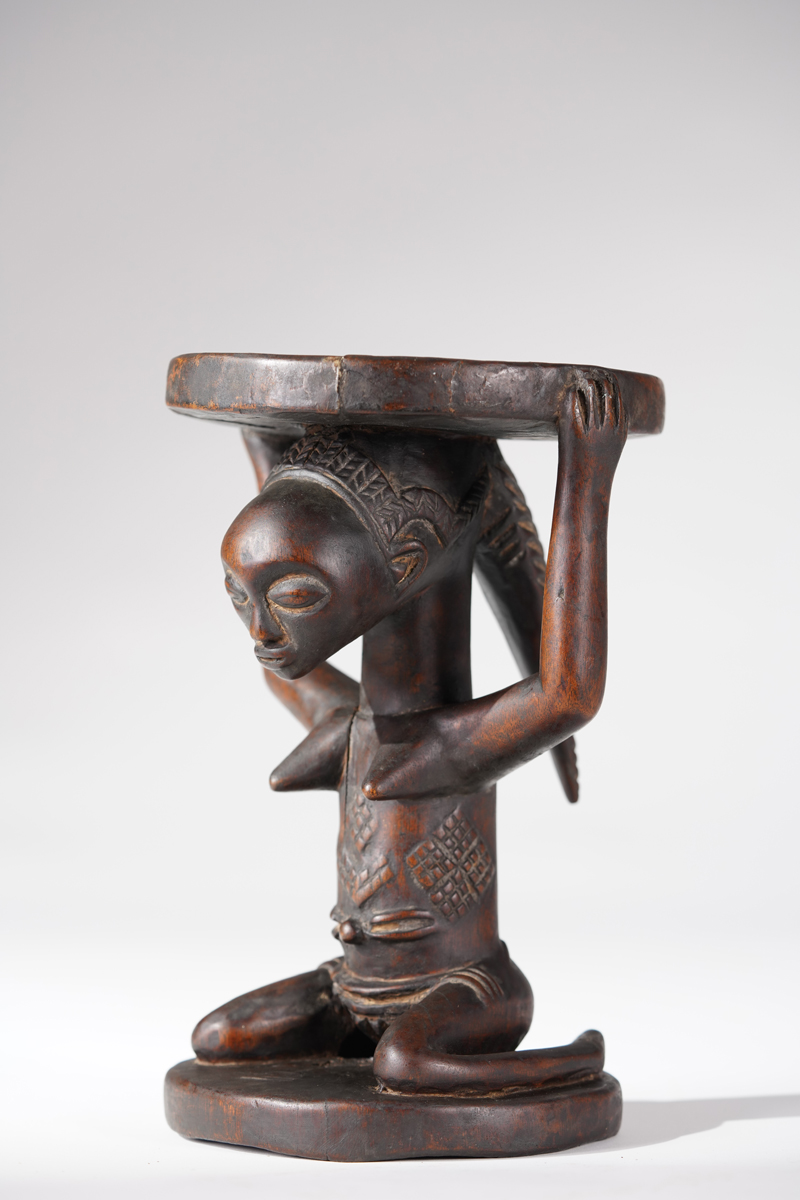 photo: wolfgang-jaenicke.com, for more information, please write us an e-mail with the identification number of the photo identification no. DSC09595.jpg |
 |