 |
 An Epa Oloju Foforo (Olojufoforo) mask, Yoruba, Nigeria, region Ekiti. There are three female figures kneeling on the superstructure of the mask. The larger one is a priestess of Oshun, a river goddess who enables conception, and two attendants, who hold bowls. The attendants similar in dimension and flanking positions, create a symmetrical composition. The Oloju Foforo mask was first painted with black pigment on the structure and the bar on which the figures kneel. White was then applied to the cowries shells and the face of the mask. The composition of the pigments still remains unknown. From the analysis of masks in the similar time period reveals that most colors were made from natural sources such as eggshells, indigo and excreta of birds or snakes. The name of the mask means “the owner of the deep-set eyes”, most probably refers to the rectangular eyes on the facial mask. Other than the analysis of the form and material, to understand fully the significance of the Oloju Foforo mask, one has to comprehend how the mask is identified and the relationship between the mask with the performer and the performance. ‘Olojufoforo’ masks are very rare. This is not only because the Yoruba use helmet and face masks much more, but also because these ‘Olojufoforo’ masks are only present in a small area, in and around the town of Osi, in the northeast of the Yoruba region (Ekiti province). For only in this region does this mask type belong to the highest city god of Osi, ‘Baba Osi’. And only there do such ‘Olojufoforo’ masks dance in his honour in ritual feasts and processions. Source: Medium, Olojufoforo Headdress. Lit.: Schaedler, Lexikon Afrikanische Kunst und Kultur, 1994, p. 315; Drewal, African Artistry, 1980. already posted sold Height: 99 cm |
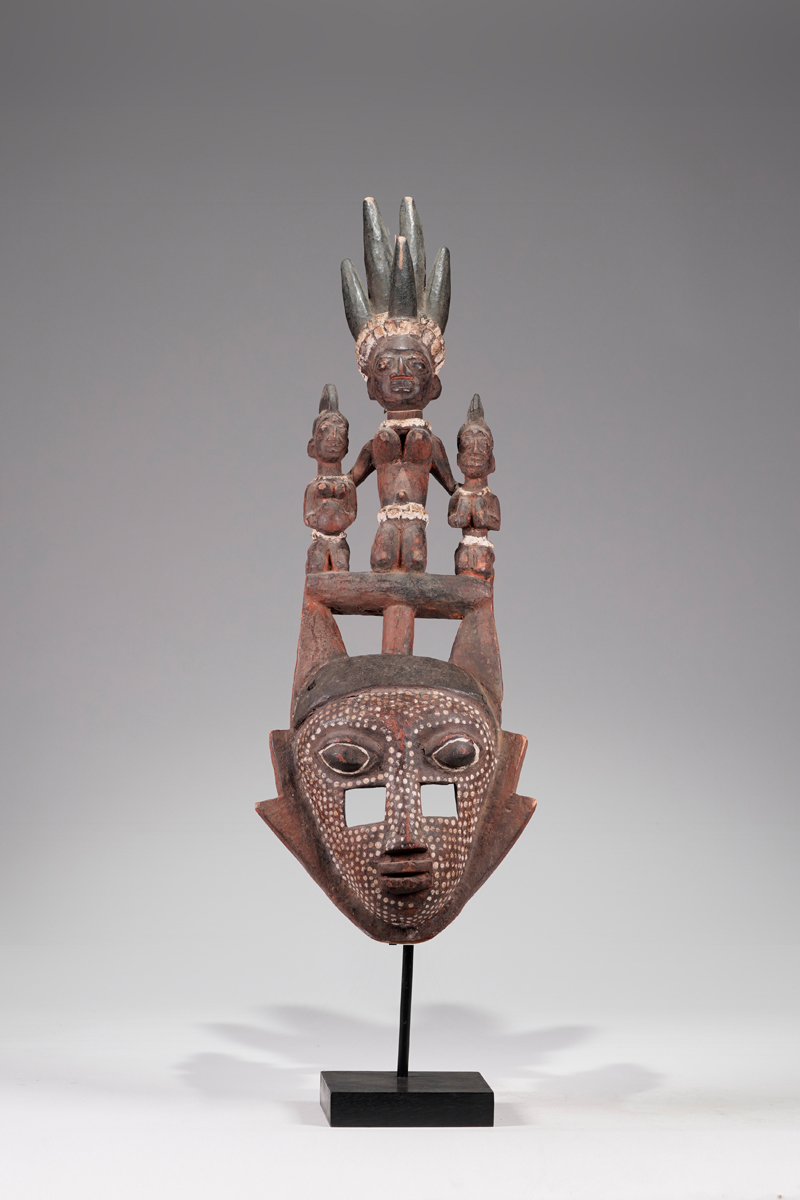 photo: wolfgang-jaenicke.com, for more information, please write us an e-mail with the identification number of the photo identification no. _XBD112312.jpg |
 |