 |
 A Shango staff, depicting a kneeling female figure, holding onto her two breasts, she is sitting upright, her head coiffed with the Shango's double axe, fine brown to blueish patina, partly shiny by an intensive touch patina. "The oshe Shagon baton is carried in rite and procession by the god of Thunder´s devotees" "The Yoruba people are known for their remarkable skills in art and craft. The majority of their artifacts date back to the late 19th and mid-20th centuries, and are often attributed to a particular carver by name, which is an uncommon practice in African art. „Among the objects used to honor Shango is the oshe Shango, or dance wand. It is carried by Shango priests and devotees during public worship activities and enshrined on the deity's altar. … The priestesses or female supplicants often depicted on oshe Shango represent Shango's benevolence as he bestows the blessing of children upon his faithful worshippers and protects children, especially twins (ibeji).“ Read more: Shango dance wand ("Oshe" Shango"). "Among the objects used to honor Shango is the oshe Shango, or dance wand. It is carried by Shango priests and devotees during public worship activities and enshrined on the deity's altar. … The priestesses or female supplicants often depicted on oshe Shango represent Shango's benevolence as he bestows the blessing of children upon his faithful worshippers and protects children, especially twins (ibeji).“ Read more: Shango dance wand ("Oshe" Shango"). Further lit. Yoruba: Nine Centuries of African Art and Thought, Drewal, Pemberton III, Abiodun, Wardwell, Yoruba: An Art of Life, Cooksey and Mato, Ibeji: The Cult of Yoruba Twins, Chemeche. sold |
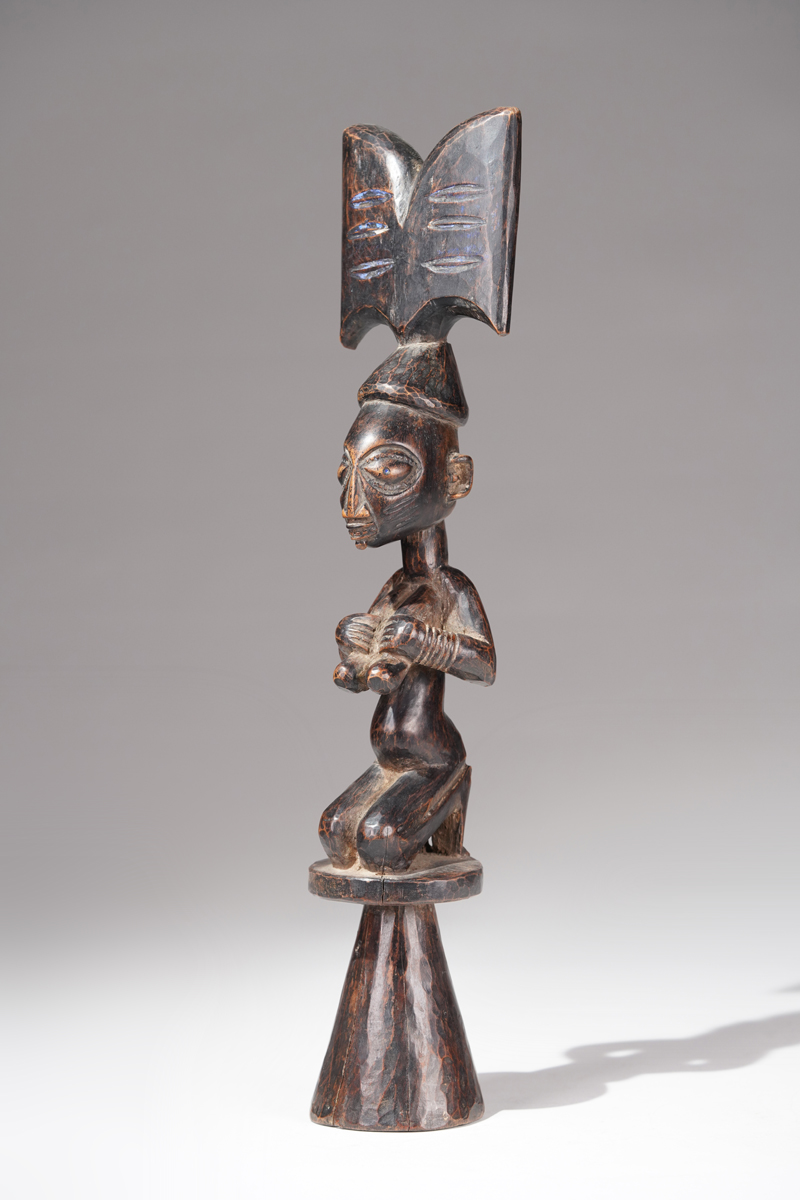 photo: wolfgang-jaenicke.com, for more information, please write us an e-mail with the identification number of the photo identification no. XBD122795.jpg |
 |