 |
 A Guerre/We mask, of rectangular shape, tubular mouth, a small pointed stout nose, two slit small hollow eyes, with two horns curing inwards and two coming out of the side of the face that join in the middle of the face, the top of the face is blocked with a large rounded bun like element. The rear of the mask is punctured with holes where the costume would have bene attached. This carving is sleek and glossy, usually covered with dark patina : the residue of Kola nut and blood sacrifices; traces of ritual use, some cracks. Certificate of origin and provenance. "The border between Cote d'Ivoire and Liberia cuts across several ethnic groups, including the Dan, Wee, Kran, and Grebo. In Dan society, dangerous immaterial forest spirits are translated into the forms of human face masks. Whether or not they are worn, such sculptures are spiritually charged. Male performers, gle-zo, experience a dream sent by the mask spirit that allows them to dance it. In performance, the masks are integrated into the hierarchical system that governs political and religious life." Lit: The Arts of the Dan in the West Africa, Eberhard Fischer and Hans Himmelheber, 1984. "Östlich und westlich des oberen Cavally dehnt sich ein Kunstgebiet, das Völker zweier ganz verschiedener Sprachgruppen umfaßt und doch sowohl im Stil als auch in der besonderen Bedeutung der Schnitzereien eine Einheit bildet. Es handelt sich um die "mande -fu" sprechenden Ethnien der Konor und Guerze nördlich des Mount Nimba in der Republik Guinea und der Dan in Liberia und an der Elfenbeinküste, und um die "kru"-sprechenden Völker der Wè (Kran, Guere, Wobe) Bete, Niaboua, Oubi an der Elfenbeinküste. Der kundige Leser wird überrasscht sein, dass ich die zarte Kunst der Dan und die ungschlachte der Wè als Einheit auffasse, aber wir werden sehen..." Hans Himmelheber. sold |
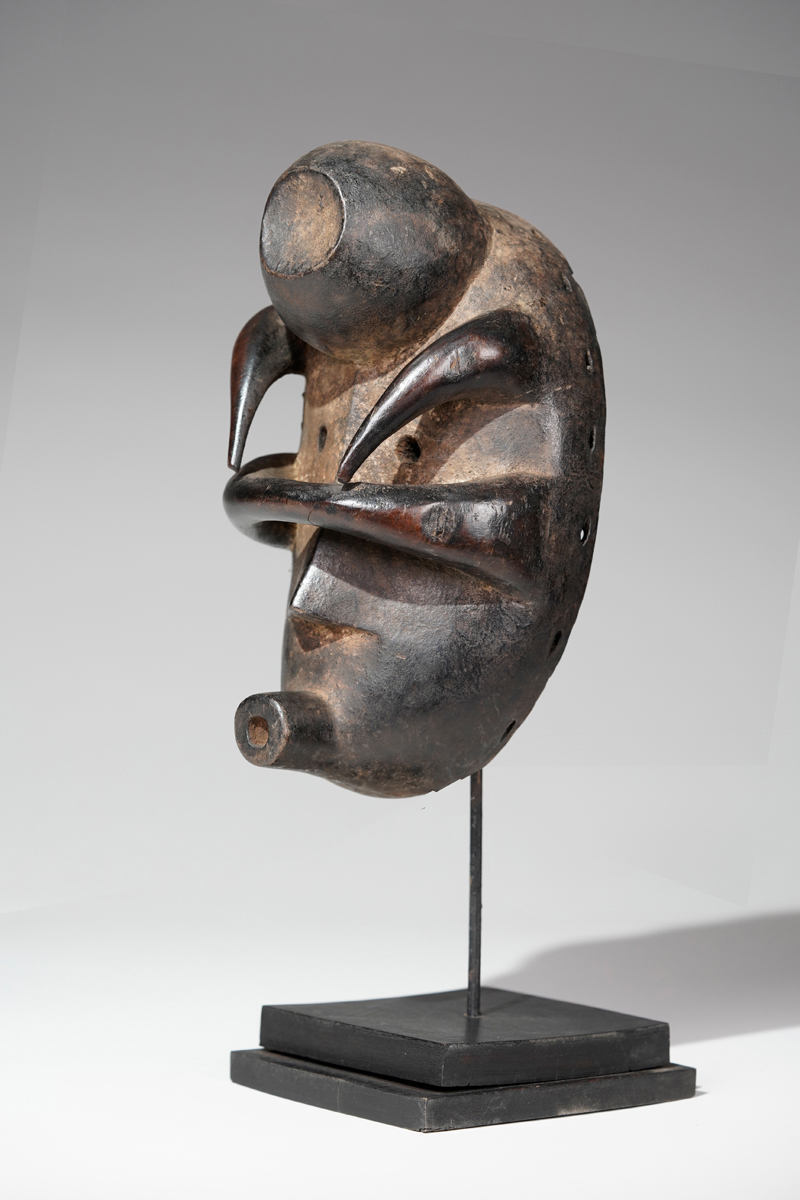 photo: wolfgang-jaenicke.com, for more information, please write us an e-mail with the identification number of the photo identification no. _XBD117423.jpg |
 |