|
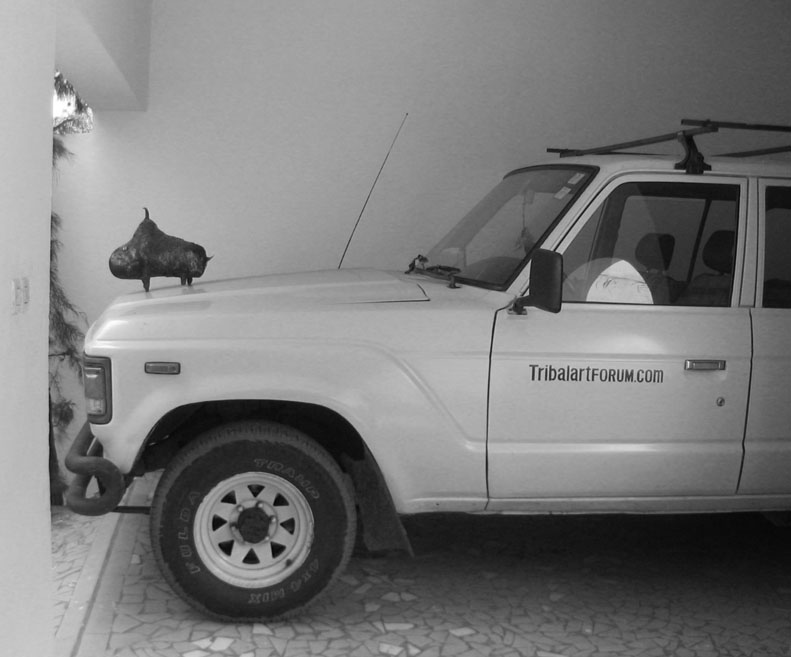
 A zoomorphic Bamana sculpture of a portable altar called "Wantchi" (blood) or "Boli" (fetish) from the Segou region. Four wooden legs support an amorphous body with a towering hump on the back, below the "head" with age cracks in the organic material of the encrusted patina. "Boliw are shrine figures of the Bamana people in Mali and as such central figures of secret societies. Rather than being carved, a bolus is constructed and formed from materials such as wood, earth, clay, bone, chewed kola nuts, sacrificial blood, urine, honey, beer, bark, and other substances. The mass is formed into a heavy, rounded shape that can sometimes resemble an animal or human, but can also remain unidentifiable. The boliw's indefinite forms imply a mystery that only the initiated can penetrate. Hidden from the uninitiated, the boliw were carefully kept in shrines or in the priest's house. Through ritual performances, their power was augmented and renewed through the application of sacrificial animal blood, and their dark, encrusted surfaces evoked fear or awe. The extraordinary group in this exhibition represents a unique opportunity to study objects whose sublime mastery rivals the radical insights into sculptural form that we associate with the most sophisticated modern work. As Robert Goldwater wrote: “But also in a deeper sense [the Boliw] are works of art, emanating from an imagination that does more than imitate appearances and thus acts as an imaginative focus for the viewer, mysterious yet real ."1 The pressures of colonialism and the spread of Islam supplanted pantheism and its associated secret societies in Mali. As a result, most of the shrines containing the boliw were either destroyed or abandoned, and many of their objects were scattered. Although stripped of their ritual significance, the Boliv exerted an intense fascination on the Europeans who came into contact with them. Perhaps most notably, Michel Leiris described Boliw enthusiastically in L'Afrique Fantôme (1934). Undoubtedly, the research work devoted solely to the complexities of the Boliv is Sarah Brett-Smith's essay “The Poisonous Child”, published in Res magazine in 1985. Exhibition catalog for the Museum of Primitive Art, New York. Older but much shorter references to Boliw can be found in publications by Abbé Henry (1910), Monteil (1924) and Tauxier (1927). Texts by Dieterien (1951), Zahan (1974), McNaughton (1979) and Celenko (1983) also refer to the Boliv and in particular to secret societies. Boliw: Shrine Figures of the Bamana, Mali promises to be an inspiration for all parties interested in the fruitful interplay between tribal art and contemporary art. We're still far from understanding these enigmatic characters, but they still speak to us strongly". According of Brett-Smith they are "used by high ranking male members of the feared Komo association to focus power from the spirit world. The unique heavily encrusted surface on these objects is the result of a compilation of a variety of sacrificial elements such as wood, bark, tree roots, cotton, animal hair, blood and other substances applied as an offering over to the spirits, collected in the Bamana region of Bla, 120 km from Segou together with a small sack-like fetish object. sold Height: 27 cm |
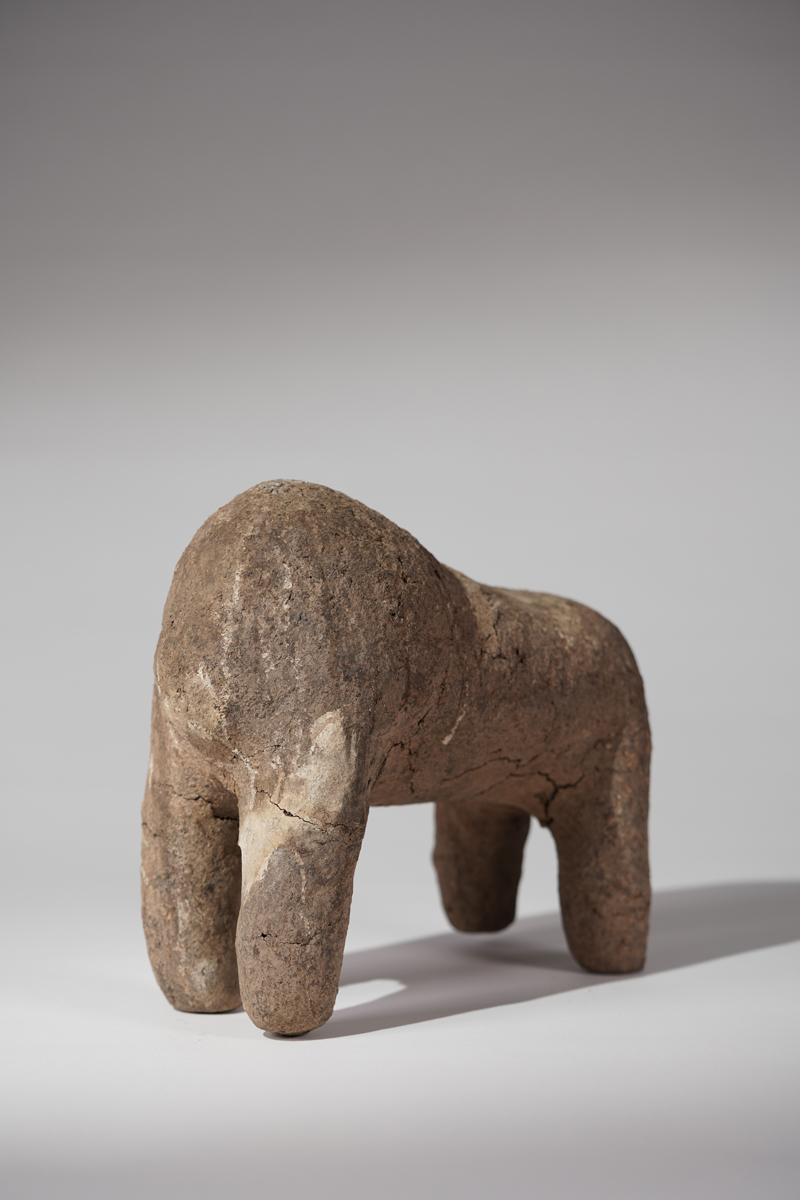 photo: wolfgang-jaenicke.com, for more information, please write us an e-mail with the identification number of the photo identification no. XBD123963.jpg |

Boli (pl. boliw), once played a central role in the ritual life of a Bamana village. Such power objects are owned by male initiation associations whose members progress through induction processes that span decades. Over time, they attain esoteric knowledge that leads to a greater understanding of the natural and spiritual worlds. Opaque and mysterious to the uninitiated eye, boliw are safely handled only by those association members equipped with the most rarified skills and expertise. |