 |
 A Beté mask, Ivory Coast, with rough aesthetics and rugged features of a half opened mouth showing white teeth, straight nose, two almond shaped eyes slit in their centre on a slanted angle, the forehead is wide, two small ears at each side of the mask, the rims of the mask are punctured with holes to attach a costume to it, its nuanced individuality, highly refined details, powerful presence, is especially appealing for its unusual depth that affords strong three-quarter views; the woods grooves are quite visible and offer another layer of texture to the mask, in addition to some cracks, dark wood, white patina on the mouth and around the eyes. Certificate of origin and provenance. “These masks are carved from wood, designed to depict characteristics of the hostile spirits found in the environment where the Bete live. The Southwestern part of Cote d’Ivoire, where the Bete People live, is covered in dense forest. The Bete’s concept of respect for social rules in their village are carried over to their respect for aggressive and hostile nature spirits they believe Gre masks embody. The people who wear the masks are viewed as protective agents that represent the spiritual forces. Distorted features like facial protuberances, horned heads, bulging forehead, and tubular eyes create the grimacing face gre masks are known for. Gre masks are designed to provoke terror through embodying wild animals. Some are said to resemble living wild animals such as wild hogs or chimpanzees that are both found in the heavy tropical forests .The Bete use the term “gre”to describe terror, hence the name gre mask. Emphasis on a an animals strength and ferocity are the traits portrayed in the Gre mask, giving it power to expel evil forces and disease through masked dance performances.” Sources: sold |
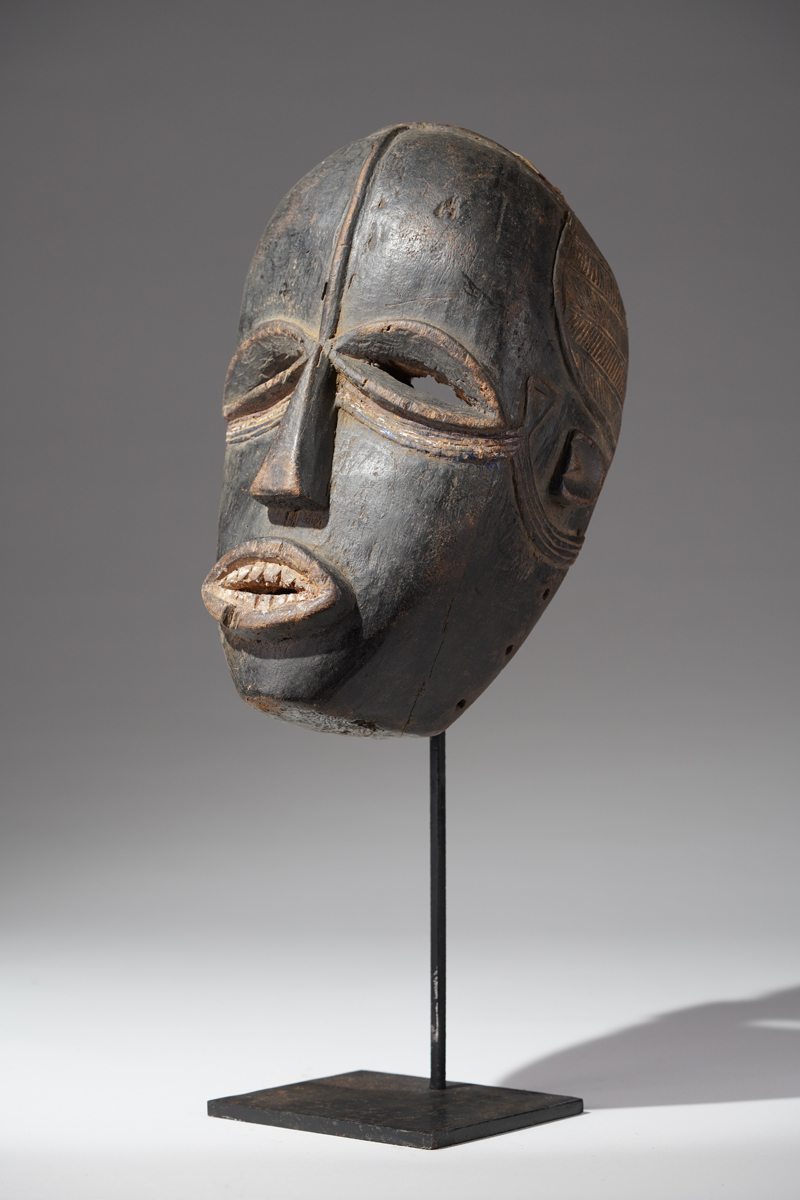 photo: wolfgang-jaenicke.com, for more information, please write us an e-mail with the identification number of the photo identification no. XBD126786.jpg |
 |