 A female Bronze sculpture, in the style of Benin, Nigeria, standing on a square plinth that is decorated with a bow and arrow, long flat feet, ankle bracelets, short legs, a necklace around the waist, cylindrical body, a braided necklace around the neck crossing between her breasts, short arms rising towards the sky, the hands are upwards, open, she has a large rounded head composed of serene features, a closed mouth, pointed nose and two large eyes, her hai is short and composed of small lines and dotes. This sculpture could be of the goddess Irhevbu or of Princess Edeleyo. “Princess Edeleyo was the eldest daughter of Oba Ewuare and eldest sister to prince Oduwa who later became Oba Olua. Edeleyo was the most famous Princess in Benin kingdom: she was very wealth and popular among the people. The decision taken by the Uzama Nobles in 1473 A.D to crown her as Oba was unusual. This was because no woman has ever been chosen for the crown of Benin kingdom. She became the first woman to be chosen for the position of Oba in Benin history. Although some historians have claimed that women had ruled as Ogiso during the first period of Benin Kingdom, it has already been stated that this assertion was a mistaken identity. Edeleyo was the closest woman to the throne of ancient Benin; she is the first and last woman to be made Ediaken (heir apparent) and was also prepared for coronation. However, this plan or arrangement was truncated by the nature of a woman” Source: Benin Kingdom, the unusual choice of princess Edeleyo, 2020 sold Height: 65 cm |
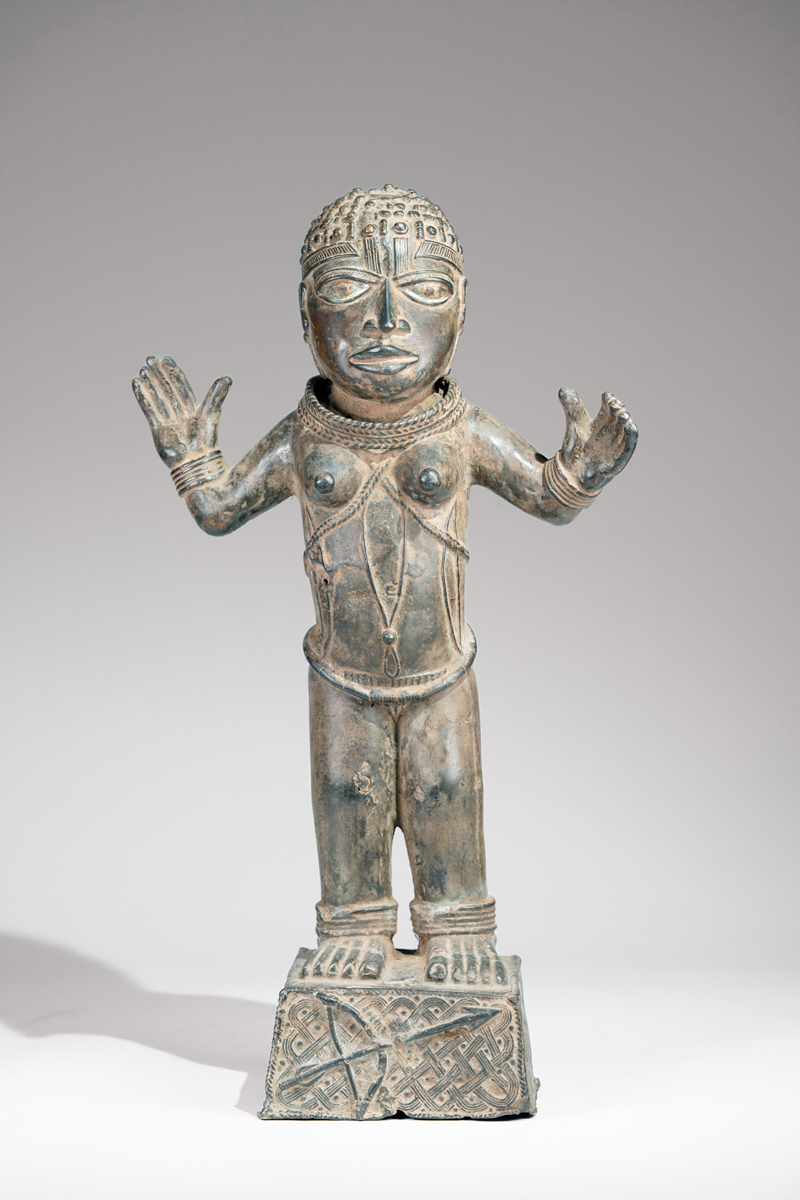 photo: wolfgang-jaenicke.com, for more information, please write us an e-mail with the identification number of the photo identification no. XBD141228.jpg |
 |