 |
 A terracotta sculpture of zoomorphic bird shape, in the style of Nok, Nigeria, in the style of Nok, of extreme rarity, and intrigue, the feet are perched on a tubular base, they are like claws, a cylindric body with some elements of clothing wrapped around, the arms are morphed into small wings, a tubular neck, rounded head with typical Nok features of triangular eyes, perched at the center, rounded nose and a slightly opened mouth-with teeth showing, like a vampire, a part of the sculpture chin is missing, the hair is pulled back and short. Inside the sculpture is packed earth; some pieces are fragmented off, some minor cracks. "In 1943, tin mining in the vicinity of the village of Nok near the Jos Plateau region of Nigeria brought to light a terracotta head, evidence of the oldest known figurative sculpture south of the Sahara. Although stylistically related heads, figures, animals, and pottery shards have been found in a number of Nigerian sites since that time, such works are identified by the name of the small village where the first terracotta head was discovered. Artifacts continue to be unearthed without documentation of the context in which they were buried, a lack of extensive archaeological study that has severely limited our understanding of Nok terracottas. One of the earliest African centers of ironworking and terracotta figure production, the Nok culture remains an enigma. Most Nok sculpture is hollow and coil-built like pottery. Finely worked to a resilient consistency from local clays and gravel, the millennia-long endurance of these ancient objects is a testament to the technical ability of their makers. This is not to say that Nok sculpture has survived unchanged by time. The slip (the mixture of clay and water used to give pottery surfaces an even texture) of many Nok terracottas has eroded, leaving a grainy, pocked exterior that does not reflect their original smooth appearance. Most of the Nok sculpture found consists of what appear to be portrait heads and bodies fragmented by damage and age. The recovered portions of the baked clay bodies that have survived show that they were sculpted in standing, sitting, and genuflecting postures." sold Height: 50 cm |
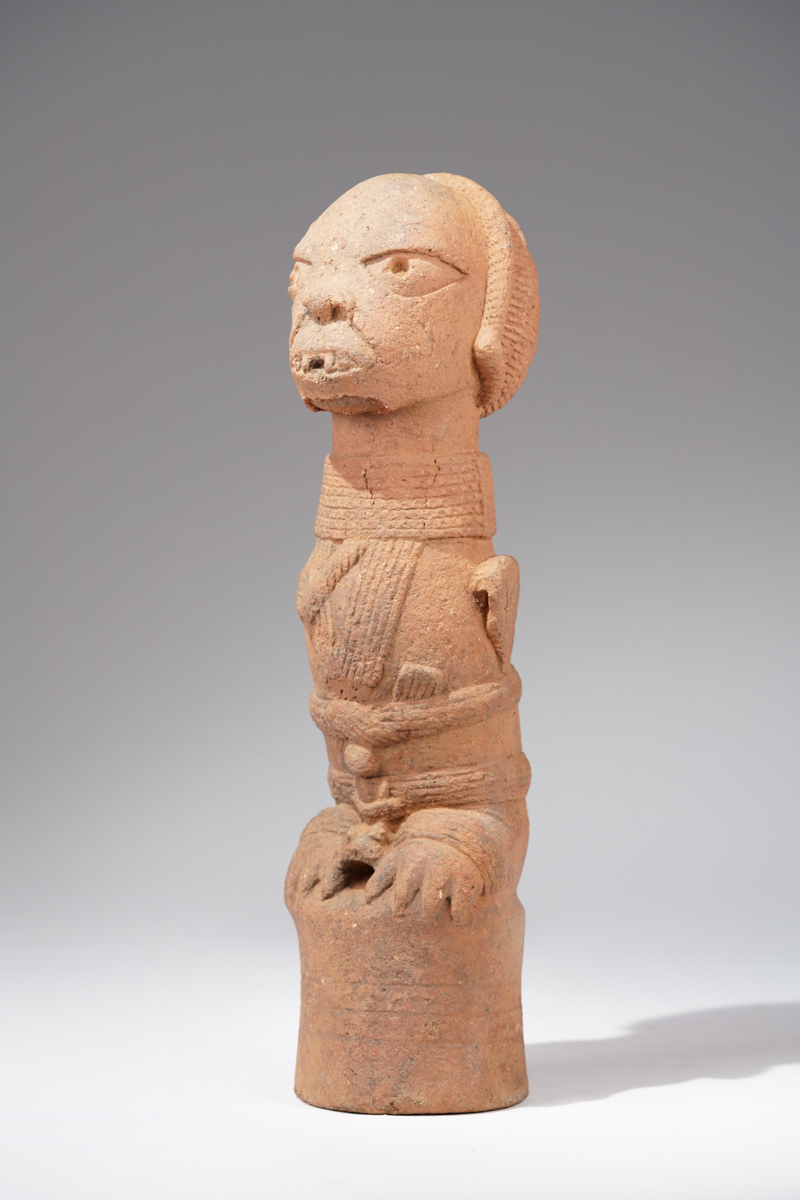 photo: wolfgang-jaenicke.com, for more information, please write us an e-mail with the identification number of the photo identification no. XBD141379.jpg |
 |