|
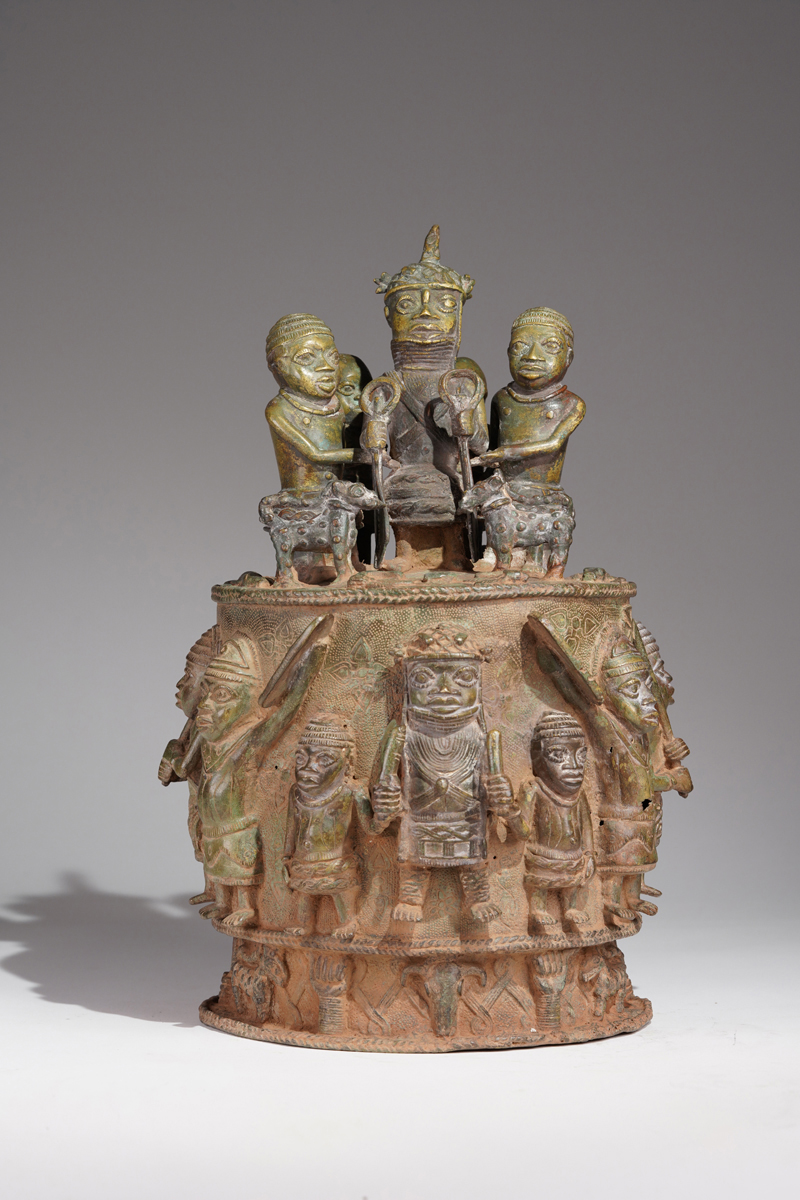
 An unusual female sculpture that bears the head of an Idia - Uhunmwu elao ọghe Iy’ọba - bust. We know this sculpture on Digital Benin as a bronze head and as an altar figure an the Urhotọ (altar tableau) are displayed on an ancestral altar dedicated to the Iy’Ọba, who was usually entitled to an Urhotọ in her ancestral shrine. Just like the Ọba, after her death, an altar was erected in her memory within Uselu Palace and Ọba Palace. These altars would be decorated with a collection of objects related to achievements in life.
Queen mother altar tableaux began being cast in the eighteenth century, a time when court arts flourished once again, after a period of turmoil in the seventeenth century (Ezra, 1992 We are also not aware of any other similar specimen in the literature. Nevertheless, there is no doubt that it is a Queen Mother's head due to the pearl hood and the coral collar. Uhunmwu elao ọghe Iy’ọba (commemorative queen mother heads) were placed at the ancestral shrine of the Iy’Ọba. Similar to the Ọba’s altar, the Iy’ọba also had an altar erected on her behalf which consists of a commemorative head. The Uhunmwu elao ọghe Iy’ọba are particularly distinguished by the Upkẹ okhokho (chicken beak) hairstyle. Usually, a woman in Benin would only have three suborbital markings, however the Iy’Ọba is shown in many of these objects with four suborbital markings, which would usually indicate a man. This may indicate thato when an Iy’Ọba is crowned, she ascends to a status usually belonging only to men. There are two main types of Uhunmwu elao ọghe Iy’Ọba, those with a quadrangular block-like base or pedestal, and those with flanges, as seen in other commemorative heads. It is believed that Ọba Esigie (c. 1504–50) introduced the role and title of Iy’Ọba to honour his mother, Queen Idia. It is thus thought that the earliest heads, those with quadrangular pedestals, may date to that period (Ben-Amos, 1995)
sold Height: 64 cm |
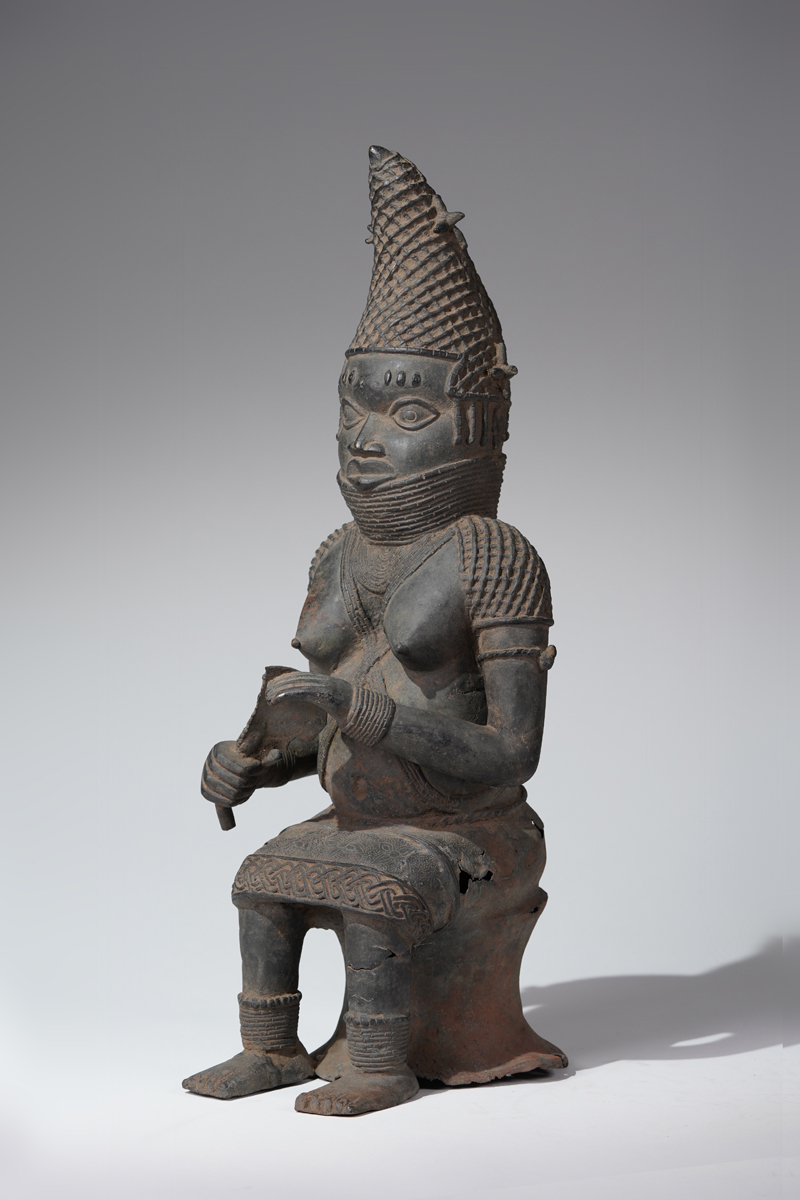 photo: wolfgang-jaenicke.com, for more information, please write us an e-mail with the identification number of the photo identification no. XBD142356.jpg |
 |