 |
 A very tall Mumuye sculpture, Nigeria, zig zag legs merging into a four columnar waist, a tubular abdomen, sloping shoulders margining into thin arms, a long neck carries a small head with expressive features, the two large ears are in a square shape coming out in a diagonal way, the hair is pulled up as a mohawk, typical of Mumuye style; a ritual patina, signs of age, cracks. Certificate of origin and provenance. “It was not until the late 1960s that statues from the Mumuye culture of northeastern Nigeria appeared on the European art scene. Their impact was immediate and profound: African art aficionados marvelled at Mumuye artists’ abstract interpretation of the human body, which recalled the approach to anatomy by artists of the Cubist and Expressionist movements. Indeed, anthropomorphic Mumuye figure sculptures demonstrate an astonishing range of variations, testifying to their makers’ unbridled creativity and limitless inventiveness. One of the only Western art historians to witness these statues being used in their original context was Arnold Rubin, who noted: "The high degree of stylistic diversity is paralleled by the variety of functions of Mumuye figures: some were used as oracles, others in connection with healing, and still others reinforced the status of important elders as embodiments of vaguely conceived tutelary spirits. Sometimes, one figure was employed in two or more of these capacities. A particular function cannot be correlated with size, style, or other formal attributes." (Arnold Rubin in Susan M. Vogel, ed., For Spirits and Kings: African Art from the Paul and Ruth Tishman Collection, New York, 1981, p. 155)." sold |
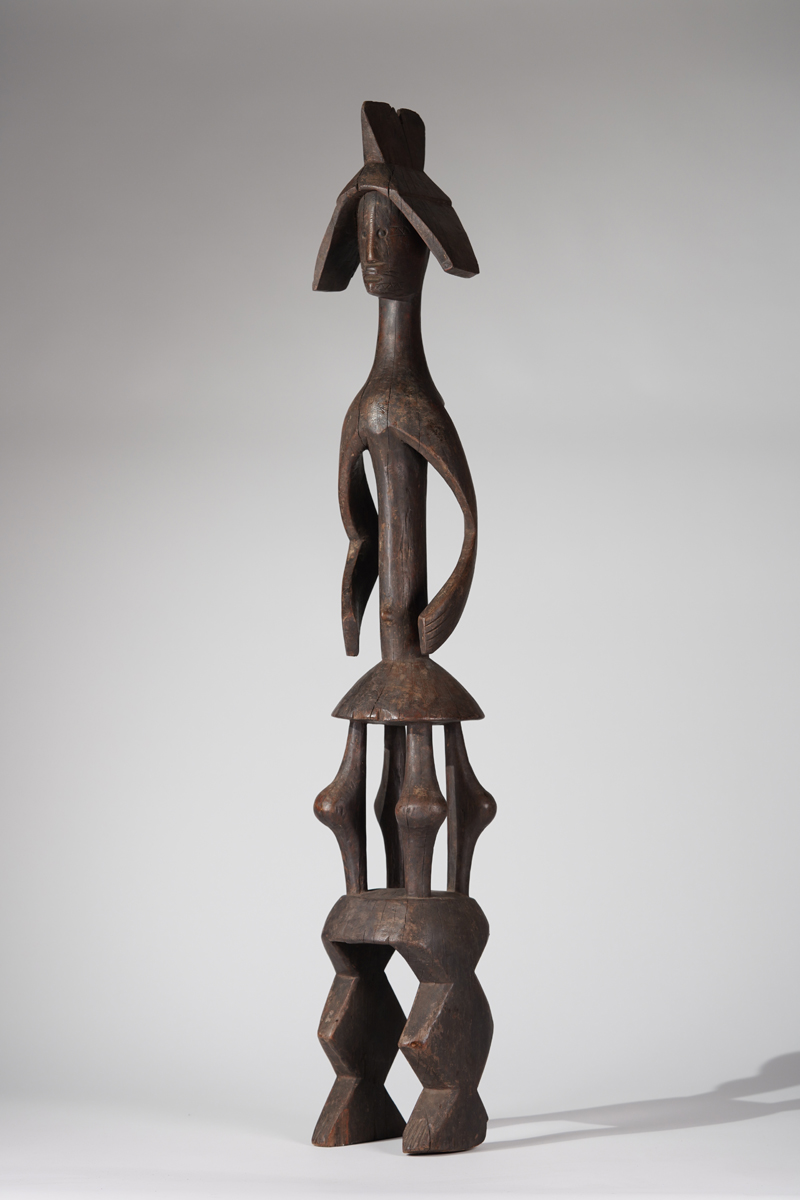 photo: wolfgang-jaenicke.com, for more information, please write us an e-mail with the identification number of the photo identification no. XBD142845.jpg |
 |