 |
 Four Akan brass vessels, gold dust boxes, abamphruwa, Ghana, each with different artwork and designs. the sides withdifferent geometric motifs. oxidized patina; signs of use. Certificate of origin and provenance. Historically, only royals and members of their entourage could possess precious metals like locally mined gold (sika) and imported silver. Akan gold production likely began in the second half of the fifteenth century, yielding approximately fourteen million ounces of metal by 1900. Gold circulated in powdered form (sika futuro) as the currency of the Asante Empire and many of its neighbors until 1901; when not accumulated as a form of personal wealth, gold dust was melted down and cast into fashionable ornaments... Metropolitan Museum, NY, Container (Kuduo) 18th -19th century. sold Height: ca. 4 cm |
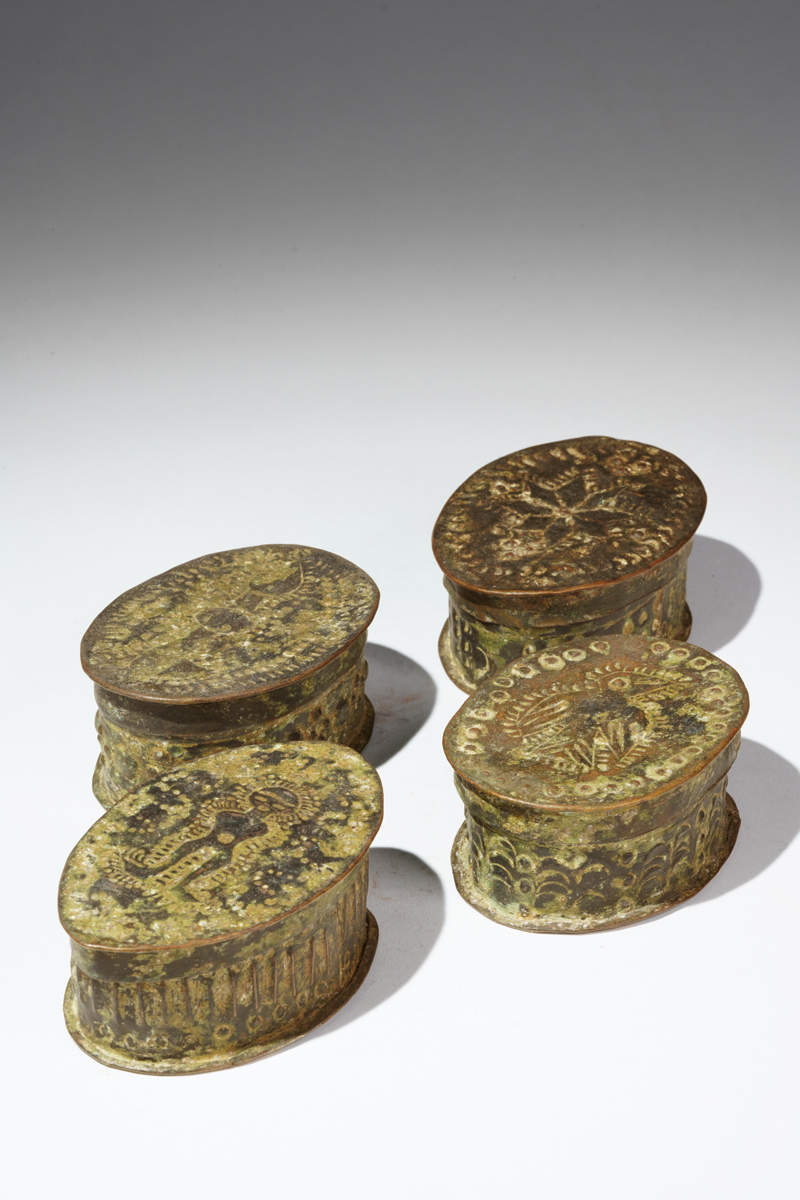 photo: wolfgang-jaenicke.com, for more information, please write us an e-mail with the identification number of the photo identification no. XBD143661.jpg |
 |