 |
 A female Senufo Rhythm pounder - called Débéle - Northern Ivory Coast, - uprising from a cylindrical, oval, base with straight, shortened legs, the arms carved beside a slender body with a small pointed navel with scarification carvings around it, wide shoulders, small pendular breasts with scarifications on them, the columnar neck supporting a triangular head with a slender nose, small round mouth, small coffee shaped eyes; wearing a domed, single crested coiffure; dark, aged patina with significant signs of a touch patina; crack next to the right breast(documented in following pictures). Provenance of Amadou Bouaflé, Abidjan, Ivory Coast. "In the mid- to late twentieth century, communities displayed pombibele as static works of sculpture and animated them in performance. The figures sometimes stood on the ground during a ceremony for a deceased poro elder or larger funerary ceremonies dedicated to all the deceased elders in a community. On other occasions, poro initiates carried pombibele as they walked, tapping the large figures on the ground. Rarer sculptures include the much admired large birds, reproductions of which today fill West African tourist markets. By the time Senufo arts captured scholarly attention in the West at the beginning of the twentieth century, artists and patrons had already created a wealth of forms to assert diverse local identities." Source: Met Museum, NY sold Height: 101 cm |
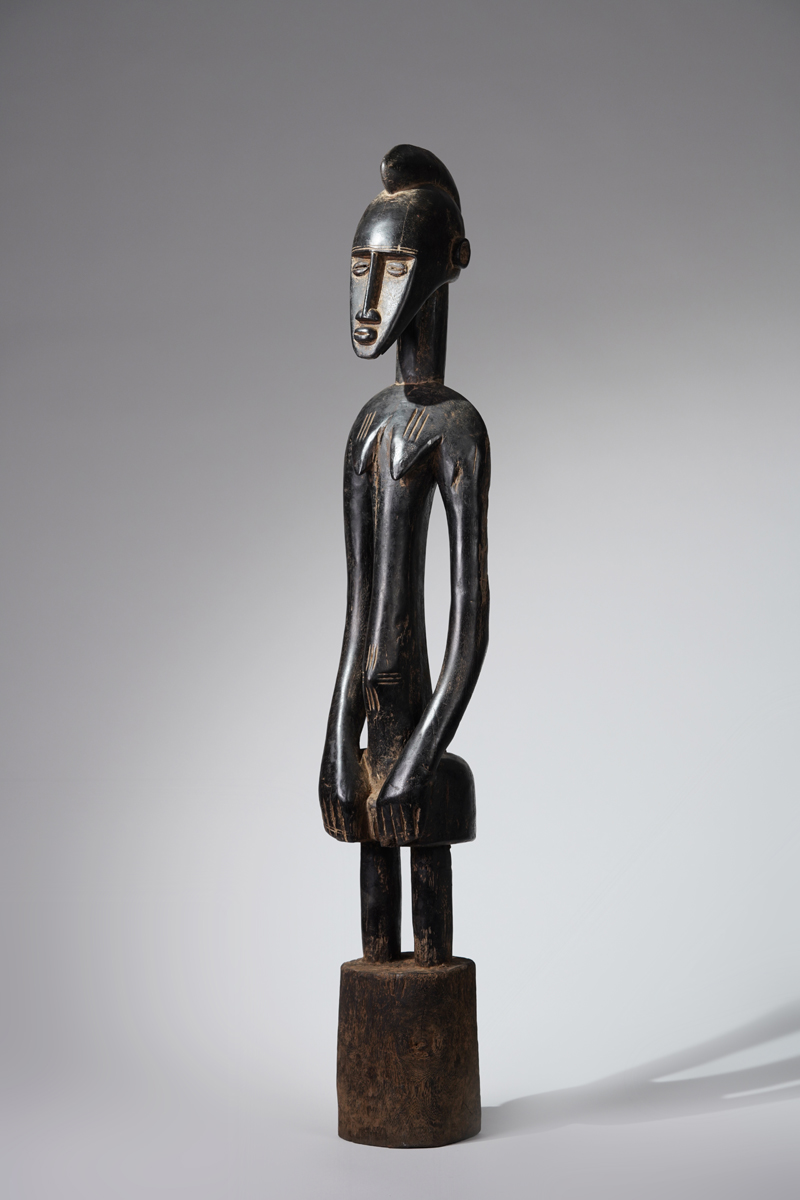 photo: wolfgang-jaenicke.com, for more information, please write us an e-mail with the identification number of the photo identification no. XBD144697.jpg |
 |