|
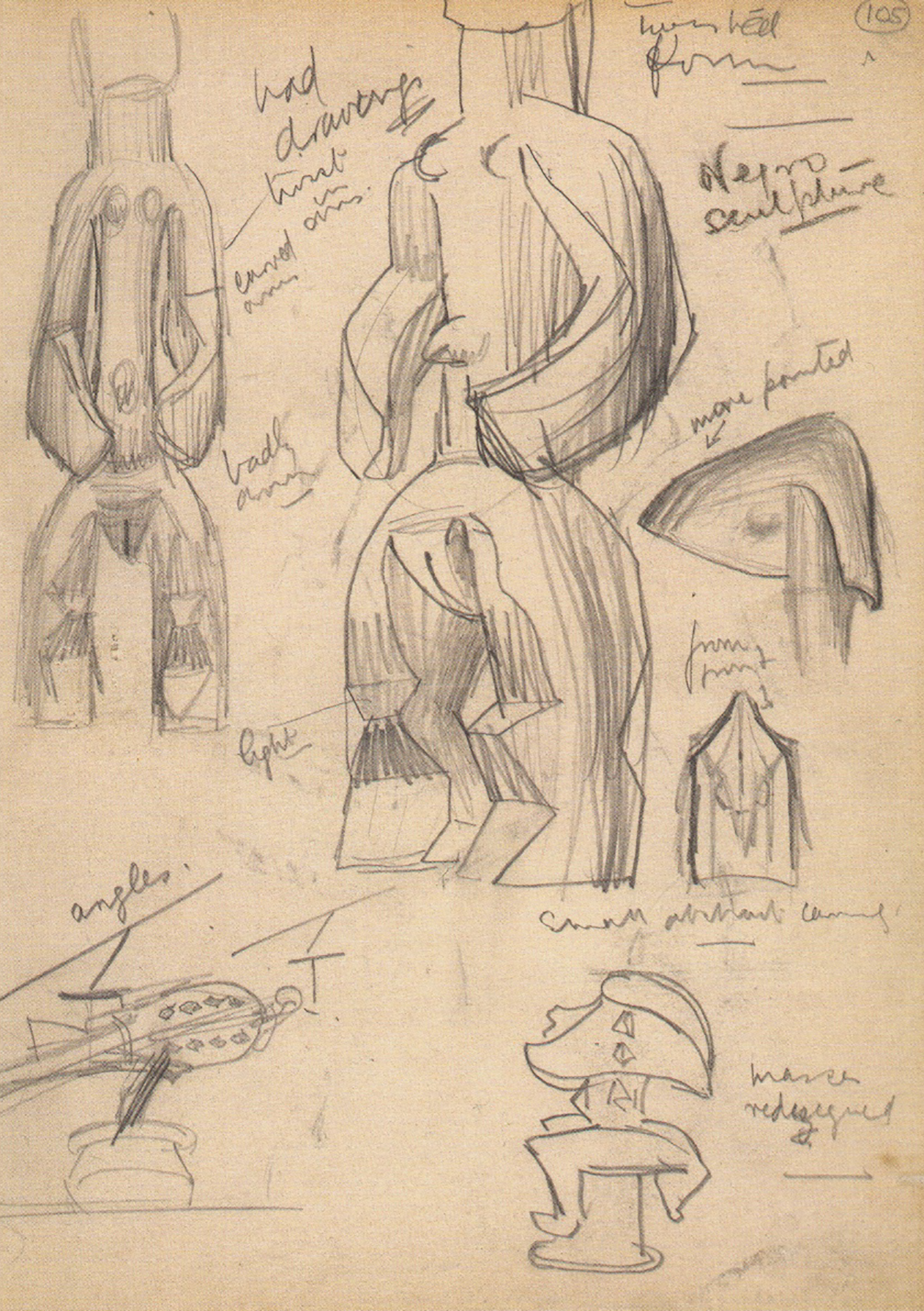
 A female Mumuye sculpture, Nigeria, carved from light wood, standing on its short zigzag legs, a long thin abdomen that thickens at the top, protruding navel, two flattened and elongated arms joining at the waist by the two hands, two small breasts hiding under the shoulders cave, a conical neck carrying a head composed of expressive features, the eyes are placed in two cavities making the look of the sculpture astonished, a thin nose, small lips, two long square ears fall on each side of the head; some aged cracks, signs of ritual use. "Until the 1970s most Mumuye sculpture were misattributed to their neighbors the Chamba. With no royal system, the Mumuye are organized by age classes and choose a village chief who is assisted by a council of elders. The vabong secret society regulates Mumuye religious life. Entry into the society is achieved through initiation ceremonies. The initiation of boys begins at the age of ten and takes place in a tsafi hut, where the statues are kept. Lit.: Frank Herreman and Constantine Petridis, The Discovery of Mumuye Art. In: Frank Herreman, Mumuye. Sculpture from Nigeria. The Human Figure Reinvented, Milan 2016, p. 9 (8-13). Alan, G. Wilkonson, p. 608 ff, Primitivism in 20th Century Art, Prestel, ed. William Rubin, 1996.
sold Height: 98 cm |
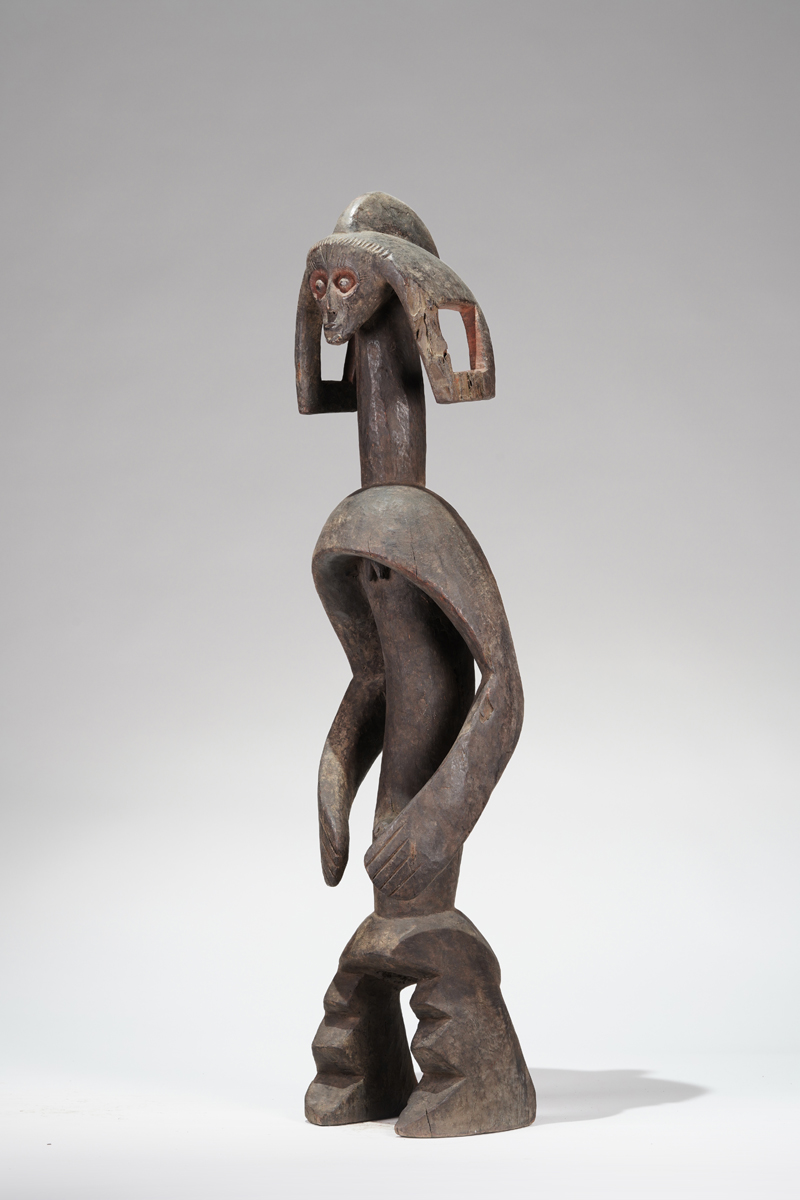 photo: wolfgang-jaenicke.com, for more information, please write us an e-mail with the identification number of the photo identification no. XBD145478.jpg |
 |