 |
 A Yaure or Baule double face mask, Ivory Coast, surmonted by two leopards, these types of masks were used by wedding cermonies and the related dances, incl. wooden stand The Yaure and Baule masks are both associated with the cultural traditions of the Ivory Coast (Côte d'Ivoire), but they come from distinct ethnic groups and have different functions, aesthetics, and symbolism. Here's a breakdown of the differences between them: Yaure Masks: The Yaure people are part of the Akan ethnic group, living primarily in the central and eastern regions of Côte d'Ivoire. They are closely related to the Baule, though the two groups have distinct cultural practices. 2. Function Yaure Masks: Yaure masks are often used in initiations, funerary rituals, and other community events. They can represent ancestors, spirits, or nature deities, and they play a role in maintaining harmony within the community and between the living and the spiritual world. 3. Aesthetic Characteristics Yaure Masks: Yaure masks are known for their elegant, refined features, which often include a smooth, polished surface and delicate proportions. The eyes may be deep-set and the overall form may be slightly elongated, contributing to a serene or otherworldly appearance. These masks often have a strong emphasis on human facial features, and their style can be highly naturalistic. 4. Types of Masks Yaure Masks: There are a variety of Yaure masks, including face masks that represent ancestors or spirits, helmet masks worn by dancers, and ceremonial masks that are part of initiation rites. Yaure masks often depict both male and female forms, and their facial features are typically more naturalistic, showcasing the beauty ideals of the Yaure people. 5. Symbolism Yaure Masks: Yaure masks are often associated with ancestral spirits and the protection of the community. Their elegance and balance reflect the ideals of beauty and strength that are central to Yaure culture. The masks can also be linked to the forces of nature, with some representing animals or other natural elements. 6. Materials and Construction Yaure Masks: These masks are typically made from wood, although they may also incorporate other materials like cloth, leather, or metal. They are often painted with natural pigments or carved with intricate designs. Conclusion While both Yaure and Baule masks are intricately crafted and deeply tied to the spiritual and social life of their respective communities, they differ in their aesthetic styles, uses, and symbolic meanings. Yaure masks are often more refined and naturalistic in appearance, with a focus on beauty and harmony, while Baule masks tend to be more geometric, abstract, and strongly tied to royal or ancestral themes. sold Height: 33 cm |
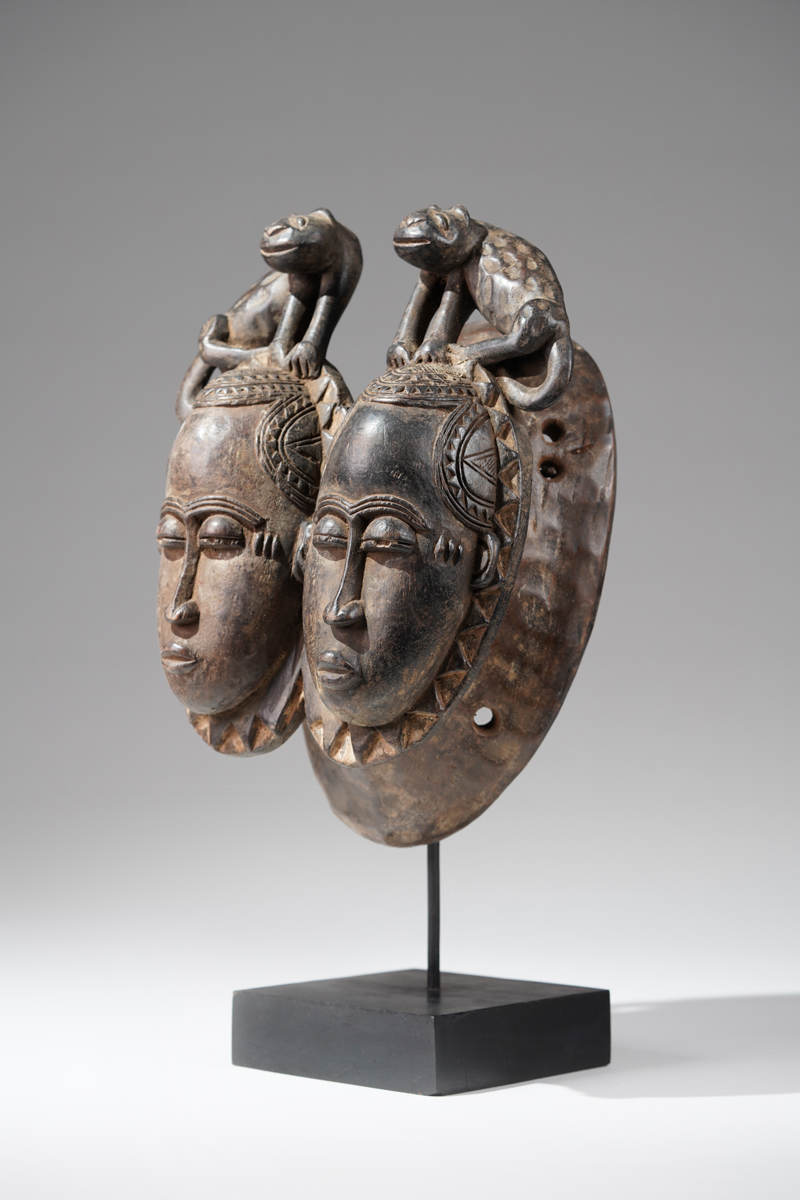 photo: wolfgang-jaenicke.com, for more information, please write us an e-mail with the identification number of the photo identification no. XBD180256.jpg |
 |