 |
A Yoruba bowlkeeper, Nigeria, with a domed coiffure, brown to reddish patina.
The role of a Yoruba bowlkeeper (often referred to as "Oshodi" or "Oso" in certain contexts) traditionally involves the responsibility of managing sacred objects, rituals, or items used in religious and cultural practices. The "bowl" in this context could refer to a ritual object, often a container used in religious ceremonies. Here's a breakdown of the role:
1. Religious and Ritualistic Significance:
* In Yoruba culture, bowls are often used in religious practices for offerings, sacrifices, or as part of divination rituals (like in Ifá). A bowlkeeper ensures that these items are handled with respect, care, and according to the spiritual or cultural guidelines.
* The bowlkeeper is seen as a custodian of sacred items, which may be connected to Orisha worship (the deities in Yoruba religion), ancestral rites, or other spiritual practices.
2. Maintaining Ritual Items:
* The bowlkeeper ensures that ritual objects, such as bowls used in sacrifices or divination, are properly maintained, cleaned, and stored. They are also tasked with making sure these items are used correctly during ceremonies.
3. Facilitating Ceremonies:
* During religious or cultural events, the bowlkeeper plays an active role in assisting or conducting certain aspects of the ritual, especially those involving sacred offerings or sacrifices. This could include ensuring that food, drinks, or symbolic items are placed in the proper bowls or containers.
4. Cultural Stewardship:
* The bowlkeeper might also act as a teacher or guide, imparting knowledge about the sacred objects and their proper use. They could be involved in teaching younger generations or initiates about the traditions, ceremonies, and spiritual importance of the bowls.
5. Guarding Sacred Knowledge:
* Some bowlkeepers are custodians of secret or esoteric knowledge, particularly related to divination, healing, or other mystical practices. In this case, the bowlkeeper may be seen as a spiritual intermediary who helps maintain the flow of ancestral wisdom.
It's worth noting that the function of a bowlkeeper can vary depending on the specific tradition, community, and the particular objects they are responsible for. In the Yoruba religious context, the role can be tied to a wide variety of sacred practices, and the individual fulfilling this role is typically someone with a deep understanding of Yoruba culture, spirituality, and rituals.
sold
Height: 42 cm
Weight: 1 kg |
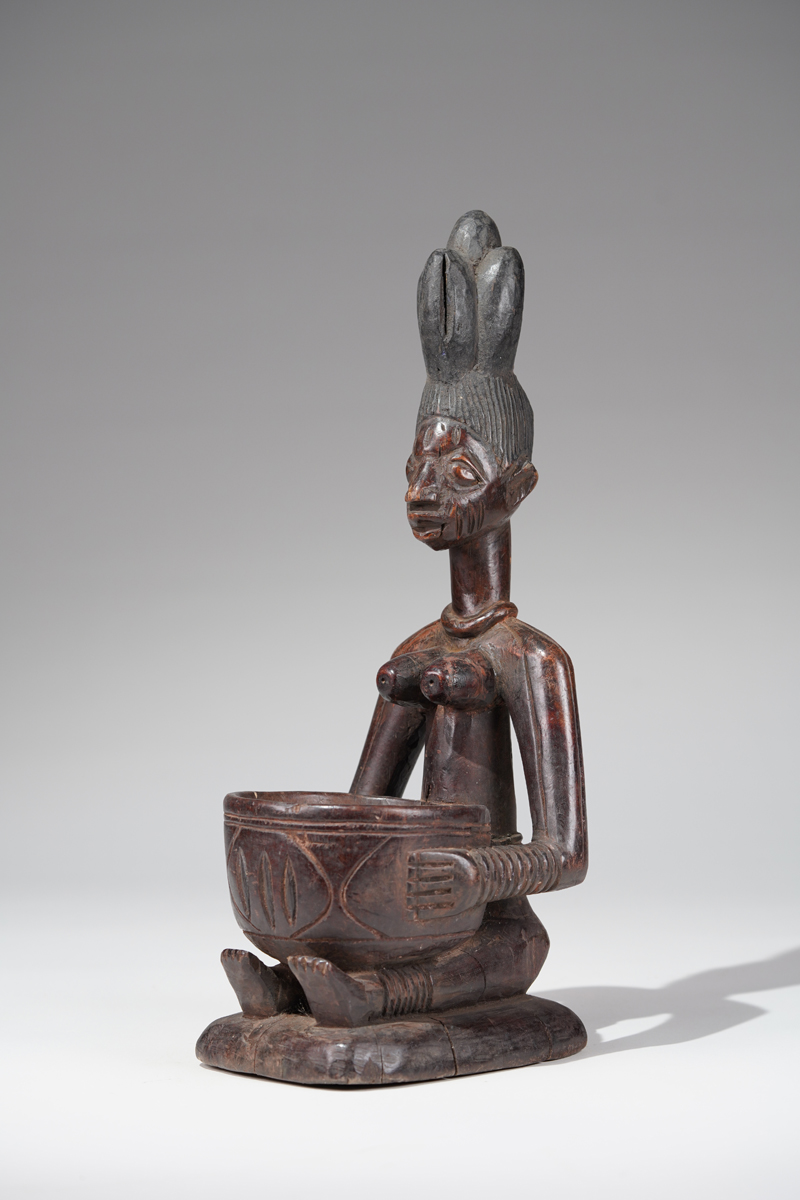 photo: wolfgang-jaenicke.com, for more information, please write us an e-mail with the identification number of the photo identification no. XBD180548.jpg
 |
|

