 |
 A Grebo mask, Ivory Coast, collected in the Sassandra region, composed of the typical Grebo set of cylindric eye series, here composed of four; signs of ritual use. "The Grebo people inhabit the coast of Eastern Liberia and surrounding forests, and are a small ethnic group named after their migration from the Sahara region to Liberia, translating to "leaping monkey people." Known for their ferocity in battle, the construction of their mask work reflects their warrior culture, with flat war masks featuring 3D tubular eyes measuring up to a meter in height. These masks make appearances not only during battles but also at pre-dance rituals and funerals of fallen warriors. Lit: The Metropolitan Museum of Art. sold Height: 35 cm |
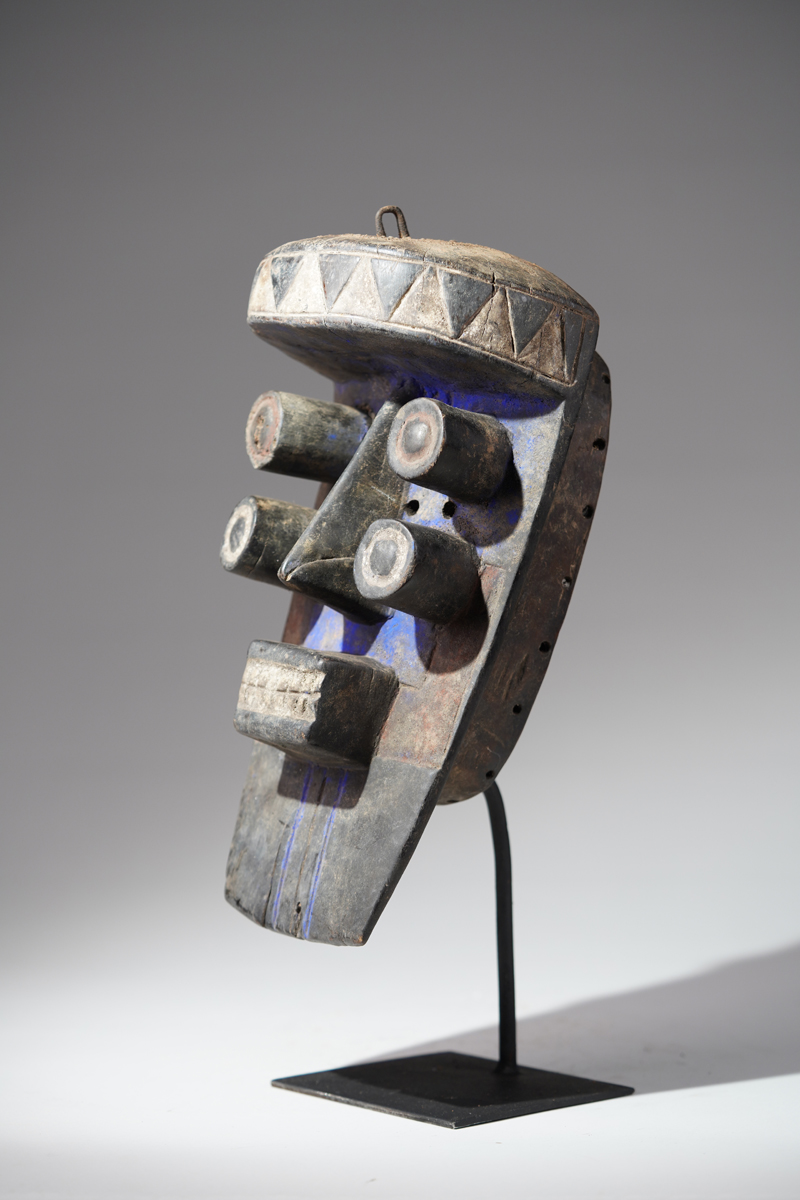 photo: wolfgang-jaenicke.com, for more information, please write us an e-mail with the identification number of the photo identification no. XBD181214.jpg |
 |