|
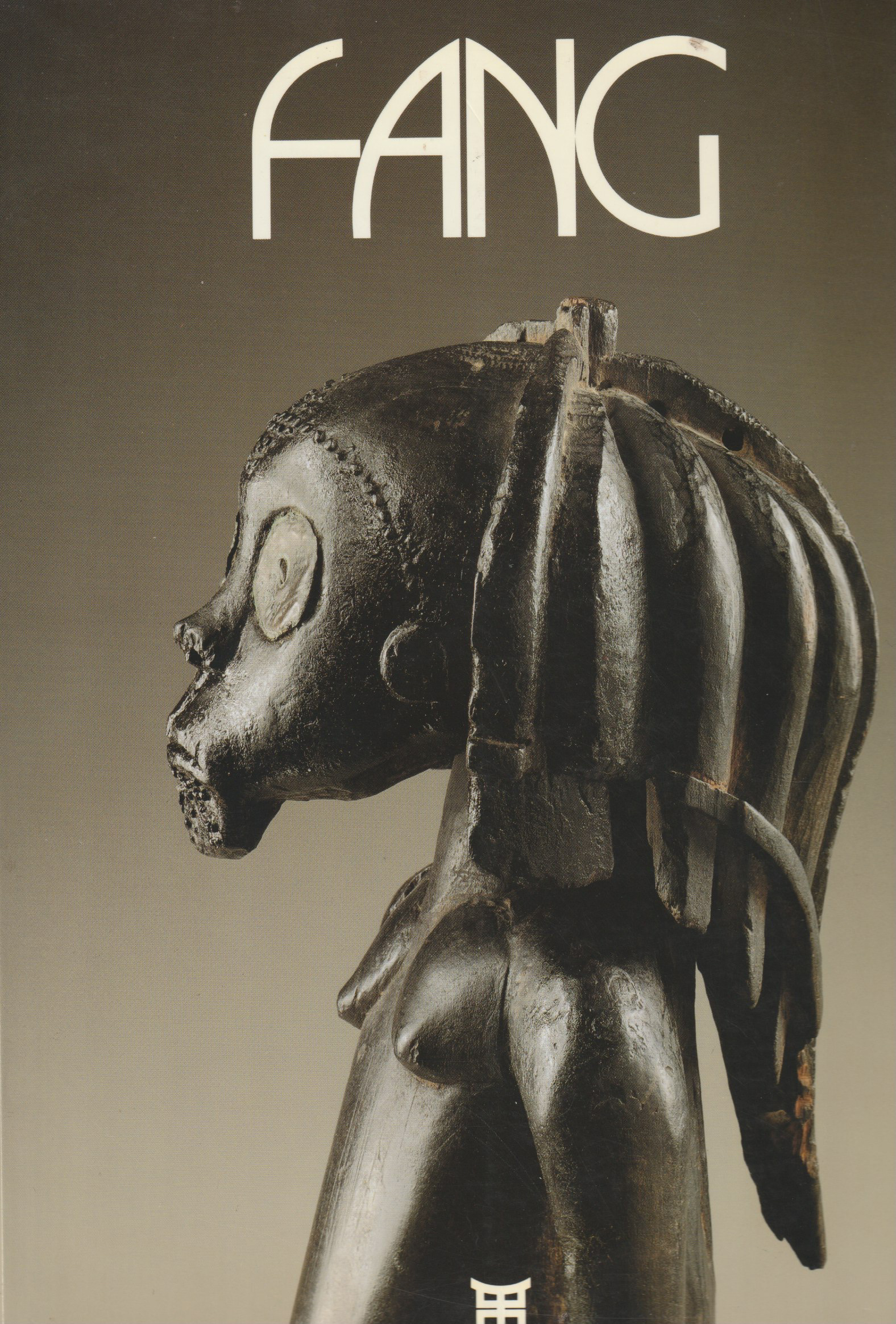
 A male Fang Ntumu figure, Gabon. Minor surface cracks and scratches; signs of use and age. Certificateof origin sn provenance. "The ensemble of Fang peoples practice a cult devoted to ancestor lineages, the bieri, whose aim is to both protect themselves from the deceased and to recruit their aid in matters of daily life. This familial cult does not monopolize the Fang’s religious universe, for it coexists with other beliefs and rituals of a more collective character. It is the bieri, or ancestor sculpture, which has most obviously given rise to the making of remarkable wooden sculpture. The statuary of the Fang can be classified into three main groups: heads on long necks, half-figures and full figures, standing or seated. Carved with great simplicity, at the same time they exhibit a high degree of sophistication in the coordination of bulbous forms. The neck is often a massive cylindrical form. The arms have various positions: hands clasped in front of the body (sometimes holding an object); held in front of the chest or attached to it; hands resting on the knees in the seated figures. The navel is often exaggerated into a cylindrical form. Legs are short, stunted. Usually there is a domed, wide forehead and the eyebrows often form arcs with the nose. The eyes are often made of metal roundlets.
Musee Dapper, Catalouge, 1993. The bieri would be consulted when the village was to change location, when a new crop was planted, during a palaver, or before going hunting, fishing, or to war. But once separated from the reliquary chest, the sculpted object would lose its sacred value and could be destroyed. The ritual consisted of prayers, libations, and sacrifices offered to the ancestor, whose scull would be rubbed with powder and paint each time. With its large head, long body, and short extremities, the Fang bieri had the proportion of a newborn, thus emphasizing the group’s continuity with its ancestor and with the three classes of the society: the “not-yet-born,” the living, and the dead. The relics were essentially skull fragments, or sometimes complete skulls, jawbones, teeth and small bones. The bieri also served for therapeutic rituals and, above all, for the initiation of young males during the great so festival." Source: Afrrican Art Museum (Zyama). sold Height: 59 cm |
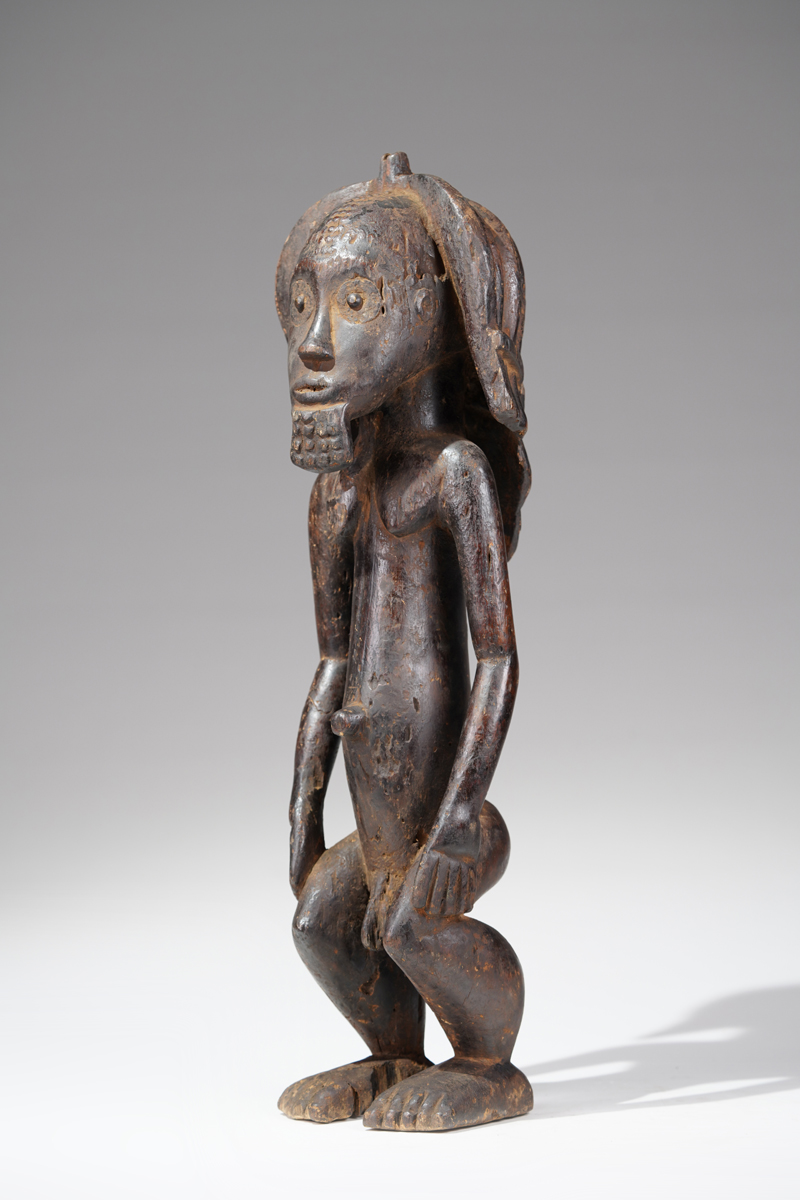 photo: wolfgang-jaenicke.com, for more information, please write us an e-mail with the identification number of the photo identification no. XBD181300.jpg |
 |