 |
 A Dogon stone sculpture, Mali, Bandiagara region. Certificate of origin and provenance.
Dogon stone sculptures are typically linked to ancient ancestral traditions, and some are believed to predate the Dogon migration to the Bandiagara Escarpment (Bedaux, 1977). These stone figures are found in shrines, caves, and sacred spaces, where they are used in funerary rites, fertility rituals, and protective ceremonies (Ezra, 1988).
Stylistic Features and Symbolism
Dogon stone sculptures share certain stylistic elements with their wooden counterparts, yet they possess unique attributes:
• Abstract and elongated forms, echoing the Dogon preference for geometric stylization.
• Minimalistic facial features, emphasizing spiritual rather than representational qualities.
• Seated or standing postures, often depicting figures with raised arms, a gesture associated with prayers for rain, fertility, and cosmic balance.
Some sculptures represent Nommo, the amphibious ancestral spirits in Dogon cosmology, believed to be mediators between the divine and human worlds (Griaule, 1965). Others depict human figures or mythical beings that symbolize continuity, protection, and fertility.
“Dogon stone sculptures represent an ancient artistic tradition that predates many of the well-known wooden carvings of the Dogon people. These figures, often placed in caves and shrines, serve as tangible connections to ancestral spirits. Unlike the more expressive wooden sculptures, Dogon stone carvings emphasize abstraction and geometric simplification, reflecting a spiritual aesthetic rather than a purely representational one. Their weathered surfaces and remote locations suggest that they have been ritually maintained for centuries, reinforcing their role in the transmission of cultural memory.”
— Bedaux, R. M. A. (1977). Tellem, reconnaissance archéologique d'une culture de l'Ouest africain au Moyen Âge. Leiden: Brill, p. 83.
"Many Dogon stone sculptures are closely linked to the Nommo, the mythical water spirits believed to have introduced order and knowledge to humanity. The frequent depiction of raised arms in these sculptures is significant, as it represents the gesture of invocation and communication with celestial forces. These figures are placed in strategic locations, such as mountain caves and village shrines, where they serve as conduits for spiritual energies. The Dogon regard these sculptures not as static art objects but as active participants in their ritual landscape, imbued with the power to influence human affairs.”
— Griaule, M. (1965). Conversations with Ogotemmêli: An Introduction to Dogon Religious Ideas. Oxford University Press, p. 142.
sold
Height: 41 cm
Weight: 6,1 kg |
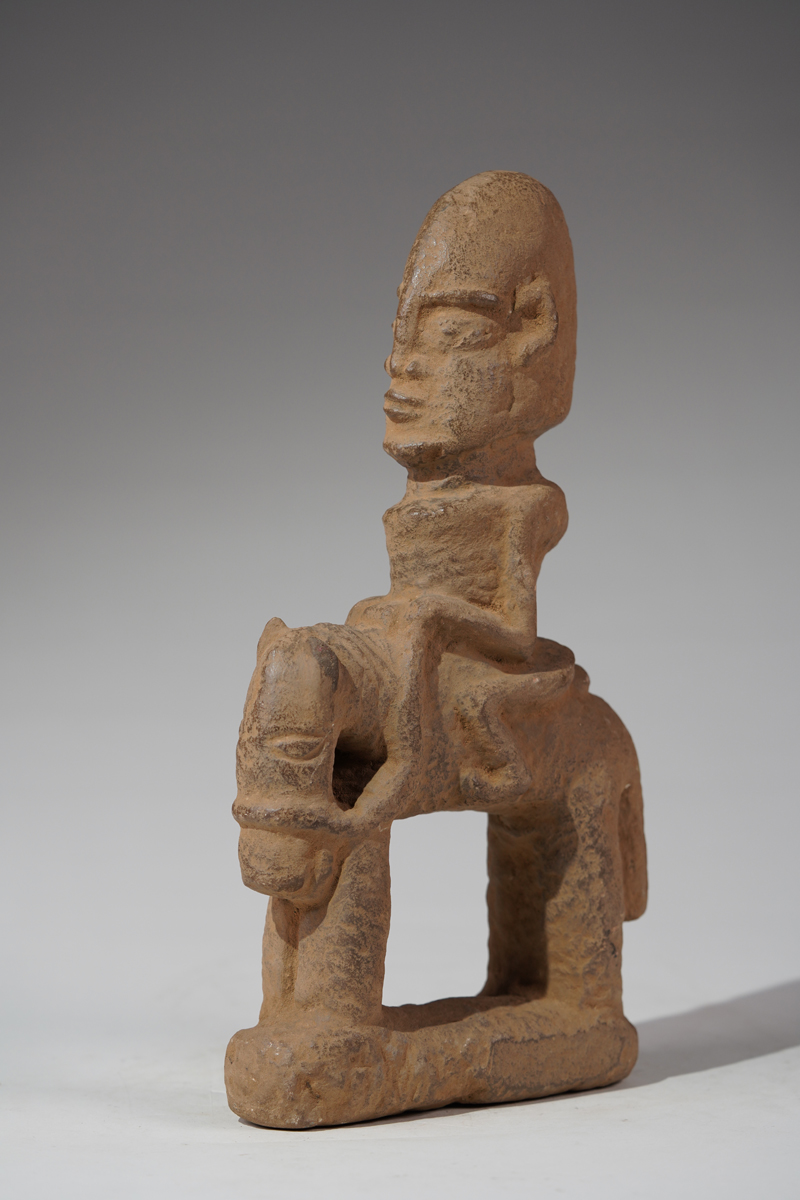 photo: wolfgang-jaenicke.com, for more information, please write us an e-mail with the identification number of the photo identification no. XBD182556.jpg
 |
|
