 |
 A female Mossi sculpture, Burkina Faso. Signs of ritual use. Certificate of origin and provenance. "The Mossi (moss-ee) people have many different types of masks, reflecting their cultural diversity. Mossi cavalry from northern Ghana swept onto the Mossi plateau of central Burkina Faso in the 15th century. Farming peoples, which then included the Dogon, Lela, Winiama, and Nuna, populated this area. Those who did not flee intermarried with the Mossi, resulting in the diversity of sculpture and mask designs found on the plateau today. The contemporary Mossi are primarily famers, tending to crops of millet, sorghum, maize and groundnuts. In the north, some Mossi raise livestock. The Mossi language is known as Mooré, one of the two primary languages of Burkina Faso. Numbering 2.2 million, they are the largest ethnic group in the country. Those descended from the invaders are the nakomensé. Those that descended from farming peoples are known as nyonyosé. Other groups include smiths (saaba) and traders (yarse). A patrilineal (inheritance passes through the male line) and polygamous (men can marry more than one wife) people; they have deep respect for the spirits of their ancestors, who have power over the forces of nature. (...)Masks are owned by a clan (a group of people claiming descent from the same ancestor) and are used in various ceremonies, including initiations, funerals, and annual year-end sacrifices. The masks represent the spirits of familiar animals and a clan’s ancestor spirits or serve as guardians of fruits. Every member of a clan is connected to the animal that their clan’s masks depict. The animal is involved in the founding myths of the clans and members of a clan cannot kill their clan’s animal. Masks are named after the animal a mask represents, prefixed with the word “wan-”. For example, a gazelle mask would be known as wan-nyaka. The masks are commonly accompanied by a costume made of blackened fibers from the hibiscus plant called a bindu. Young men who are educated in the meanings of the mask are those chosen to wear them, and they are also known by the name wango." Source: Pacific Lutheran University: African art collection. sold Height: 70 cm |
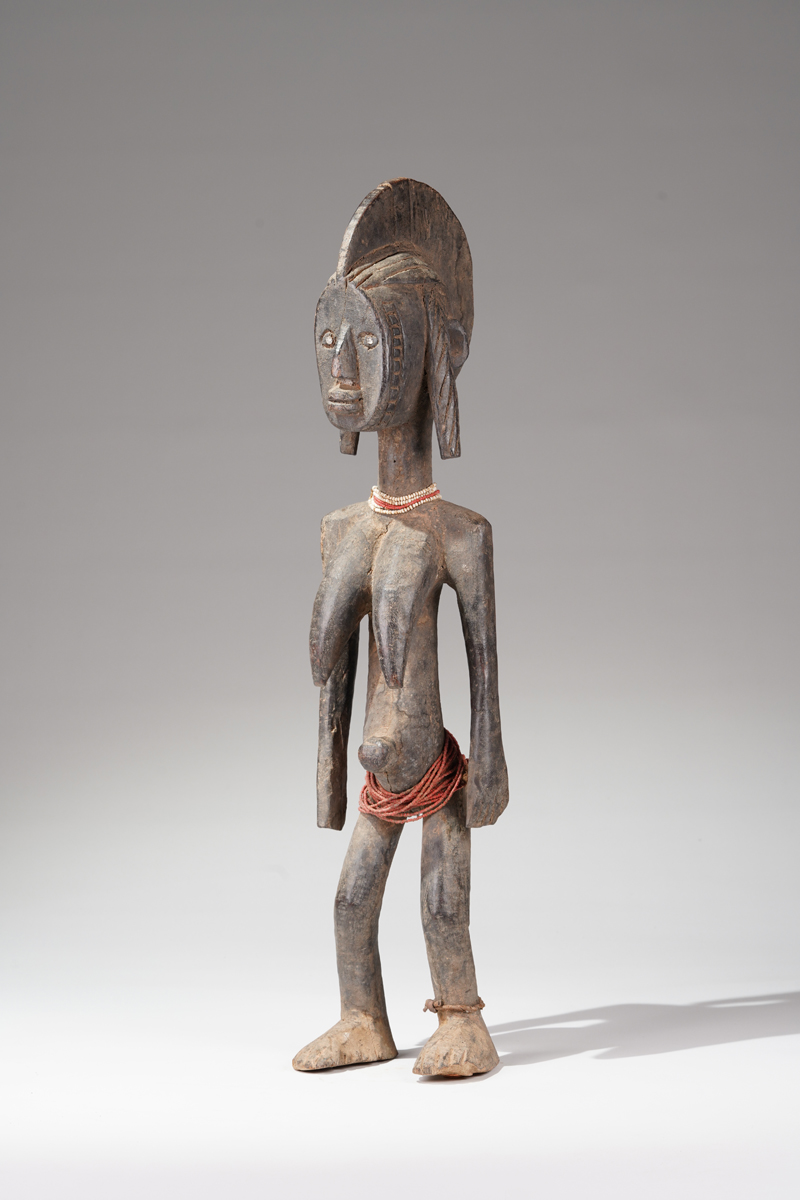 photo: wolfgang-jaenicke.com, for more information, please write us an e-mail with the identification number of the photo identification no. XBD183403.jpg |
 |