 |
 An Itante terracotta healing sculpture, Nigeria, from the Cham people. Certificate of origin and provenance. Overall, the design language of this object is extraordinary and makes it a work of art that has inspired many artists. Longuda healing vessels are distinguished by their expressive facial features, characterized by wide-open mouths and striking ornamentation, such as the intricately rendered ears and plugs seen here. The raised elements and punch marks on their surfaces differentiate them from those of neighboring tribes. These terracotta statues are exceedingly rare and only found among three obscure tribes: the CHAM, the MWANA, and the LONGUDA.(northern Benue River - northern Nigeria). These terracotta statues are also known as "pseudo-vessels". The LONGUDA call them "Kwandalowa", the CHAM and the MWANA call them "Itante". The production of these objects continued until approximately 1920, and today, only a few ancient tribes are aware of their usage. There were two versions crafted: one to safeguard expectant and newly born infants as well as newborn livestock, and the second variation, known as the "Kuluk Kuluk," was created to alleviate sudden pain, such as backaches or toothaches. "Ceramic vessels were conceived to contain various kinds of spirit forces. Their shoes typically recall pottery used for domestic purposes but their decoration differs…Such decoration also established links between people and the spirits who were called upon to facilitate positive alterations in human destiny.” Lit: Gallery Wall Text, Central Nigeria Unmasked: Arts of the Benue River Valley, 2011. sold Height: 38 cm |
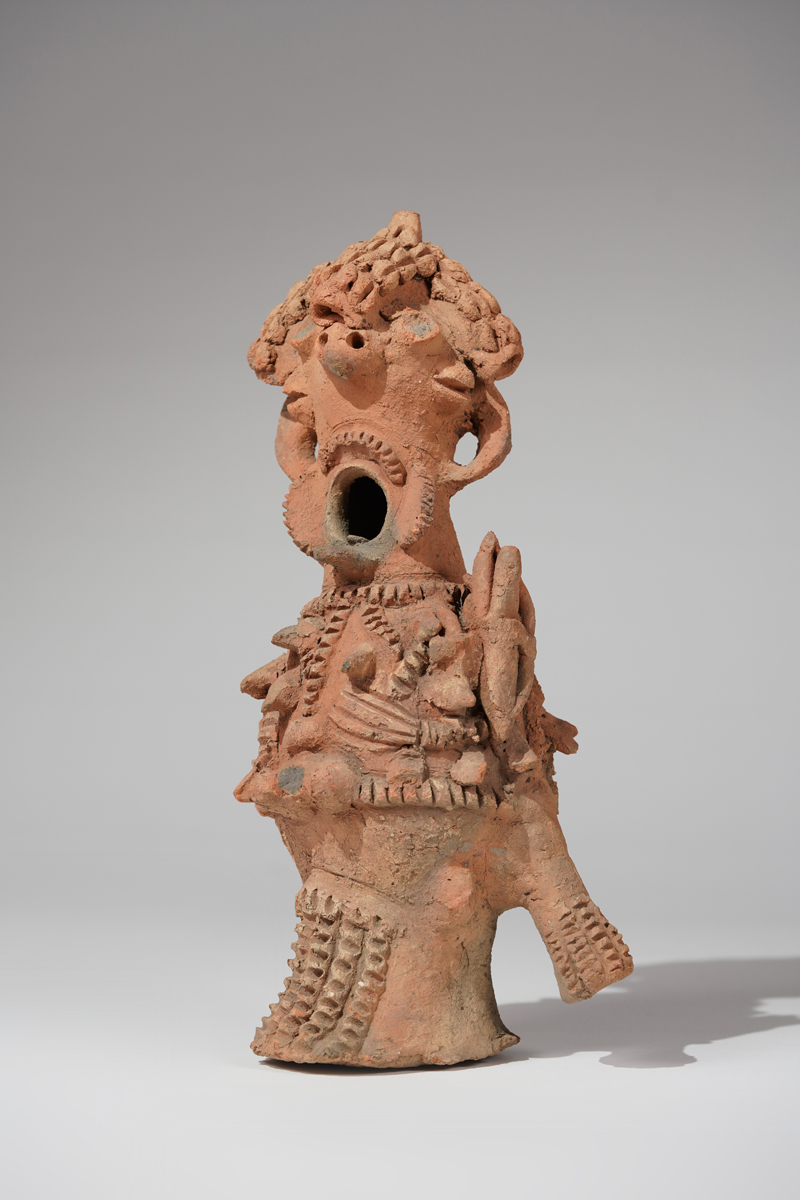 photo: wolfgang-jaenicke.com, for more information, please write us an e-mail with the identification number of the photo identification no. XBD183856.jpg |
 |