 |
A Mossi Biga doll sculpture, Burkina Faso, Ouagadougou region. Certificate of origin and provenance.
The Mossi Biga Doll is a traditional wooden figurine used by the Mossi people of Burkina Faso, primarily associated with fertility, motherhood, and socialization. These dolls, typically carved from wood with a stylized, abstract form, serve both ritualistic and educational purposes.
In Mossi culture, young girls carry Biga dolls as surrogate children, learning maternal responsibilities through play. The dolls are also linked to fertility rituals, as women struggling with infertility may use them in prayers and ceremonies, seeking divine intervention for conception and safe childbirth.
Aesthetically, the Biga dolls exhibit an elongated, cylindrical body with minimalistic or symbolic facial features. Some are adorned with beads, scarification patterns, or textiles, reflecting Mossi artistic conventions and cultural identity.
Beyond their domestic function, these dolls hold spiritual significance. They are sometimes associated with ancestral spirits and are believed to carry protective powers. Their presence in ceremonies underscores the Mossi people's belief in the interplay between the spiritual and material worlds.
"Wooden dolls are purchased by mothers for their daughters, who cover them with leather and decorate them with cowries and beads. Before marriage, a woman coyly carries the doll to market on her back. A few days after being married, she is given a bit of straw in place of her doll and is asked if her first child will be a boy or a girl. The doll is given a name and will permit the newly married couple to conceive a child quickly."
Source: Christopher D. Roy's "Mossi Dolls," African Arts in August 1981 (Vol. 14, No. 4, pp. 47-88).
sold
Height: 31 cm
Weight: 160 g |
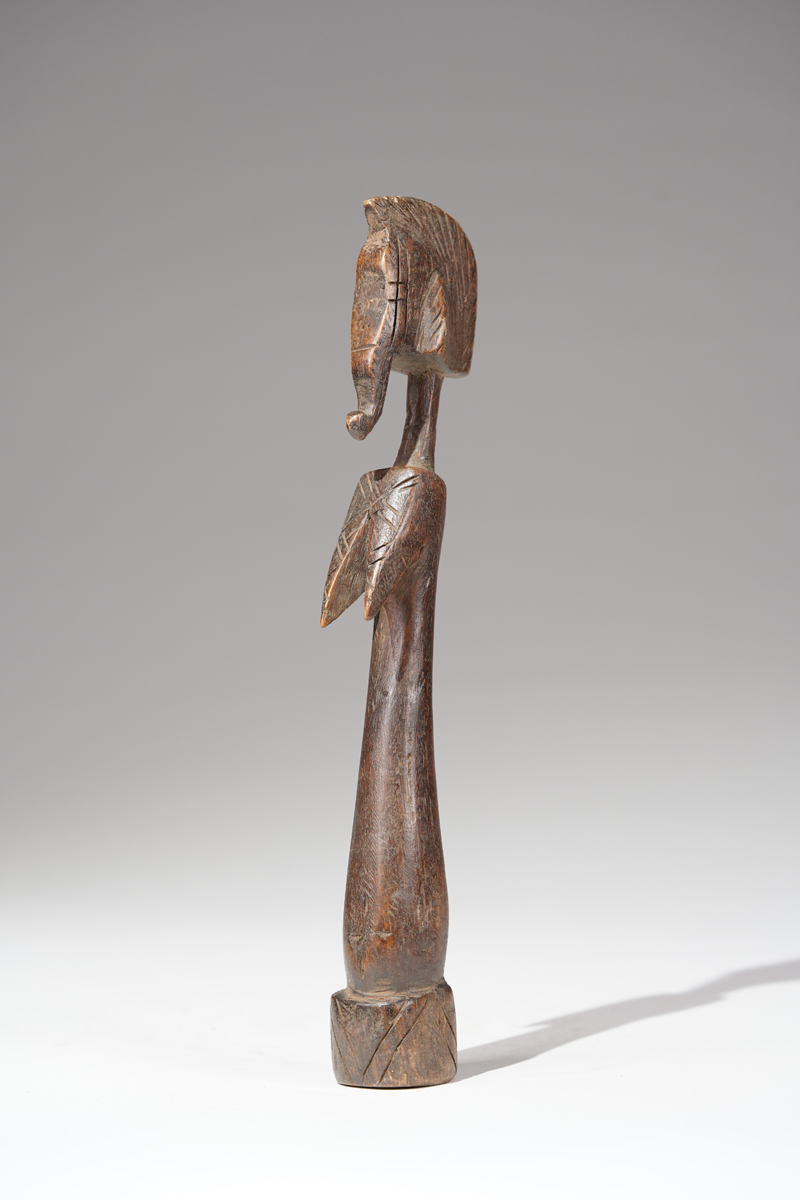 photo: wolfgang-jaenicke.com, for more information, please write us an e-mail with the identification number of the photo identification no. XBD184599.jpg
 |
|

