 |
 A Junkun sculpture, Nigeria, Benoue region. Certificate of origin and provenance.
The Jukun sculpture of Nigeria is a significant example of the artistic and cultural heritage of the Jukun people, who primarily inhabit the Benue River region in central Nigeria. These sculptures, often crafted from wood, serve both religious and ceremonial functions, reflecting the spiritual beliefs and historical narratives of the Jukun.
Material and Form: Jukun sculptures are typically carved from wood, sometimes adorned with pigments, metal embellishments, or other organic materials. The figures are often elongated and stylized, with exaggerated features such as large heads, prominent facial scarifications, and elongated torsos. The eyes are usually almond-shaped, and the figures may display geometric patterns that suggest ritualistic significance.
Function and Symbolism: These sculptures are believed to have played an important role in ancestor veneration, spiritual protection, and ritual ceremonies. They were often used in shrines, where they served as intermediaries between the living and the spirits. Some scholars suggest that these sculptures were linked to royalty and priesthood, given the Jukun’s centralized political and religious structures.
"The uniqueness of Africa is not because of its geographical location, but because of its diverse rich cultural heritage, symbolic operation and adages that surround the entire spectrum of human learning, reasoning, and communication. This research work on adaptation of the Jukun cultural symbols for textile design gives a brief introduction of the Jukun people, which are called the 'karorofawas' with their rich cultural symbols. Its importance to the Jukun societies and how through symbolization, the Jukun people have communicated their ideas, fears, anxieties, moods, sensations, feelings and intuitions. All of these experiences, of course, are subjective or emotional, yet are capable of being graphically represented in line, shape, color, texture, and form."
—Okunna, Emman, and Gausa Solomon. "Adapting the Jukun Traditional Symbols for Textile Design and Production."
"The performance of keku dance of the Jukun has experienced some level of changes over the years, some of which will be discussed in this study. The coherence of the knowing and the change experienced in the performance of this music will also be examined. Through an ethnographic study of the music and the musician in the context of its performance and cultural implications, this study looks at the changes the music has experienced so far and their effects on the cultural posterity of the music."
—Ekpo, O.E., Soretire, E.A., and Arum, J.C. "Change and Continuity in the Performance of Keku Dance of the Jukun People."
sold
Height: 57 cm
Weight: 1,4 kg
|
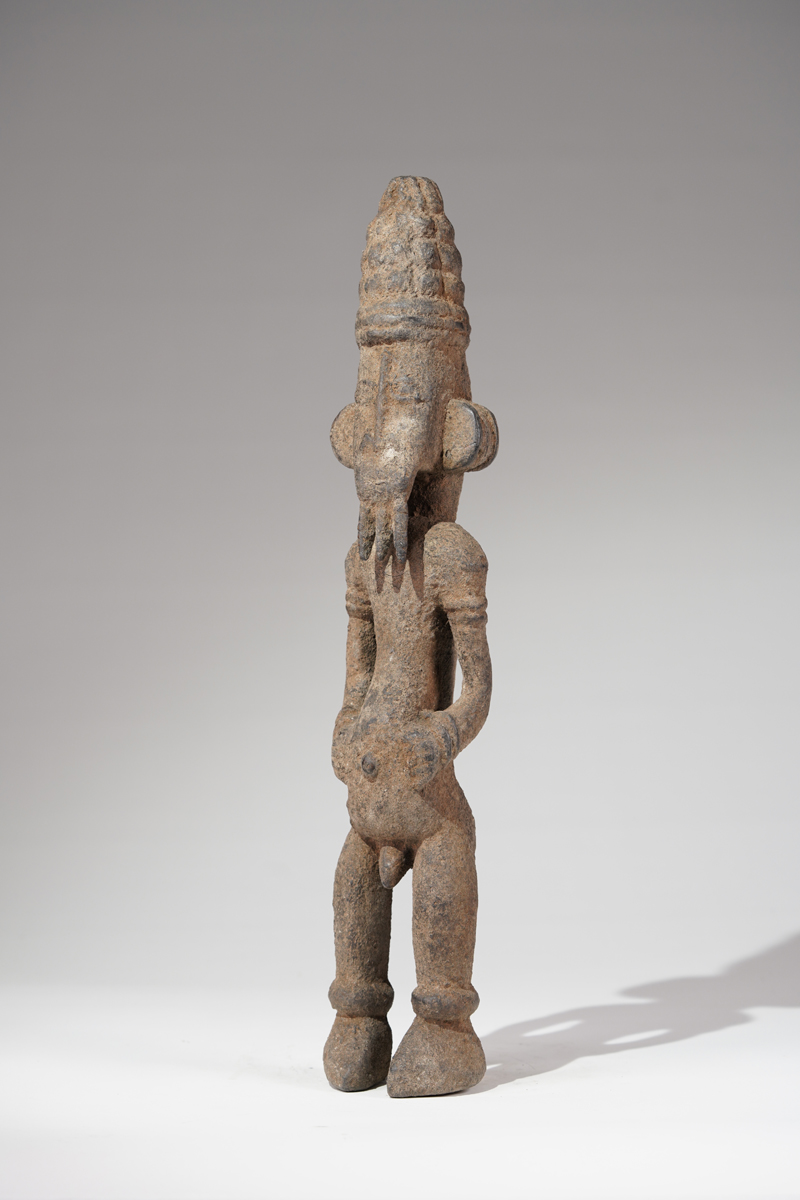 photo: wolfgang-jaenicke.com, for more information, please write us an e-mail with the identification number of the photo identification no. XBD184750.jpg |
|
