 |

A Bura terracotta head, Niger. Certificate of origin and provenance.
The Bura terracotta sculptures of Niger are an important aspect of the West African archaeological record, dating back to the first millennium CE. These terracotta figures, associated with the Bura-Asinda-Sikka culture, were discovered in burial mounds and appear to have served ritualistic or funerary purposes. The sculptures typically include human and equestrian figures, as well as anthropomorphic and zoomorphic representations, often characterized by elongated forms, intricate facial details, and distinctive stylized features.
Archaeological studies suggest that these artifacts were integral to the spiritual and social practices of the ancient inhabitants of the region. The Bura culture’s terracotta figurines demonstrate a high degree of artistic sophistication and are believed to have had religious or commemorative functions, potentially linked to ancestor veneration.
“The Bura culture terracottas represent one of the earliest known sculptural traditions in West Africa, illustrating a complex society engaged in elaborate funerary rituals and artistic expressions that suggest a well-developed cultural identity” (McIntosh, 1995, p. 232).
McIntosh, R. J. (1995). Ancient Middle Niger: Urbanism and the Self-Organizing Landscape. Cambridge University Press.
sold
Height: 24 cm without stand
Weight: 1,6 kg incl. stand |
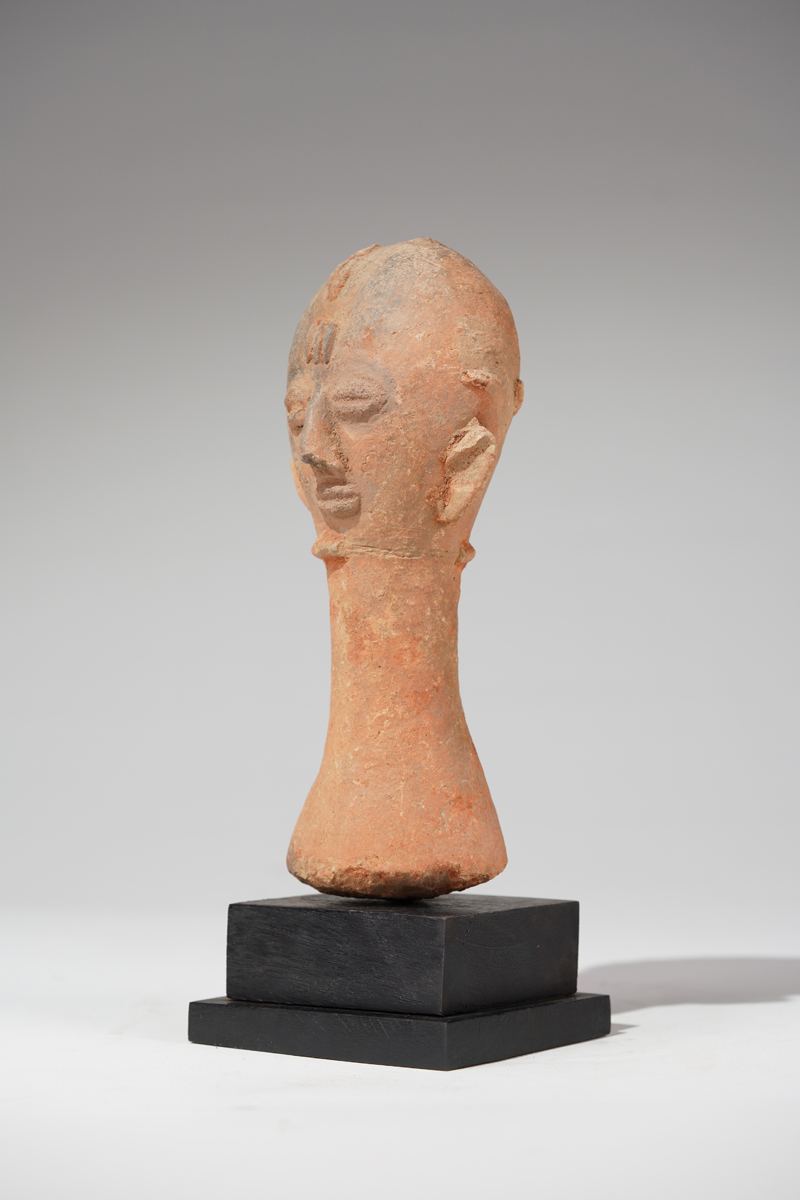 photo: wolfgang-jaenicke.com, for more information, please write us an e-mail with the identification number of the photo identification no. XBD184775.jpg |
|
