 |
 A Senufo Bird sculpture, the wooden staff was not collected, because it was - nearly zwo and a half meter - to long, called "sejen-staff", which is almost never seen in the collections. On top of the staff there is a bird, the "sejen" wings are attached two small birds, which resemble the mother animal, and in his tail hangs a strip of fabric, which moves in the wind during his appearance (adjacent picture). For the Senufo, Sejen is "He who watches over the young people". He is less often seen with the first, but when the end of the work approaches, the elders who have been watching all day grab the staff and some begin to dance in front of the musicians singing with joy. The best young workers are highly praised. They tell you, for example, fun (but not without reason) that they now have good chances with the girls who are standing on the edge of the field. They came from the village during the day with large bowls full of rice, yams and meat. However, you can only eat when all work is done.
Lit.: Gotschalk "Kunst aus Schwarzafrika, Band 3 Senufo, Pafe 113.
In the Senufo culture, which spans across regions in West Africa (mainly Côte d'Ivoire, Mali, and Burkina Faso), bird sculptures hold significant symbolic, religious, and artistic importance. Here's an overview of their role:
1. Symbolism and Religious Significance: Birds in Senufo art often symbolize spiritual and cultural themes, particularly in relation to the cosmic world and ancestor worship. Birds are believed to be messengers between the human and spiritual realms, acting as intermediaries between the living and the dead. Some birds, like the eagle or hornbill, are associated with power, wisdom, and divine forces.
2. Ritual and Ceremonial Role: Bird sculptures, like other objects in Senufo culture, were often used in rituals and ceremonial practices. These could include initiation ceremonies, healing rituals, or ancestral veneration. The Senufo people have a Poro society (a secret society responsible for teaching young men about the traditions, laws, and responsibilities of the community), and bird sculptures were sometimes incorporated into the rituals of this society.
3. Artistic Style: The Senufo people are known for their highly stylized and detailed sculptures. Bird figures in their art often have exaggerated features, such as long beaks or large eyes, emphasizing symbolic qualities over realistic depictions. The craftsmanship is often highly refined, made from wood, and sometimes decorated with geometric patterns.
4. Cultural Connections: Birds in Senufo sculpture also reflect their deep connection to nature. They are part of the Senufo people's broader worldview, where the natural world, animals, and humans are interconnected. Bird figures can symbolize attributes like agility, freedom, and the cyclical nature of life.
5. Functional Use: Beyond symbolic uses, bird sculptures might also serve as decorative elements in everyday life, serving as embellishments on furniture, ritual objects, or even masks. These objects would have both aesthetic and functional roles, blending artistic expression with cultural importance.
In sum, bird sculptures in the Senufo culture represent a blend of artistic mastery, religious belief, and a deep connection to nature, where these figures are more than just decorative pieces—they are potent symbols within their spiritual and social systems.
sold
Height: 30 cm incl. stand
Length: 52 cm
Weight: 4,2 kg incl. stand |
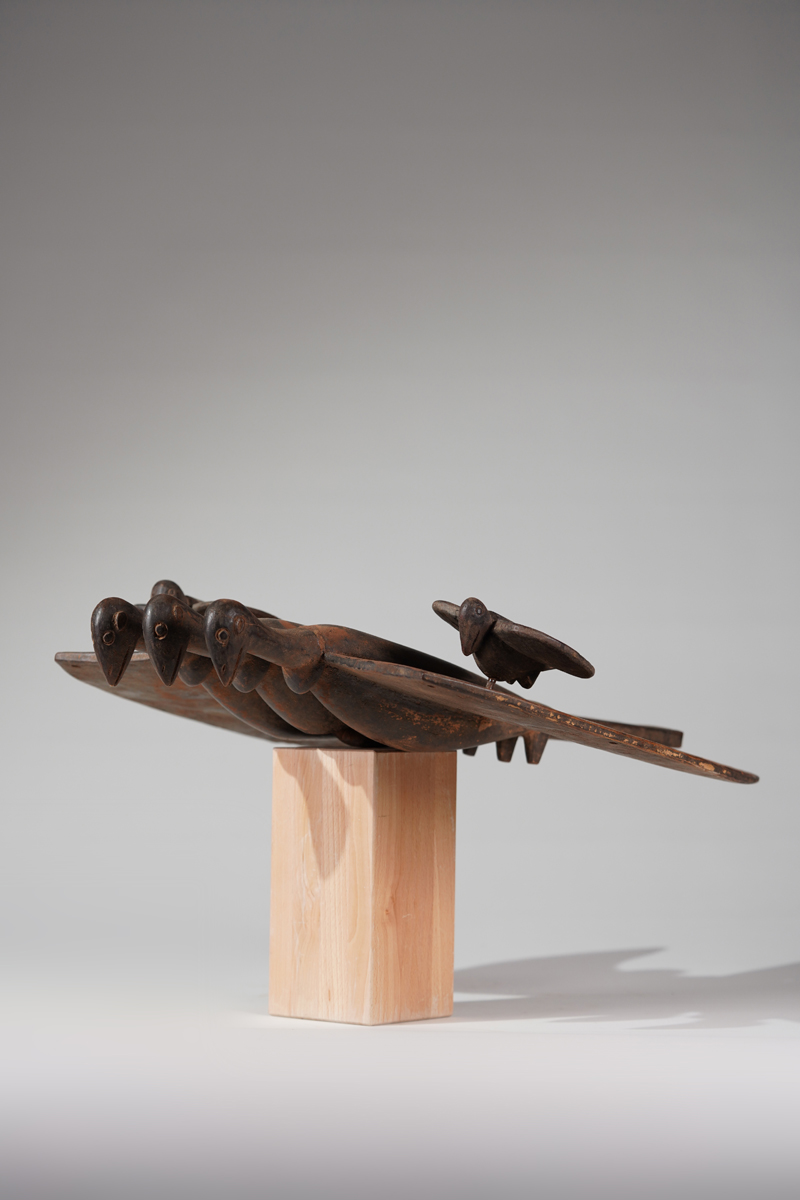 photo: wolfgang-jaenicke.com, for more information, please write us an e-mail with the identification number of the photo identification no. XBD184953.jpg |
|
