 |
 A Bete mask, collected in the Gagnoa region. Certificate of origin and provenance. Incl. stand The Bete mask from the Gagnoa region is a striking artifact, central to the spiritual and social life of the Bété people, who are part of the larger Kru cultural group in southwestern Côte d’Ivoire. These masks are known for their imposing and fearsome features—such as bulging foreheads, exaggerated jaws, narrow eyes, and horn-like protrusions—which serve both aesthetic and functional purposes. Far from being merely decorative, these elements enhance the mask’s capacity to provoke awe and assert spiritual power during ceremonial events. Traditionally, Bété masks were used in powerful rituals designed to restore harmony after conflict, enforce customary justice, and prepare for or commemorate warfare. They were worn by initiates or elders of secret societies and were believed to channel ancestral spirits or bush entities, invoking their presence to mediate in matters of justice, conflict, and protection. The presence of kaolin, iron tacks, and organic materials such as hair or animal hide heightened the spiritual potency of these masks, marking them as sacred objects that bridged the human and supernatural realms. As described by the Belgian art historian Marc Leo Felix: These masks often presided over reconciliation ceremonies following inter-village disputes or were used during rites of passage to mark the transition from youth to adulthood. Though the warrior and judicial functions of the mask have diminished in modern times, it remains an essential element in funerary rituals and public festivals, where it continues to evoke deep respect for tradition and the ancestral world. sold Height: 28 cm without stand |
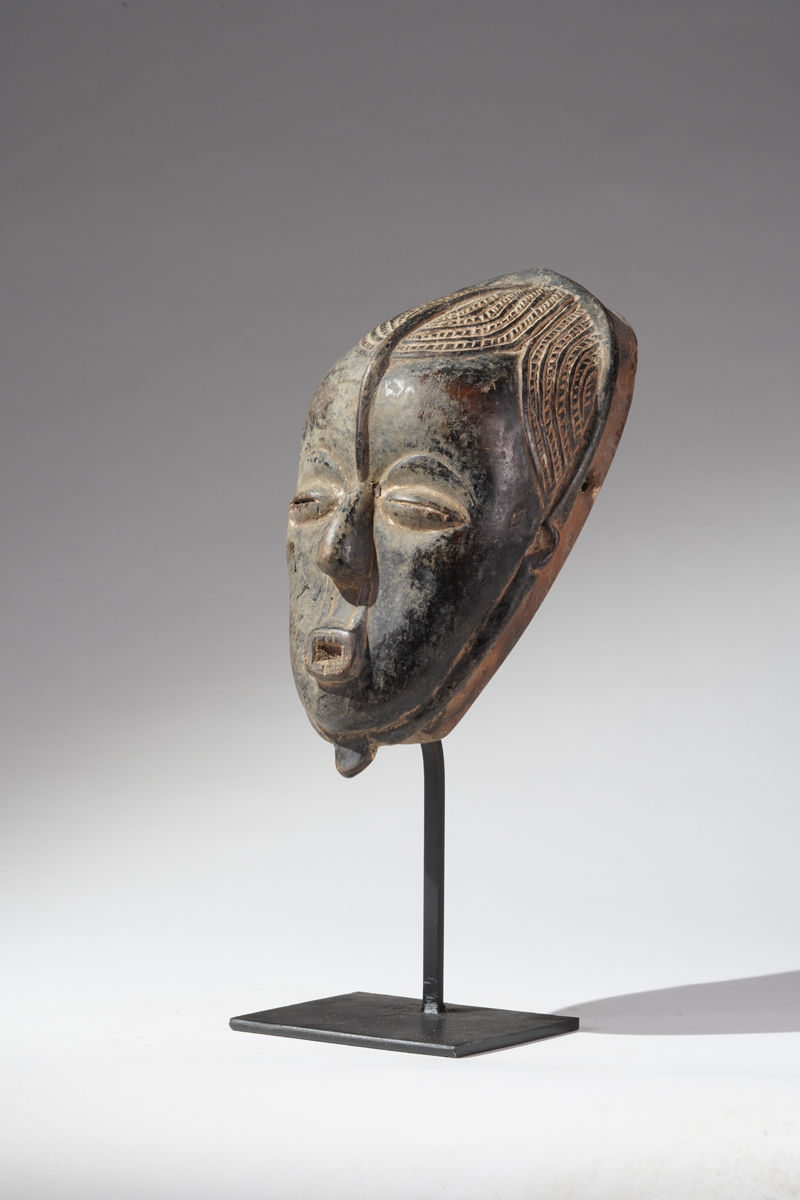 photo: wolfgang-jaenicke.com, for more information, please write us an e-mail with the identification number of the photo identification no. CAB02662.jpg |
 |