 |
 A Dogon door lock, Mali, known as 'ta koguru'. Signs of ritual use and age. Certificate of origin and provenance. The Dogon peoples used wooden bolt locks (ta koguru) to secure the doors to houses, interior rooms, granaries, and some shrines. This type of lock was introduced to sub-Saharan Africa with the spread of Islam from the Near East and North Africa. The Bamana and Dogon peoples in Mali especially made them into works of art. The lock consists of three separate pieces: the vertical beam (ta koro); the crossbeam (ta dagu) that slides into a cut-out rectangle in the back of the vertical beam, which is furnished with metal prongs; and a toothbrush-like key (ta i) that slides into a hollowed out part of the crossbeam. The key is outfitted with metal prongs that match those in the vertical beam. A hole bored into the door frame opposite the mounted lock accommodates the rounded or tapered end of the horizontal beam. When the horizontal beam is pushed into this hole, the metal prongs of the vertical beam fall into the matching holes of the horizontal beam. To unlock the door, the dangling prongs of the vertical beam are pushed upward. sold Height: 65 cm (figure piece) |
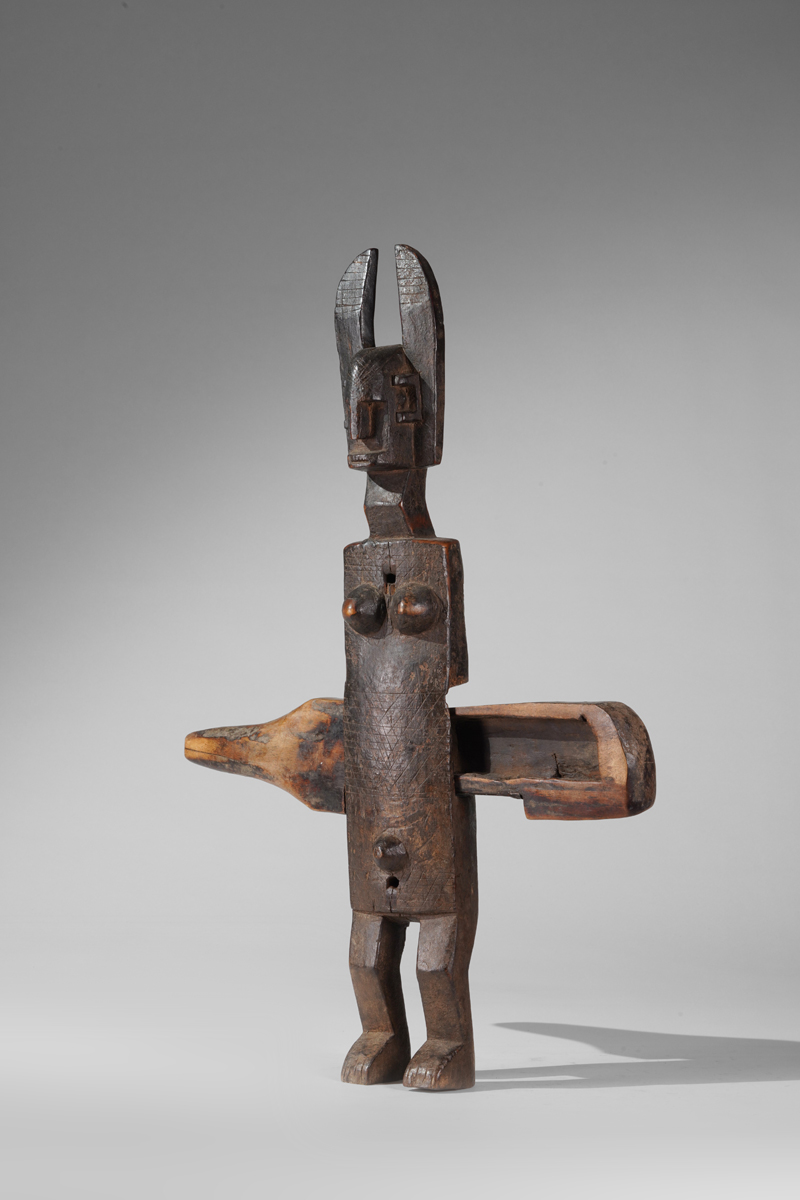 photo: wolfgang-jaenicke.com, for more information, please write us an e-mail with the identification number of the photo identification no. CAB04739.jpg |
 |