 |
 A large Fon sculpture, Benin, mounted on a tall plinth, covered in blue pigment. Signs of ritual use and age. The symbolism and significance of large bluish Fon sculptures. The visual arts of the Fon people of the Republic of Benin (formerly Dahomey) constitute a compelling intersection of spiritual belief, royal authority, and social cohesion. Among the most striking elements in Fon art are the large-scale sculptures, some of which have been observed or interpreted in bluish hues. While traditional Fon sculpture rarely used such color schemes historically, the emergence of blue surfaces in both modern interpretations and restored examples invites renewed scholarly attention. Fon sculpture is deeply embedded in the cosmology and sociopolitical structure of the Dahomey Kingdom. Monumental figures—often made of wood, bronze, or terra cotta—were produced to serve both ritual and representational functions. These works could depict ancestors, royal figures, or vodun (spiritual entities), and were often used in palace architecture, shrines, or public ceremonies to affirm hierarchical and spiritual order.¹ The use of blue pigmentation, while not traditionally prevalent in Dahomean art, can be understood through several lenses. First, blue has significant spiritual and symbolic associations across West African cultures. In Yoruba and Fon cosmologies, blue is often associated with water spirits, the divine, and otherworldly power—notably in the iconography of deities like Mami Wata.² The incorporation of blue may therefore enhance the transcendental or protective function of such sculptures. Second, in contemporary art practice, blue is frequently employed by artists or curators to recontextualize traditional African forms within modern aesthetic frameworks, providing both visual distinction and metaphorical depth.³ The scale of these sculptures contributes to their power. Monumentality in African sculpture, particularly within the Fon context, is not merely a matter of aesthetics; it is a semantic device—a means of amplifying the presence of the spirit or authority the figure represents.⁴ In this sense, a large bluish Fon sculpture operates as both a visual anchor in space and a ritual conduit, summoning collective memory and sacred force. In sum, while the bluish coloration of some large Fon sculptures may not be historically typical, its presence in modern or museum-displayed works reflects both a symbolic continuity and a dialogical evolution in African art. These sculptures serve as vital nodes where material culture, belief systems, and contemporary aesthetics intersect. sold Height: 149 cm |
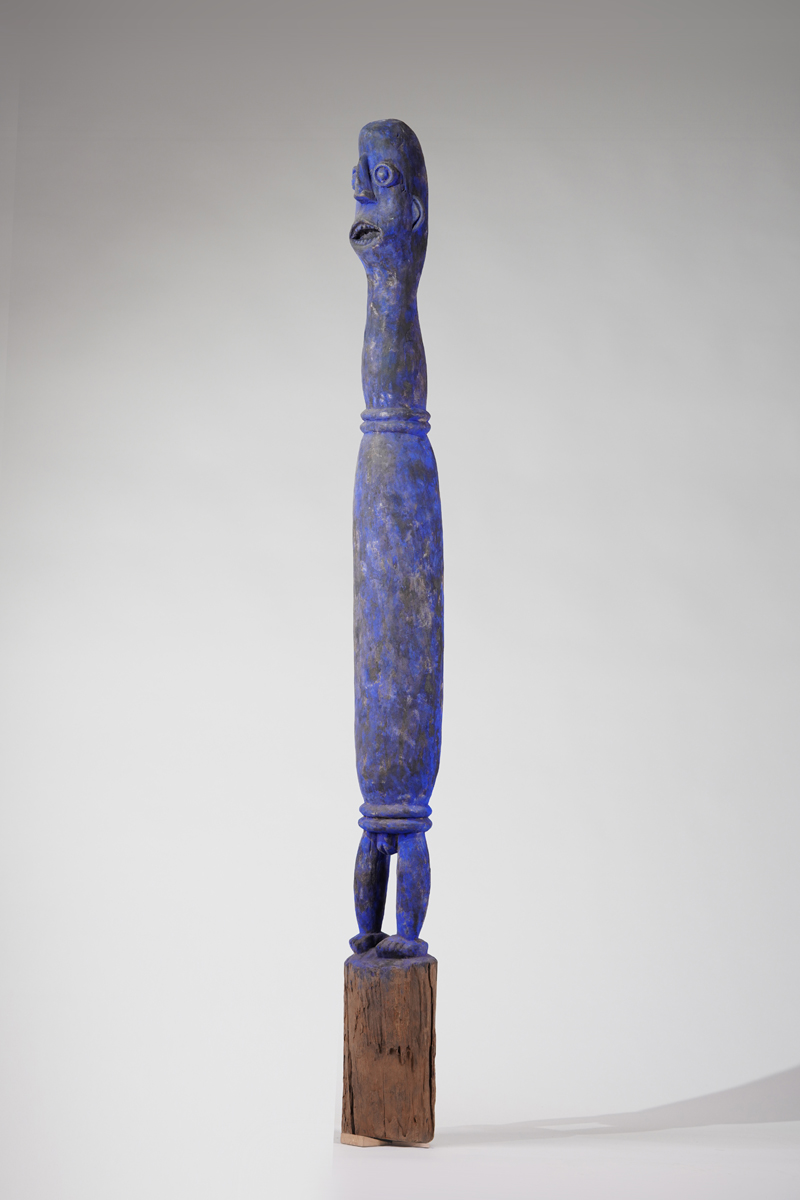 photo: wolfgang-jaenicke.com, for more information, please write us an e-mail with the identification number of the photo identification no. CAB06460.jpg |
 |