 A Lulua mask, DR Congo, with an agape mouth and geometric an ddotted textures as decoration. Signs of ritual use and age. The Lulua people, also known as Luluwa or Bena Lulua, live along the Lulua River in the Kasai region of the Democratic Republic of the Congo. Although they were once part of the larger Luba cultural sphere, they developed a distinct identity in the late nineteenth century. Their society is organized into small chiefdoms and follows a hierarchical structure. Daily life traditionally centers on farming, hunting, and fishing. Lulua masks are rare and stand out for their refined forms and symbolic features. Carved with geometric scarification patterns, the designs reflect real body markings worn by members of the community. These patterns were often emphasized with natural pigments, similar to how Lulua statues are decorated. Typical features of these masks include elongated proportions, concave eye sockets, pointed chins, and high foreheads. Many masks also display a stylized, saw-tooth element on the top, which may represent hair or a ceremonial headdress. The masks were used in male initiation rituals, especially during circumcision ceremonies and funerals of important individuals. Boys undergoing initiation wore masks called bakisi while performing dances that marked their transition into adulthood. Unlike the more common Lulua sculptures, masks were created for specific ceremonies and were often used only once. Because of this, surviving examples are rare and highly valued. Today, authentic Lulua masks can be seen in a few museum collections, such as in Hamburg and Geneva. Occasionally, they also appear in auction houses, where they are documented with expert analysis and provenance research. sold Height: 31 cm without stand |
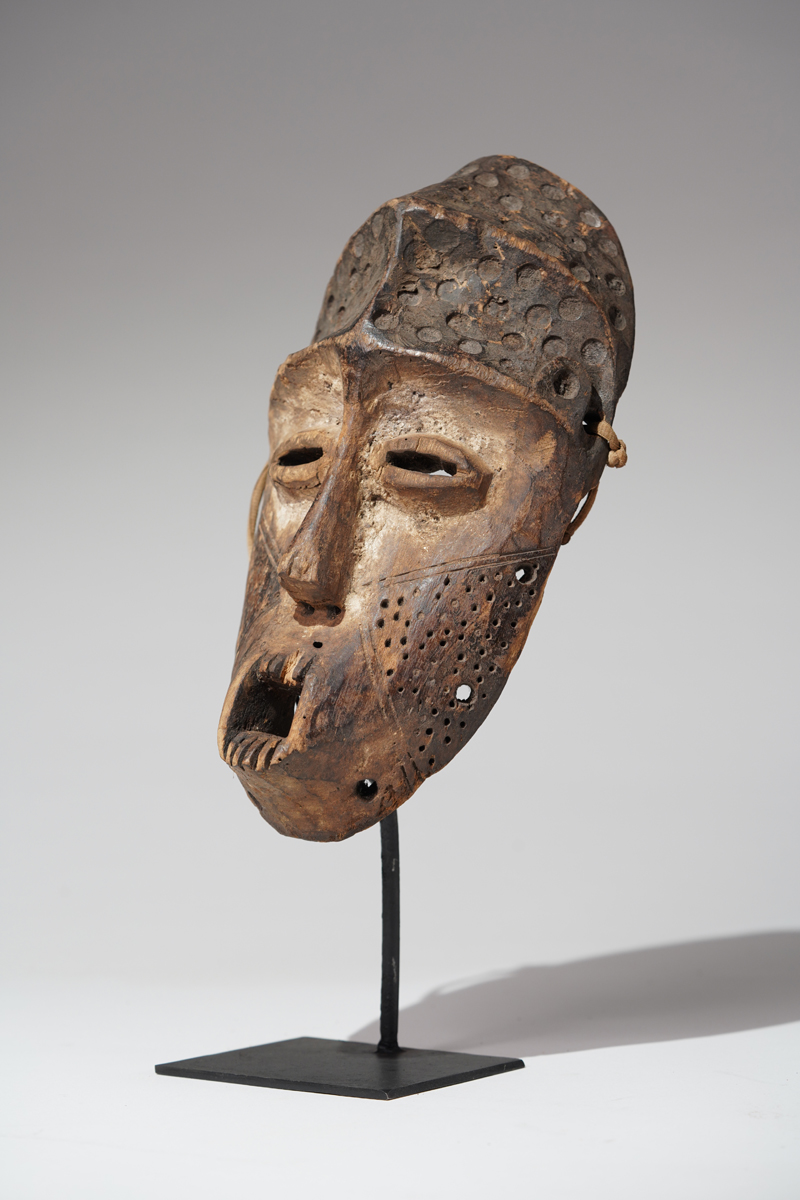 photo: wolfgang-jaenicke.com, for more information, please write us an e-mail with the identification number of the photo identification no. CAB04415.jpg |
 |