 |
 An "Altar of the Hand" - Ikegobo - Nigeria, lost-wax cast in brass. Cylindrical in form with central figure of Oba (king) on top wearing beaded coral regalia and holding two downturned eben swords. Flanked by two kneeling chiefs, with leopard figures in front, oxidations and remnants of laterith encrustration, the left leopard was broken off, but can be replaced to the fragmentary base on top, see the following photos of this sequence. Certificate of origin and provenance. Ikẹgobọ are placed on ancestral altars. Typically, the Ọba, Iy’Ọba and certain privileged chiefs may use cast forms, whereas chiefs use wooden ones (Dean, 1983). Altars of the hand are cylindrical, the outer sides decorated with relief carving. They are sometimes topped with sculptural elements, elephant tusks or antelope horns, and wooden altars are topped with a conical projection which mimics a tusk. Worship of the hand is important in Edo belief; the hand relates to an individual’s success with different skills, qualities or characteristics, such as craftsmanship, hunting or warcraft. "In the kingdom of Benin, ikegobo, or "altars to the hand," celebrate the accomplishments of exceptional individuals. The hand is associated with action and productivity, and is considered the source of wealth, status, and success for all those who depend on manual skill and physical strength. Altars of this kind are commissioned in terracotta, wood, or brass, depending on the status of the patron. sold Height: 46 cm |
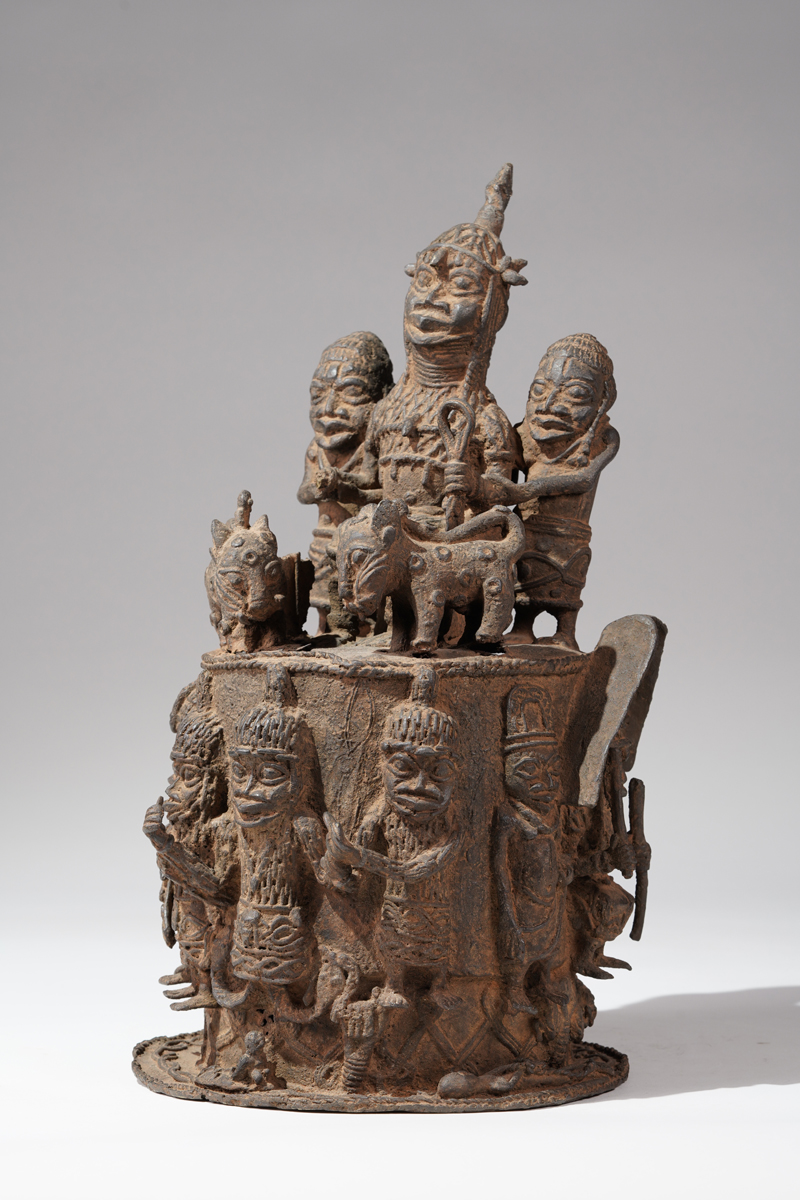 photo: wolfgang-jaenicke.com, for more information, please write us an e-mail with the identification number of the photo identification no. CAB07125.jpg |
 |