 |
 A terracotta sculpture in the style of Komaland, Northern Ghana, in streight position, unbroken sculptues of this ethnic group are rare. The Komaland culture is a fascinating archaeological tradition that emerged in what is now northern Ghana. It developed between the 6th and 14th centuries CE, primarily in the region around Yikpabongo and Koma. The culture is best known for its terracotta figures, discovered in burial mounds—powerful expressions of a spiritual world shaped by ancestor worship and healing rituals. The distinctive sculptures of the Komaland culture depict humans, animals, and hybrid beings, often with abstract or stylized features. Many of the figures appear fragmented or deliberately deformed, suggesting symbolic meanings that remain only partially understood. It is believed they served as intermediaries between the living and the spirit world or were used in traditional healing practices. Archaeologically, the Komaland culture ranks among the most significant West African discoveries of recent decades. Its objects not only offer insight into the spiritual life of past societies but also expand our understanding of African sculptural traditions beyond the more familiar tribal masks and figures. They invite a reconsideration of the continent’s artistic heritage, where the fragmentary, the enigmatic, and the ritualistic take on a central role. sold Height: 37 cm incl. stand |
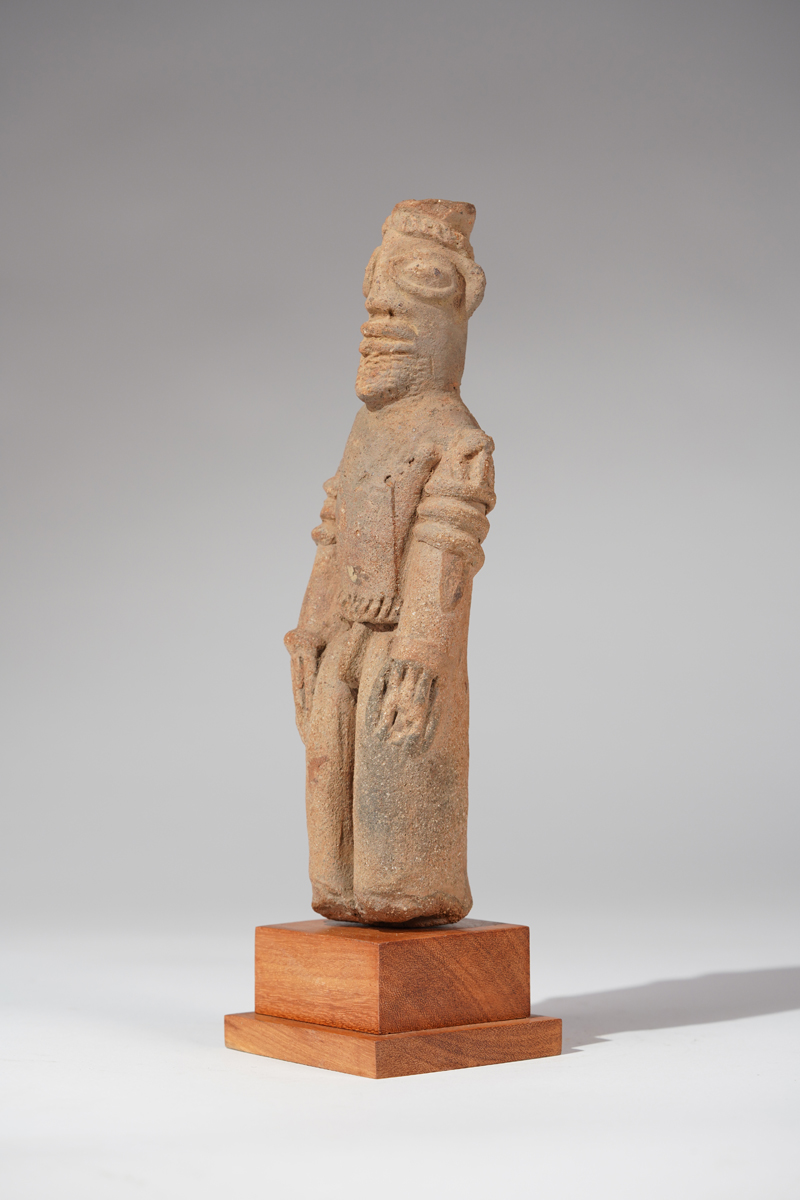 photo: wolfgang-jaenicke.com, for more information, please write us an e-mail with the identification number of the photo identification no. CAB07652.jpg |
 |