|
 A couple of PramPram sculptures, Ghana, elongated body with tapering limbs, a spherical head, eyes, ears, navel and nipples are represented as indentations, the nose in the shape of a small ridge.
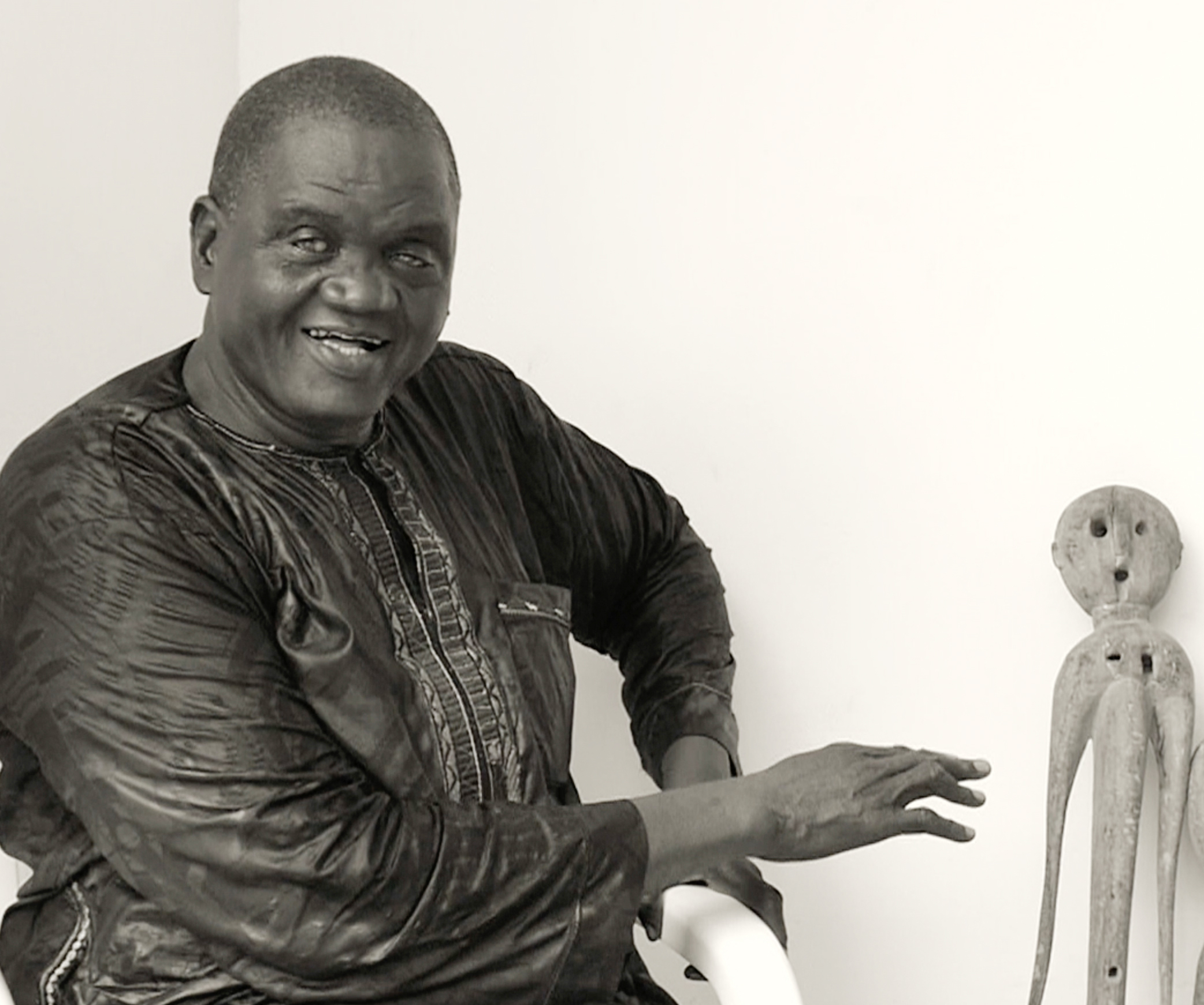
"A great discovery were the so called "Prampram" sculptures, which are stylistically related to the Northern part of the small tribes in Northern Ghana and Togo, in particular the Moba. In my interview Baba Sylla, Accra, Ghana, isn´t speaking about a "tribe“, he named it "a great family", which seems to be incorrect under anthropological aspects, but it is a link to the fact, how small this "tribe" is or was in reality. May be this is the reason that these sculptures are unknown in literature. Only Karl-Heinz Krieg (short before his death) conducted unpublished researches with voice protocols close to the hut, where these sculptures were once part of a shrine. But a friend of him told me that Mr. Krieg had no possibility to access the hut." Lit.: Dogbe, B.K. (1977). “The human form as a central theme in art” in Image (Journal of the College of Art) Interview with Baba Sylla, the well known antique dealer in Accra, Ghana, who collected these sculptures for the first time. You tube video, "PramPram sculptures with background-informations of Baba Sylla, Accra, Ghana". The Prampram sculptures are a distinctive form of African art originating from the coastal town of Prampram in the Greater Accra Region of Ghana. These sculptures are characterized by their elongated, tapering bodies, cylindrical necks, and spherical heads. Facial features such as eyes, ears, and a small ridge representing the nose are subtly indicated, often through indentations or slight protrusions. The bodies are similarly stylized, with navel and nipple areas marked by hollows or raised points, reflecting a minimalist yet expressive approach to the human form. Stylistically, the Prampram sculptures are linked to the northern regions of Ghana and Togo, particularly the Moba people. However, the exact cultural and ethnic affiliations remain ambiguous. Baba Sylla, a prominent antique dealer in Accra, refers to the creators of these sculptures as "a great family," suggesting a small, possibly obscure group rather than a well-documented tribe. This nomenclature, while not strictly anthropological, underscores the limited recognition and study these sculptures have received in academic The Prampram sculptures came to broader attention through the efforts of Karl-Heinz Krieg, a German collector and researcher. In the years leading up to his death, Krieg conducted field research near a hut where these sculptures were believed to have been part of a shrine. However, access to the site was reportedly restricted, and his findings remain largely unpublished. Subsequent documentation by Baba Sylla and others has been instrumental in bringing these artifacts to the attention of the global art community The Prampram sculptures are notable for their abstraction and stylization, focusing on essential human features while omitting detailed anatomical accuracy. This approach aligns with broader African artistic traditions that prioritize symbolic representation over realistic portrayal. The sculptures' minimalist design invites various interpretations, potentially reflecting spiritual beliefs, ancestral veneration, or societal ideals. Their enigmatic nature adds to their allure, prompting ongoing interest and study among art historians and collectors. The Prampram sculptures stand as a testament to the rich and diverse artistic heritage of Ghana. Despite their limited exposure in academic circles, they offer valuable insights into the cultural expressions of a lesser-known community. Continued research and scholarly attention are essential to fully understand the significance and context of these remarkable works of art.
sold Height: 44 cm / 46 cm incl. stand
|
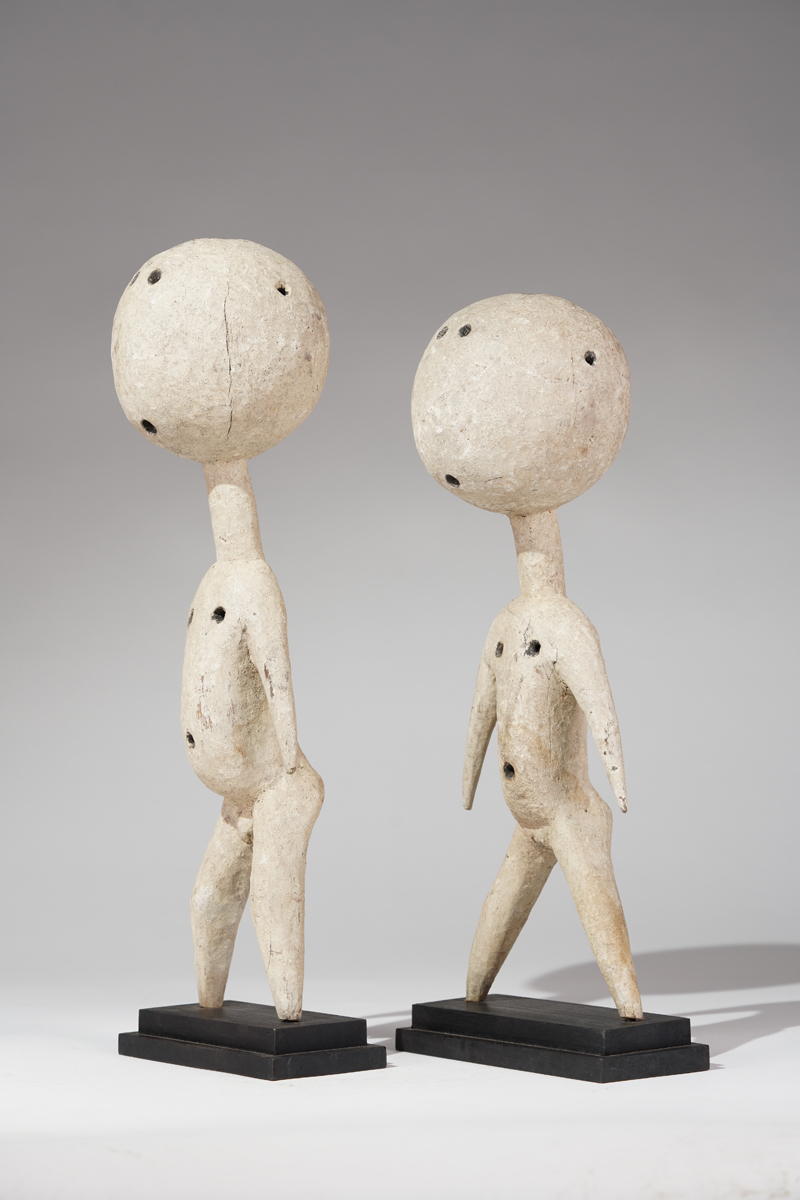 photo: wolfgang-jaenicke.com, for more information, please write us an e-mail with the identification number of the photo identification no. CAB07777.jpg |
 |