 |
 An iron Dogon horse rider, Mali, Bandiagara region. The iron horse rider sculptures of the Dogon people, originating from the Bandiagara Escarpment in Mali, represent a compelling synthesis of symbolic form and material craftsmanship within West African artistic traditions. Typically forged from iron by specialized blacksmiths (numu), these figures depict a mounted warrior or dignitary, often stylized with elongated limbs and simplified anatomical forms characteristic of Dogon aesthetics. The equestrian motif is not merely decorative but deeply symbolic, evoking themes of power, prestige, and ancestral veneration. Within Dogon cosmology, the horse and its rider may embody the transference of spiritual authority, the martial prowess of historical leaders, or even mythological figures linked to the Dogon origin narratives. The rider's elevated position atop the horse emphasizes hierarchical structures and social stratification within traditional Dogon society, where horsemanship was associated with nobility and political leadership. Forged iron, a medium charged with both spiritual and practical significance, further amplifies the object's potency. In Dogon culture, blacksmiths are mediators between the physical and metaphysical realms, and their metalwork is often imbued with ritual power. As such, iron horse riders were likely used in religious or funerary contexts, possibly as offerings or commemorative objects linked to ancestor worship. These sculptures, while small in scale, convey a monumental sense of presence and authority. Their minimalistic form belies a rich semantic density, emblematic of the Dogon’s visual language. Today, such works are housed in major ethnographic collections and continue to inform global understandings of West African material culture and ritual art. sold Height: 43 cm |
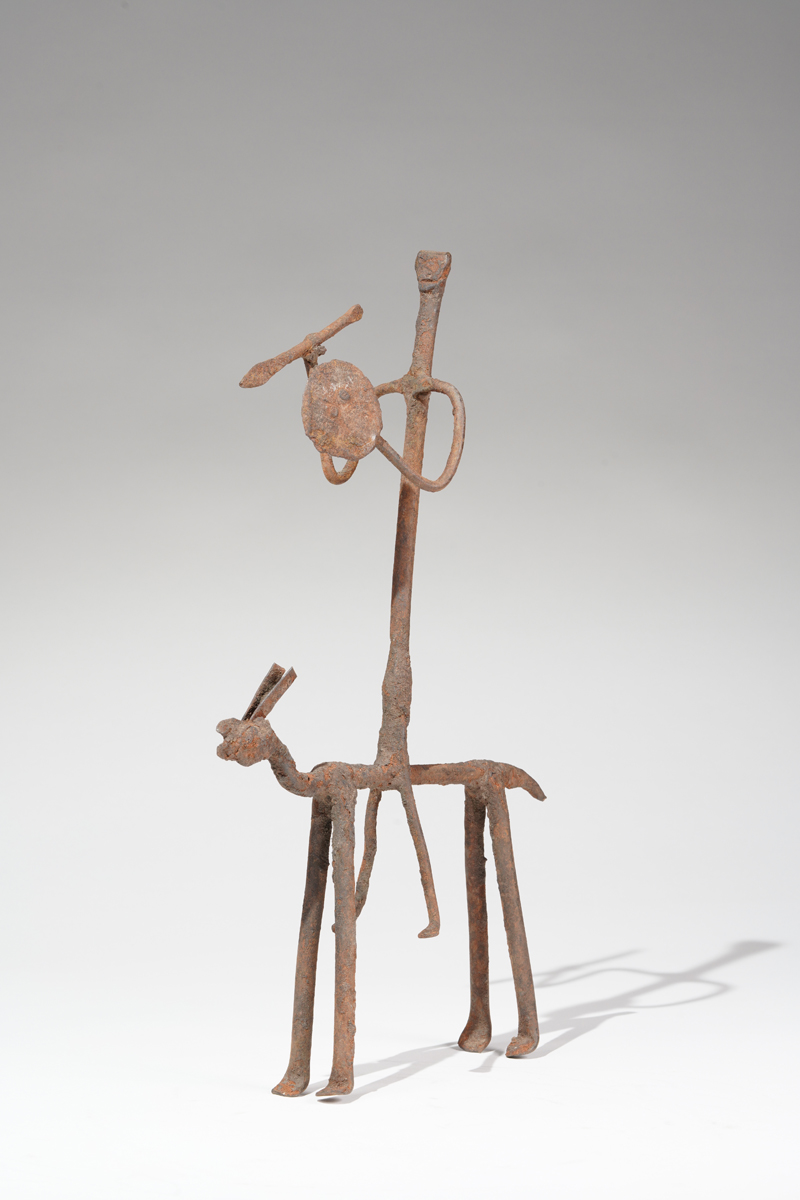 photo: wolfgang-jaenicke.com, for more information, please write us an e-mail with the identification number of the photo identification no. CAB08429.jpg |
 |