 |
 A terrcotta sculpture, in the style of Nok, Kaduna region, Nigeria. Terracotta figures attributed to the Nok culture, which flourished in central Nigeria—particularly in present-day Kaduna, Plateau, and Nasarawa states—represent some of the earliest known examples of sculptural art in sub-Saharan Africa, dating as far back as 1000 BCE to 300 CE. This particular work, executed in terracotta, reflects the canonical stylistic features associated with Nok artistry, including an elongated head, prominent triangular or almond-shaped eyes, and elaborate coiffure or headdress. The use of terracotta—a locally sourced, malleable, and enduring medium—allowed Nok sculptors to achieve a remarkable level of detail and permanence. The figures' expressive features and dynamic postures convey a sense of individuality and perhaps social status, underscoring the role of sculpture in mediating between the human and spiritual realms. As precursors to later West African sculptural traditions, including those of Ife and Benin, Nok terracottas are of profound archaeological and art-historical significance. They provide a rare and invaluable glimpse into the early development of complex societies in West Africa and remain central to discussions of African aesthetics, material culture, and identity. sold Height: 31 cm without stand |
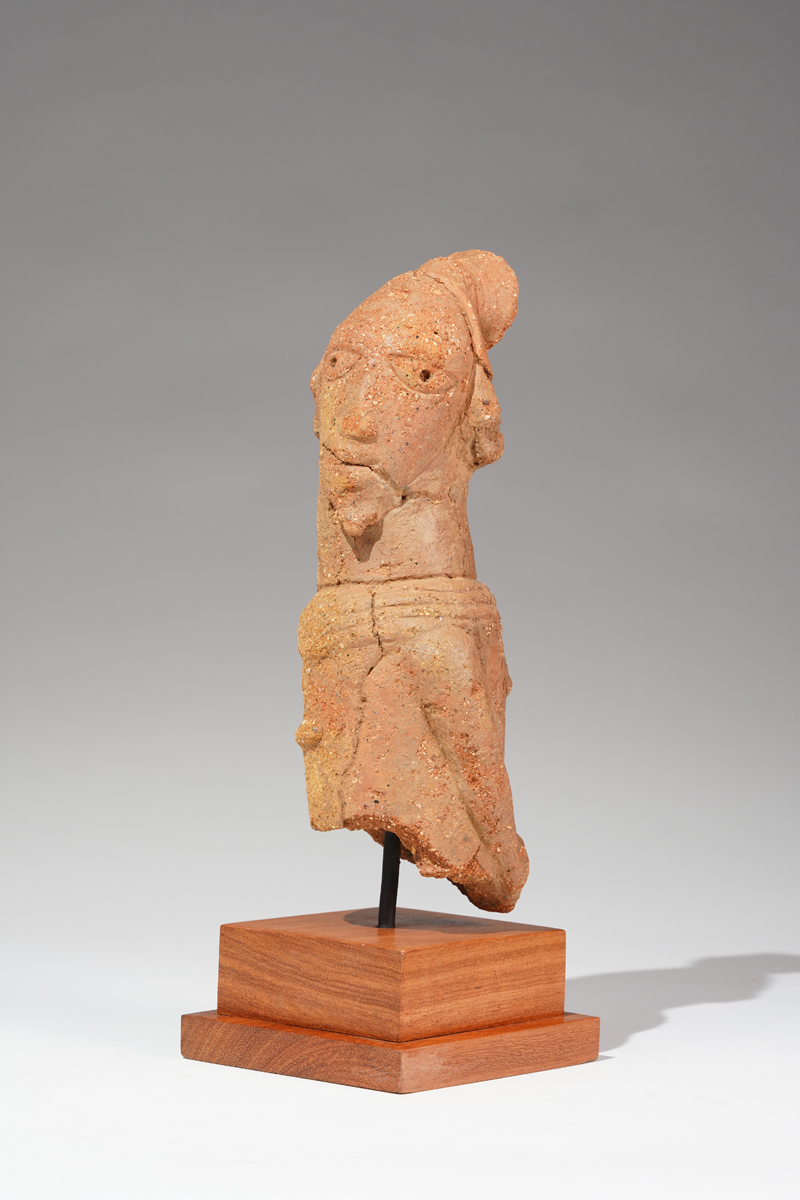 photo: wolfgang-jaenicke.com, for more information, please write us an e-mail with the identification number of the photo identification no. CAB08451.jpg |
 |