 |
 A terracotta Dogon fetish sculpture, Mali. This terracotta sculpture, attributed to the Dogon peoples of Mali, exemplifies the complex spiritual and artistic traditions of one of West Africa’s most studied cultures. Typically classified as a "fetish" object—a term derived from early ethnographic discourse—such sculptures functioned not as aesthetic artifacts in the Western sense, but as containers or conduits of spiritual power, often believed to house ancestral or protective forces. The iconography of Dogon terracotta figures is varied, though frequently anthropomorphic or zoomorphic in form. These figures are often characterized by highly abstracted or elongated limbs, minimal facial features, and seated or kneeling postures—symbolizing reverence, supplication, or ritual readiness. In many examples, the surfaces bear encrustations of organic matter or residues from libations, suggesting ongoing ritual use over extended periods. Functionally, these sculptures were employed in a range of ritual contexts: placed in personal or communal shrines, used in healing or divinatory practices, or employed as protective talismans. Their creation and use were often governed by ritual specialists or blacksmiths, who were themselves considered spiritually potent within Dogon society. While much of the scholarly understanding of Dogon cosmology derives from the 20th-century fieldwork of anthropologists such as Marcel Griaule, more recent scholarship has problematized earlier interpretations, urging caution against over-systematizing what are often highly localized and diverse religious practices. sold Height: 14 cm |
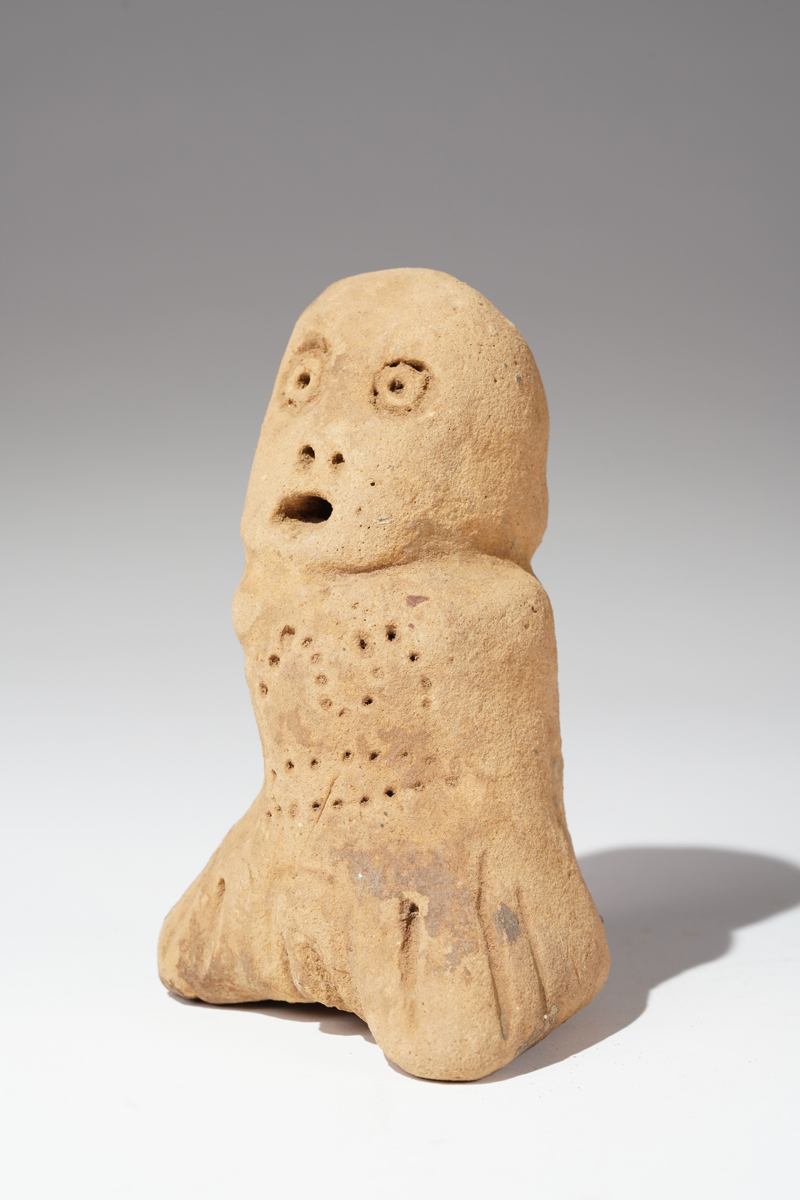 photo: wolfgang-jaenicke.com, for more information, please write us an e-mail with the identification number of the photo identification no. CAB08517.jpg |
 |