 |
 A pair of Yoruba “edan ogboni”, ceremonial bronze staves, Nigeria. Signs of oxidation, use and age. The prestigious Ogboni society includes both male and female elders. Ogboni elders would wear edan Ogboni draped over their necks. Although the functions of the Ogboni society have narrowed considerably in recent decades, members traditionally select, install and bury kings, judge criminal cases, and issue punishments, including the removal of delinquent kings. Edan Ogboni function as public signs of the society’s power. For example, a messenger of the Ogboni greets the recipient of the communication by tapping the edan on his forehead then chest. The recipient acknowledges the authority and message of the Ogboni by doing the same. Other functions of the edan object include its protective use: the edan may not be crossed if it is placed at a building threshold. Conversely, because Ogboni members had the power to punish, the edan thrust into the ground signified a death sentence. Typically, the come in pairs and include a male and female figure, representing the necessary connection between the sexes. Even the materials used to make an edan symbolize the importance of both sexes; the edan are made from cast bronze (a material associated with women and female deities), but each figure has a clay and iron core (the latter material associated with men and male deities). Much of Yoruba figurative art depicts faces with prominent, elliptical eyes. sold Height: 21 cm / 21 cm |
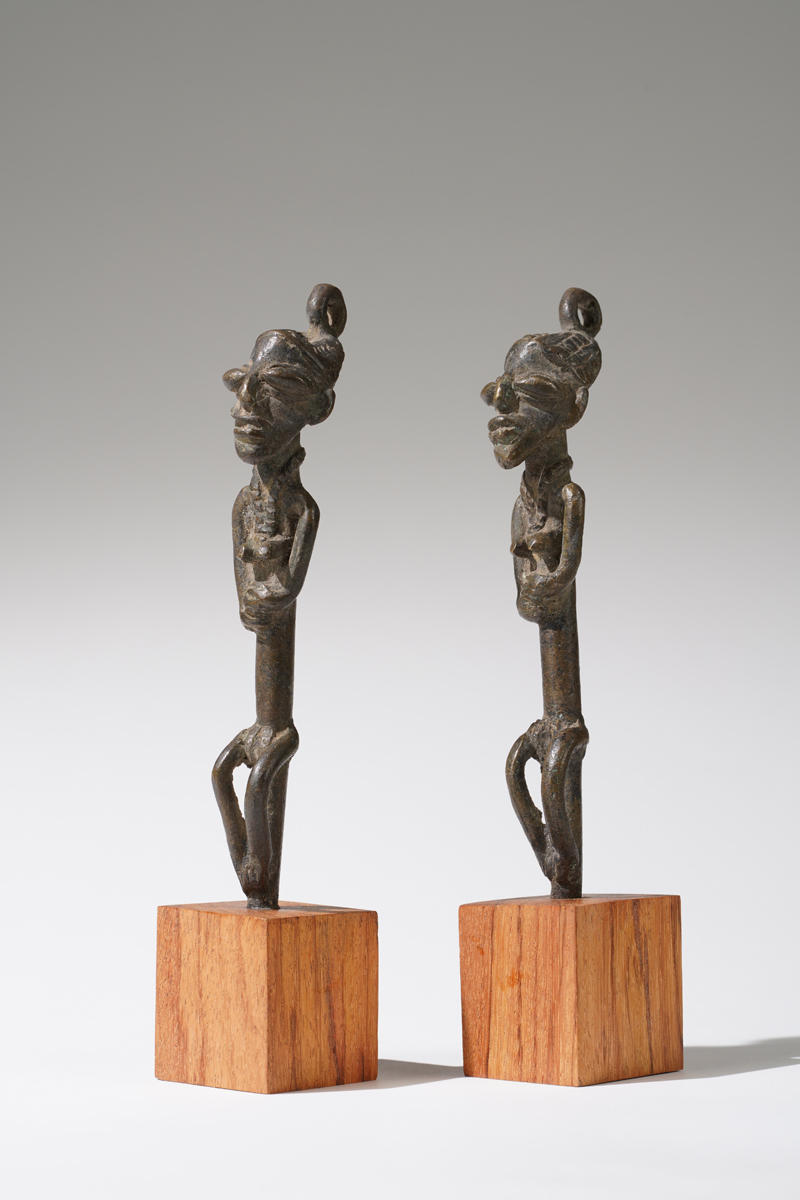 photo: wolfgang-jaenicke.com, for more information, please write us an e-mail with the identification number of the photo identification no. MAZ02893.jpg |
 |