 A Losso sculpture, Togo, Northern Region. The Losso people of the Kara Region in northern Togo, a semi-arid, mountainous zone marked by savanna vegetation and ancestral settlement patterns, are part of the larger Gur-speaking cultural sphere that stretches across northern Ghana, Burkina Faso, and Togo. This region is characterized by small, decentralized communities with rich traditions of ancestor veneration, spirit worship, and protective shrine practices. Losso sculpture—although relatively less documented than the more famous works of their neighbors such as the Lobi or Mossi—is nevertheless a potent form of spiritual expression. Typically carved from dense, weathered wood, Losso figures are anthropomorphic and often appear stylized, with angular limbs, simplified torsos, and abstracted facial features. These sculptures are used primarily in domestic or community shrines, where they serve as mediators between the living and the ancestral or spiritual realms. In particular, figures with upward-facing or gesturing arms are believed to act as active protectors, supplicants, or emissaries of prayer. While specific iconographies vary, the function of these figures aligns with a broader regional emphasis on spiritual efficacy over naturalistic form, a tendency shared with nearby Somba and Tamberma groups. As Louis Perrois writes, “Losso sculpture, like that of other northern Togo peoples, privileges expressive intensity and ritual potency over refined aesthetics. Their power lies in their presence—silent, stern, and unyielding—guardians of ancestral law and spiritual continuity” (Perrois, 2008, p. 46). These works are typically consecrated through libations, animal sacrifice, and ritual incantation, with their patinas often showing evidence of long-term devotional use. The Kara Region’s cultural isolation, due in part to its topography and historical resistance to colonial centralization, has allowed for the persistence of deeply localized and spiritually rooted artistic practices. As such, Losso sculpture must be understood not merely as art objects but as active components of a living cosmology in which ancestral spirits remain embedded in the moral and physical protection of the communit . sold Height: 46 cm |
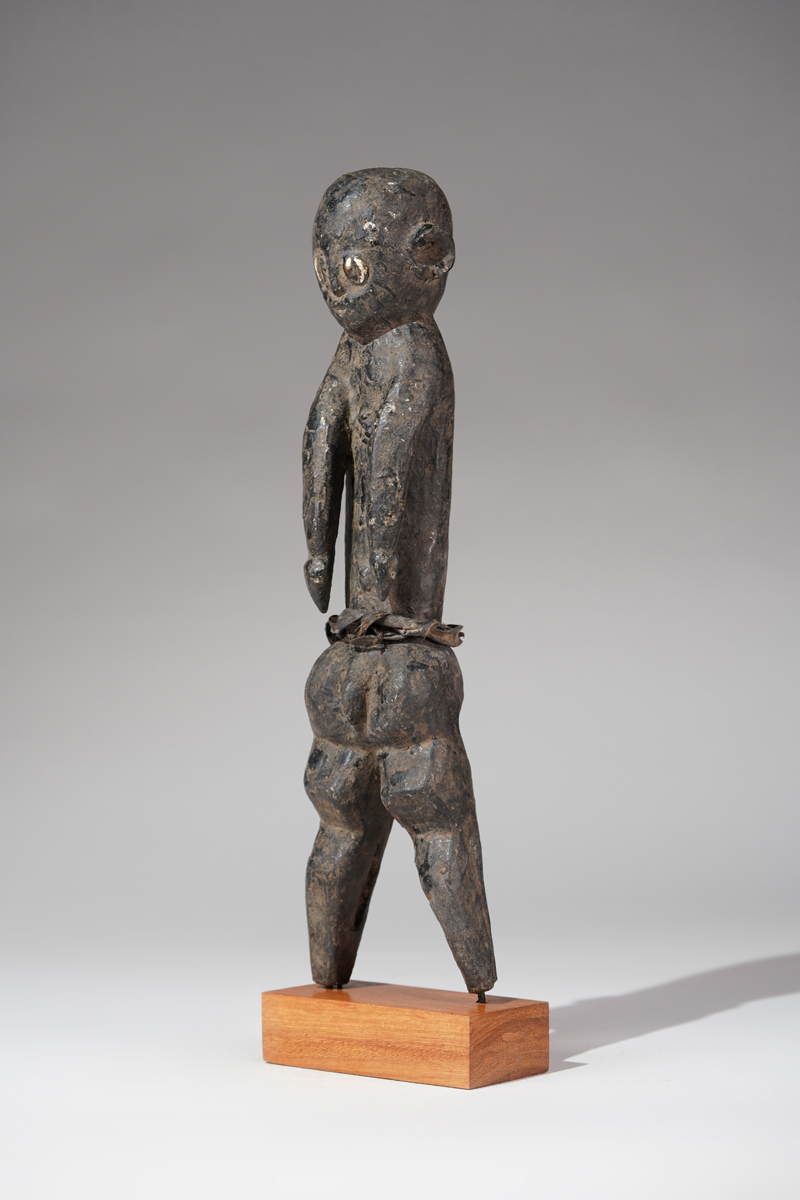 photo: wolfgang-jaenicke.com, for more information, please write us an e-mail with the identification number of the photo identification no. CAB08017.jpg |
 |