 |
 A Junkun sculpture, Nigeria, collected at Wukun, Benoue region. Among the Jukun people of Wukari in the Benue region of Nigeria, sculpture—particularly wooden figures—holds profound ritual and political significance, deeply rooted in the region’s pre-colonial religious systems and centralized kingship. The Jukun, who historically occupied the core of the Kororofa kingdom, are known for a highly developed system of spiritual and political authority, in which sculpture plays a mediating role between the divine, the ancestral, and the earthly realms. Jukun figures, often found in shrines or royal compounds, are typically elongated in form, with stylized heads and prominent scarification, and they may represent tutelary spirits, ancestors, or symbolic embodiments of political power. Sculptures collected at Wukari, a historic seat of Jukun authority, likely belonged to such sacred contexts, serving in rituals related to kingship, fertility, healing, and warfare. According to Fagg and Plass, “The Jukun were among the earliest known Nigerian peoples to develop a court art tradition, in which sculpture expressed not only religious devotion but also the legitimacy of the divine king, or ‘Aku’” (Fagg & Plass, 1964, p. 112). These figures were sometimes linked to initiation societies and secret cults, and their use was restricted to priests and elders who served as guardians of esoteric knowledge and custodians of community welfare. The Benue Valley’s complex ethnic landscape, with neighboring Tiv, Chamba, and Mumuye communities, influenced the stylistic plurality of Jukun sculpture, yet the distinctive features of Wukari pieces—such as their verticality, dynamic forms, and use in state rituals—signal a highly structured and historically layered visual language. Despite disruptions caused by colonial conquest and Islamic influence, Jukun sculpture remains a key reference point for understanding pre-Islamic religious expression and regal aesthetics in central Nigeria. sold Height: 48 cm |
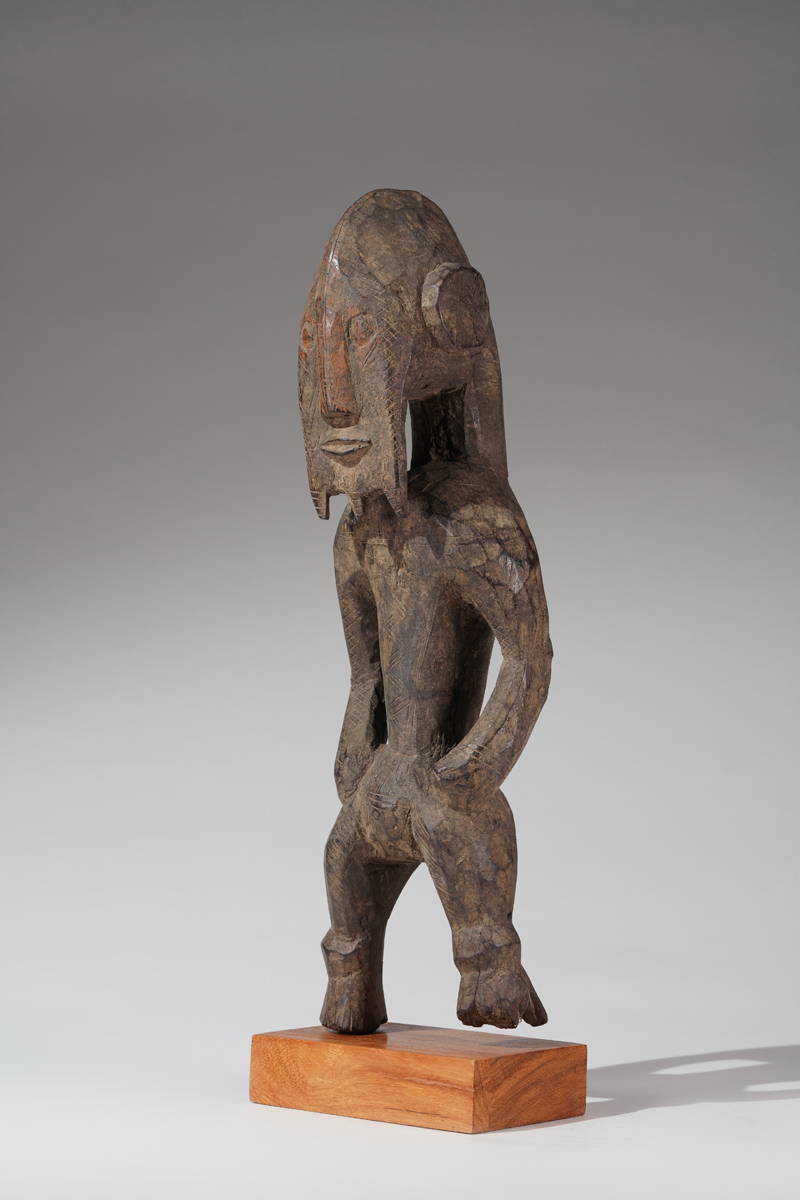 photo: wolfgang-jaenicke.com, for more information, please write us an e-mail with the identification number of the photo identification no. CAB09584.jpg |
 |